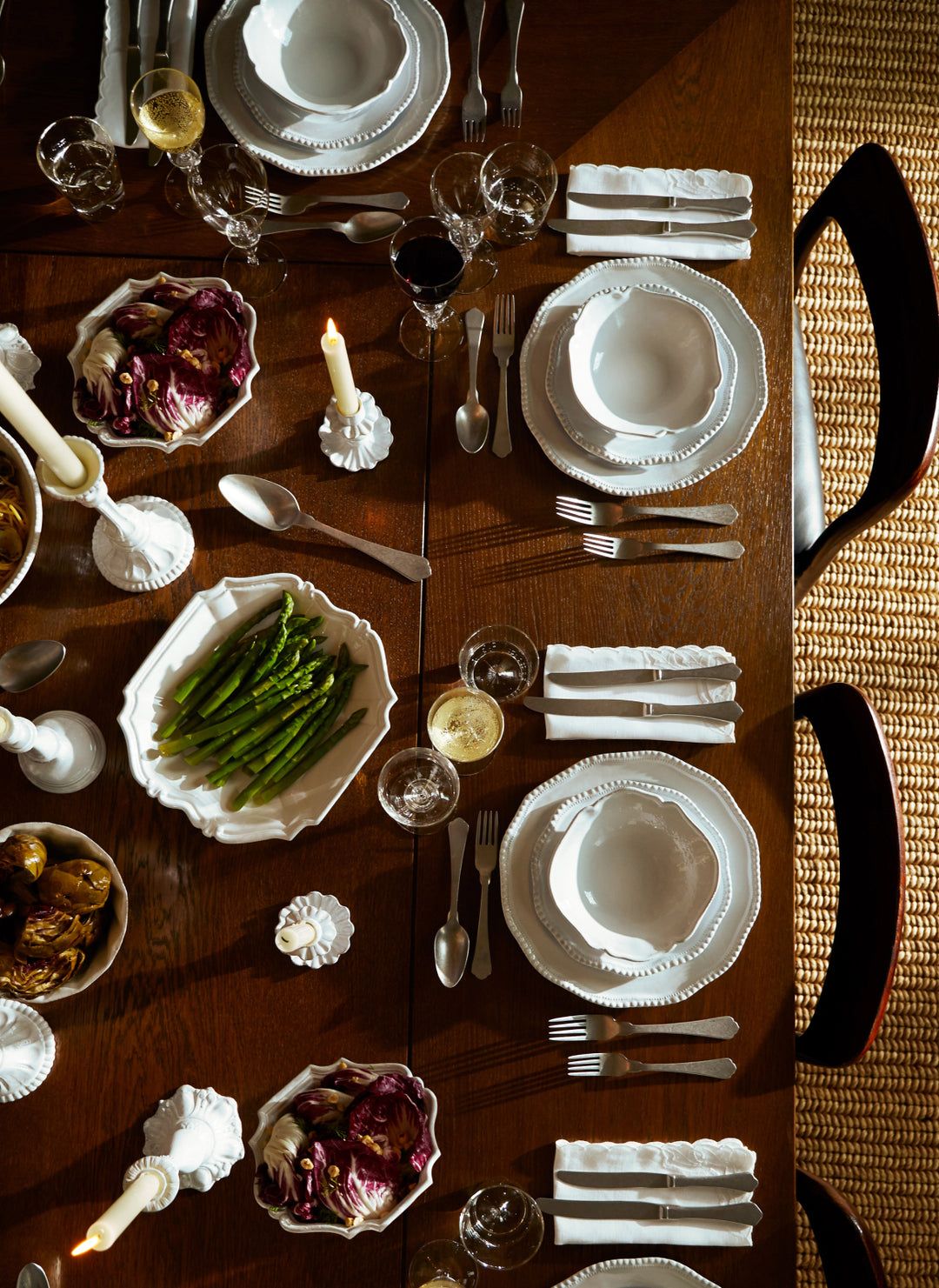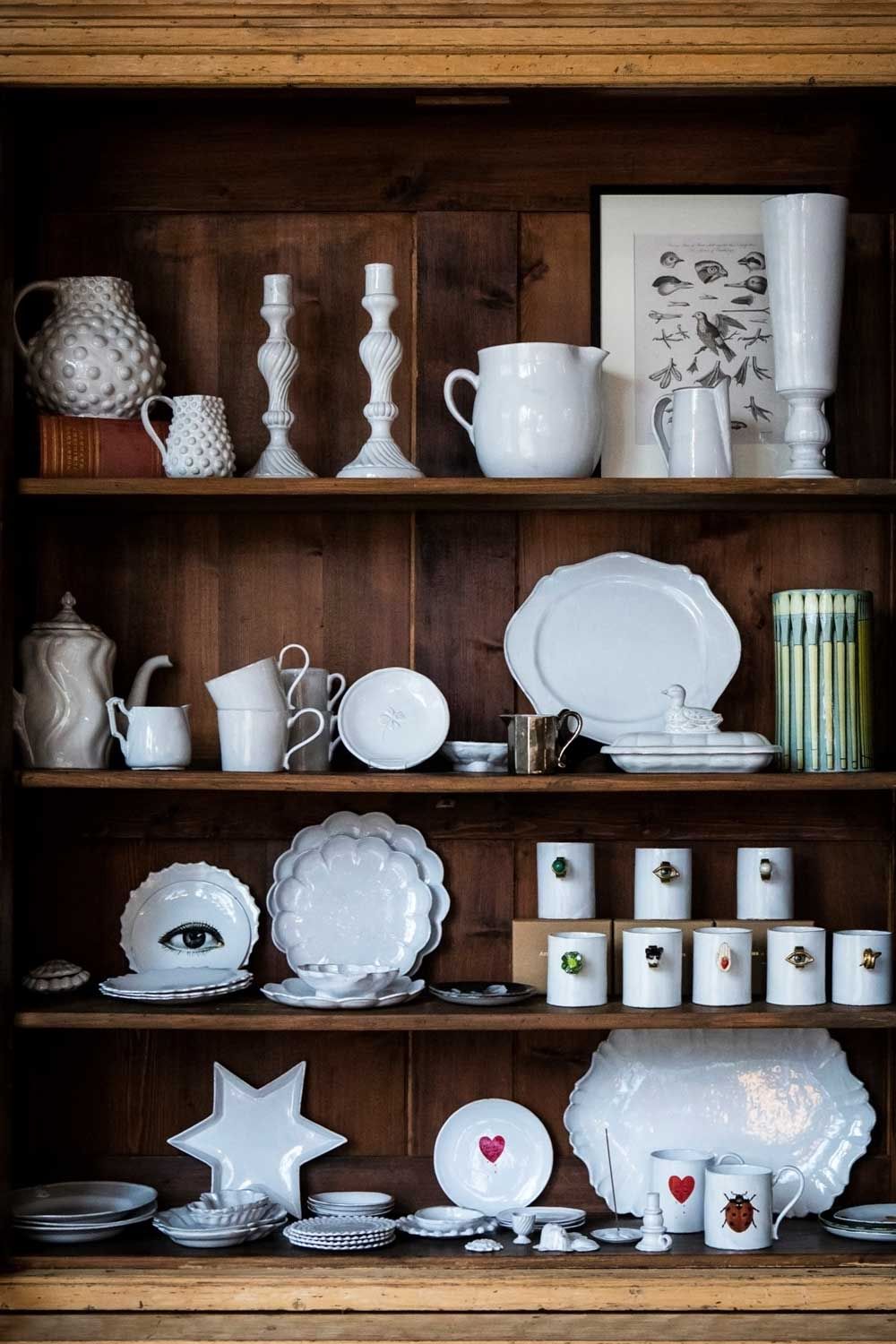

Astier de Villatte's workshop, rue Saint-Honoré
How three thousand ceramic pieces come out of a Bastille workshop each month — and why they age white.
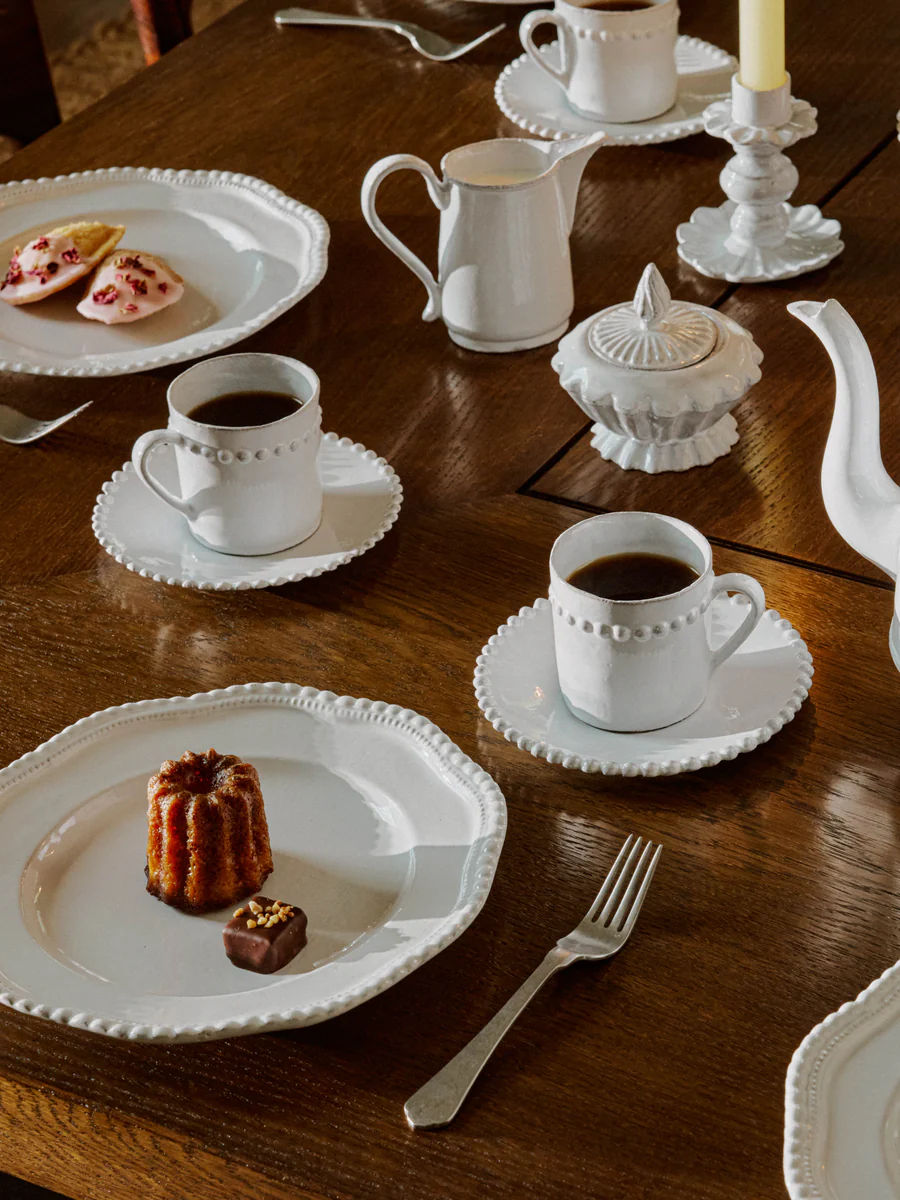
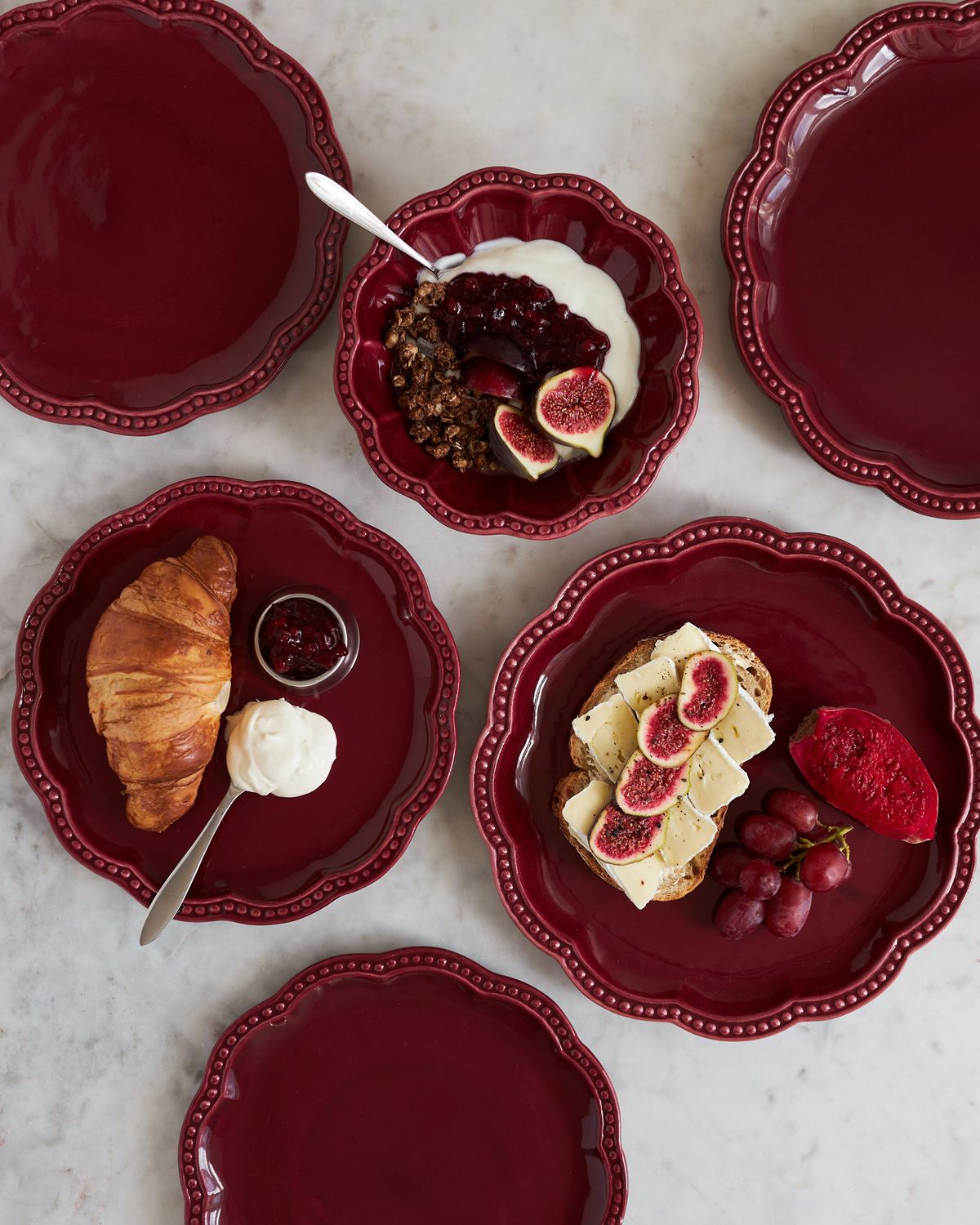
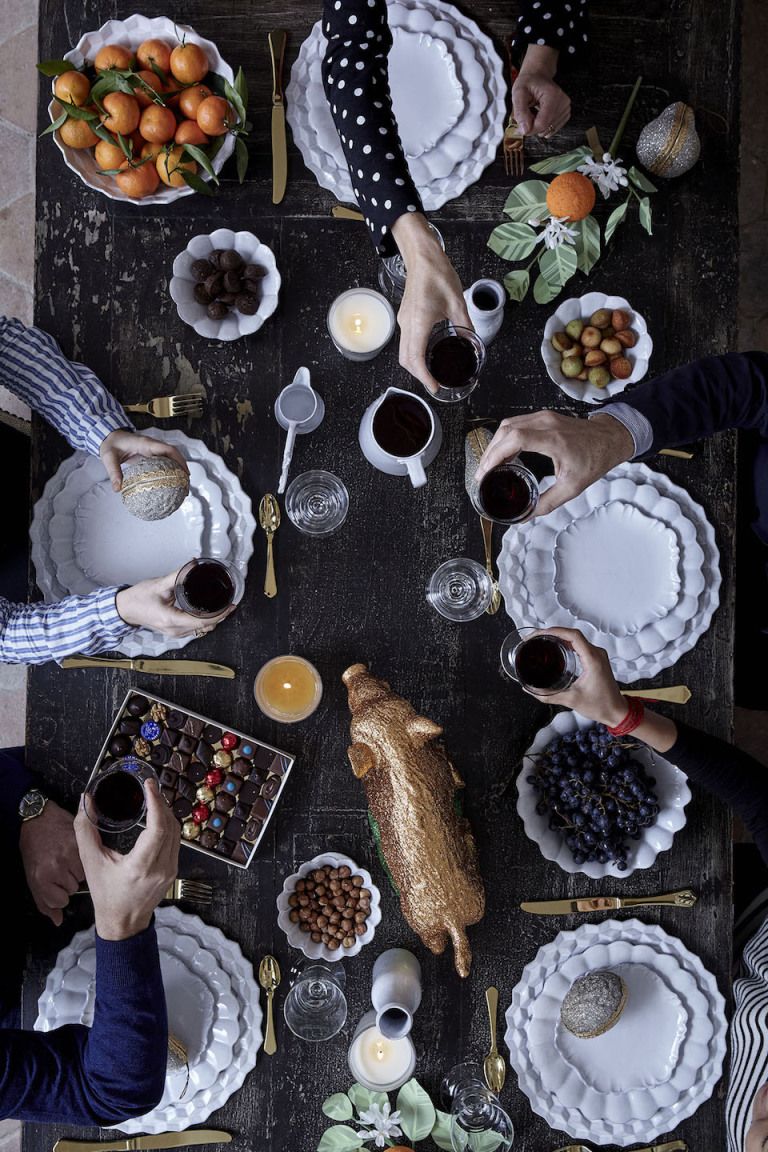
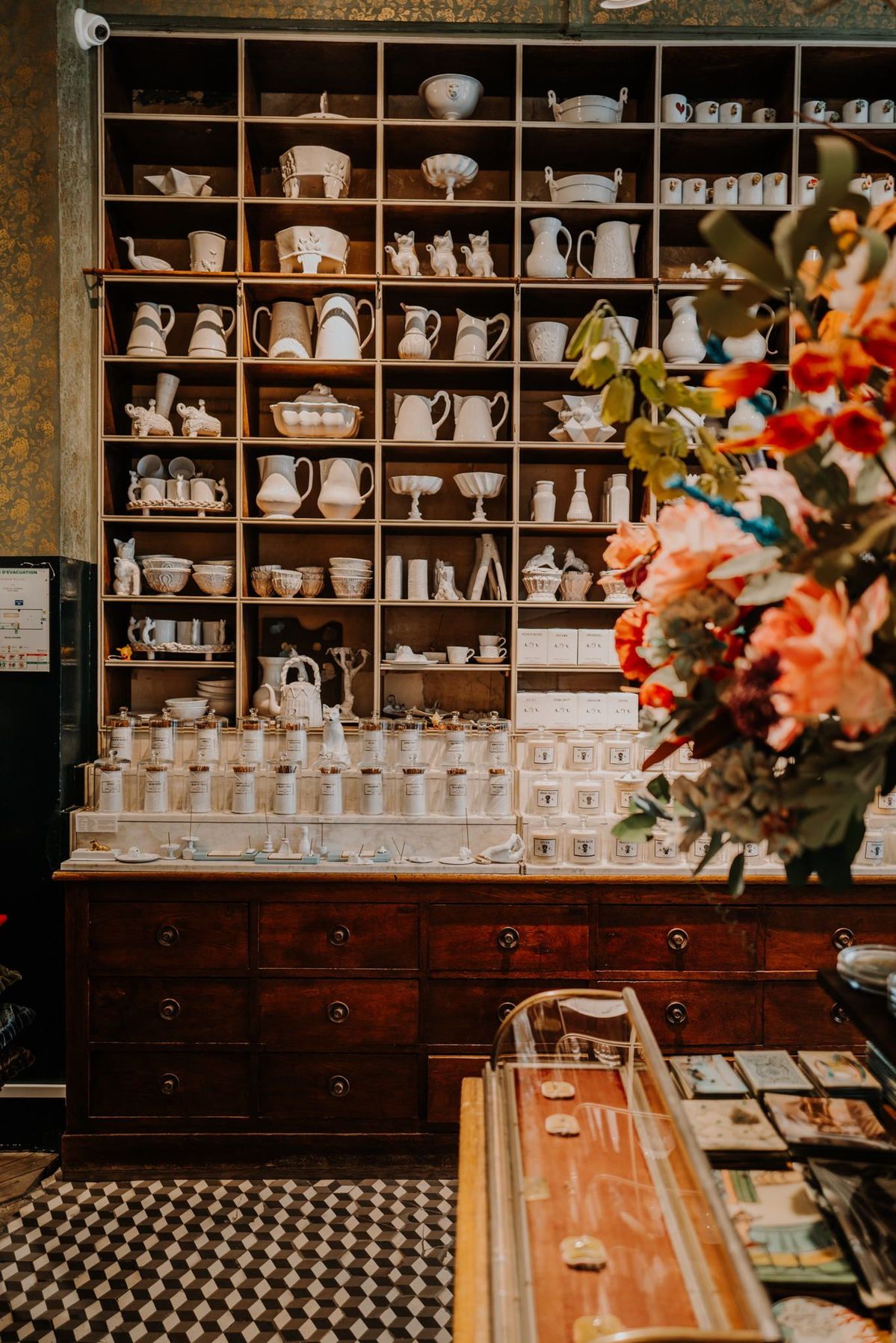
5 MIN · 12 May 2026Astier de Villatte is that strangely quiet shop at 173 rue Saint-Honoré, a stone's throw from the Palais-Royal. Inside, white plates rest on dark tables, candles bear no labels, cups look like objects pulled from a dig. Everything is made by hand, in Paris, in a Bastille workshop where thirty-five potters still work with black Berry clay, exactly as it was done in the eighteenth century — save that today the kilns run on gas rather than wood. To date, the house remains the only one to produce faience of this quality at this scale intra-muros.
The founding gesture
Benoît Astier de Villatte and Ivan Pericoli founded the brand in 1996. They had known each other since the Beaux-Arts, where they attended Jean Garcin's class together, and they shared a common obsession: putting black clay — a dense earth, little used by contemporary ceramicists because it fires less prettily than the white variety — back at the centre. Onto this black clay they lay a white tin glaze which, after firing, lets the earth show through in places, especially along the edges and the foot of the piece. It is this black-and-white tension, this almost graphic contrast, that defines the house's signature and is recognisable from ten metres away.
Thirty years on, the process has not changed by an inch. The brand has simply grown — it sells in seventy countries, set Karl Lagerfeld's table until his death, supplies dinners at the Quai d'Orsay — without ever industrialising. No machine has replaced the hand, no mould has been streamlined. It is probably the only case, in French luxury, of growth without dilution.
The workshop, in five stations
1. Casting
The black clay — a blend of earths from Berry and the Bourbonnais — is mixed with water until it becomes slip, a dense slate-coloured mud that is slowly poured into plaster moulds. The plaster draws out the water, the piece takes shape in about an hour. It is the most invisible step, and the most structural: a bad cast — too much slip, too little, an air bubble — and the whole firing collapses ten days later. The moulds themselves are made on site: Astier subcontracts nothing.
2. Hand turning
Once unmoulded, the piece is taken up one by one by a seated potter. Edges are trimmed with a Japanese knife, handles are set on with a finger, the prints remain — a thumb on the foot of a cup, an index trace on the spout. This is why no two Astier de Villatte plates are exactly alike, and it is the house's invisible signature: industrial regularity is explicitly rejected as a flaw.
3. The first firing, known as biscuit
At one thousand degrees, in a gas kiln that runs twenty-four hours a day — the workshop never stops, not even at Christmas. The piece becomes porous, hard but still friable, a bluish grey that is startling the first time you see it. It waits, on bare wooden shelves, to be glazed. The wait varies: sometimes three days, sometimes three weeks, depending on the order book and the availability of the glazers.
4. The tin glaze
The white glaze, a jealously guarded recipe, is applied by dipping. The piece passes through a bath for three seconds and comes out white, but with that thick white that crackles slightly as it dries. Those fine, intentional crackles are what let the black clay show through underneath — the Astier effect par excellence. Pure tin having grown expensive, the recipe has been adjusted several times, but never the final look.
5. The second firing, at 1050 degrees
The glaze vitrifies. The piece comes out white, sometimes faintly yellowed at the edges, never perfectly uniform. It is inspected by eye, rejected if it has shifted by a millimetre. Out of three thousand pieces produced each month, about twelve per cent are broken — an enormous rate for industry, a normal one for craft. Rejected pieces are systematically destroyed: no official seconds, no outlet. That is also why imperfect Astier pieces are so sought-after on the resale market.
Why white ages well
The great question with Astier de Villatte is patina. Will a plate bought in 2026 look, in ten years, like a plate from 2000? The answer is yes — only better.
Tin glaze, unlike industrial borosilicate glazes, accepts marks. Coffee leaves a faint ring that lodges in the crackles, the knife makes fine lines that look like pencil strokes, the crackles themselves widen year by year. Rather than appearing worn, the piece gains a depth that the new never has. Ceramicists call this the life of the object. It is the opposite of Sèvres porcelain, which tolerates no mark and ends up looking frozen, like a museum piece living in your home.
A practical consequence: these plates must never go in the dishwasher. Aggressive detergent and cyclical heat would attack the glaze. Lukewarm water, a non-abrasive sponge, a tea towel for drying — that is the price of patina.
The candles, the other cash flow
If Astier de Villatte is known for its plates, it is in fact the scented candles that keep the brand running. Launched in 2007, they are poured into the same white glazed pots as the house's small bowls, and they burn for around fifty hours on pure vegetable wax. Each scent is composed by a guest — Lyn Harris, John Galliano, Setsuko, Wajiro Ushikubo — and never reproduced identically. It is this limited-edition logic that turns them into a treasure hunt: a discontinued scent can triple its price on the secondary market.
What you can find, and at what price
A Régence dinner plate, the best-known piece, costs about a hundred and forty euros in the shop. A coffee cup, sixty. A John Galliano scented candle (two are released each year, with a guest perfumer), eighty. A large Bracquemond serving dish, three hundred and fifty. Everything is dear, and everything is worth the price — all the more so since Parisian production, at this level, has no comparable.
For tighter budgets, three routes exist. The Drouot sales occasionally, where pieces from the 2000s go for around fifty euros — the rating has been climbing since 2022. The "imperfects" sale held twice a year at the rue Sedaine workshop (by invitation — sign up to the newsletter, and arrive early: everything goes in two hours). And the "Outlet" section of Selency's site, where end-of-series pieces regularly turn up at minus forty per cent.
Practical
Astier de Villatte boutique — 173 rue Saint-Honoré, 75001 Paris. Monday to Saturday, 11am–7.30pm. Workshop — 1 rue Sedaine, 75011 Paris. No regular visits; open two days a year for the Journées du Patrimoine (book from mid-August on the official site, capacity capped at a hundred visitors per day). Studio John Derian by Astier — a permanent collaboration with the American artist John Derian (collages on antique découpage), available on the website and in the main shop, from eighty euros for a small bowl.
One photo, every piece identified.
Your room, a shop window, an inspiration screenshot: send the photo, we find the pieces and their alternatives at every price.
On iPhone, the app does the same from your camera.
Gallery
5 images