Atelier Eric Schmitt: bronze as a living material
Sculptor and designer, for forty years he has been casting objects that resemble nothing — except themselves.
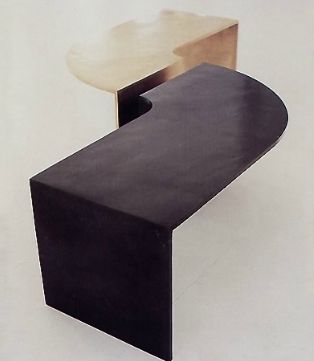
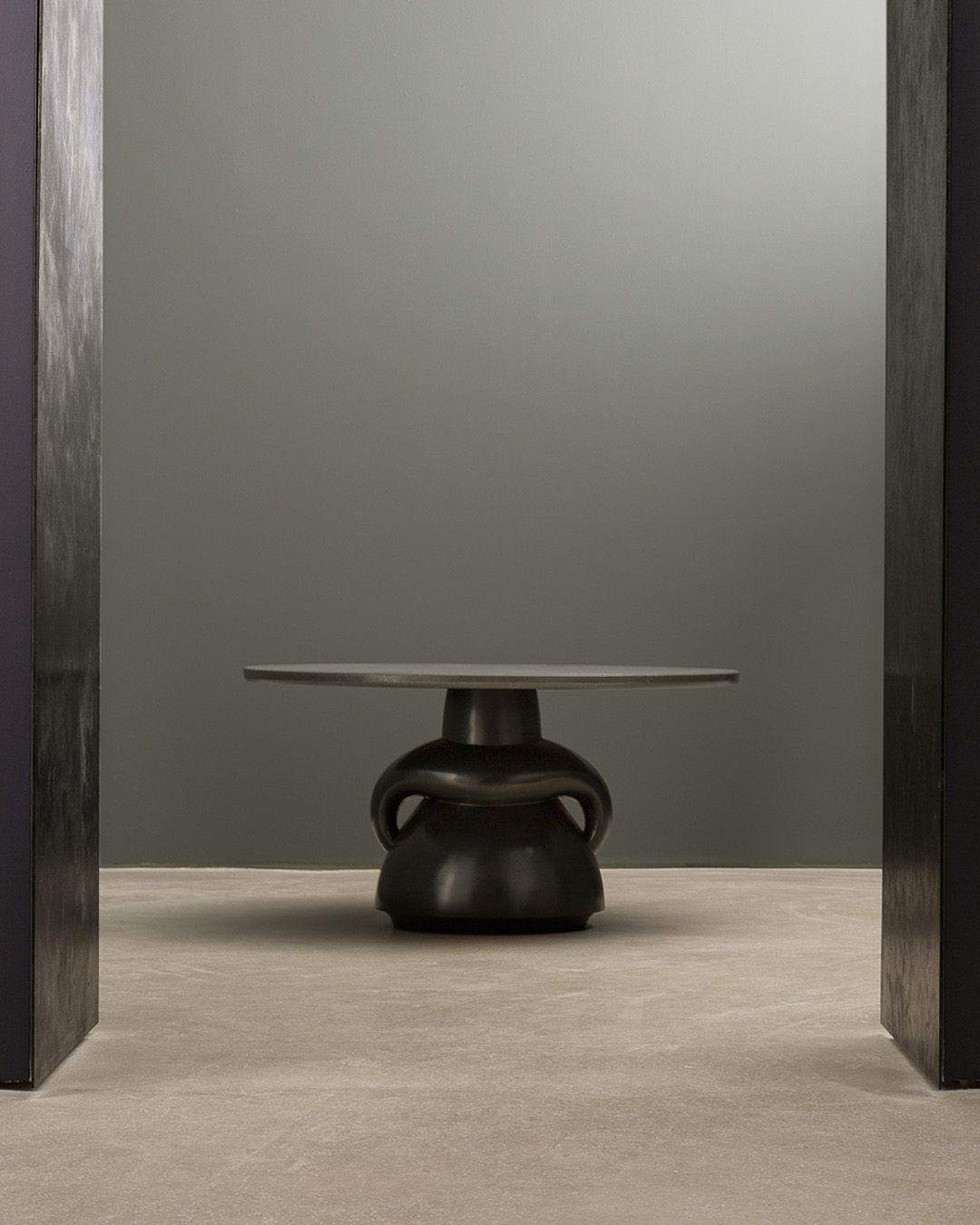
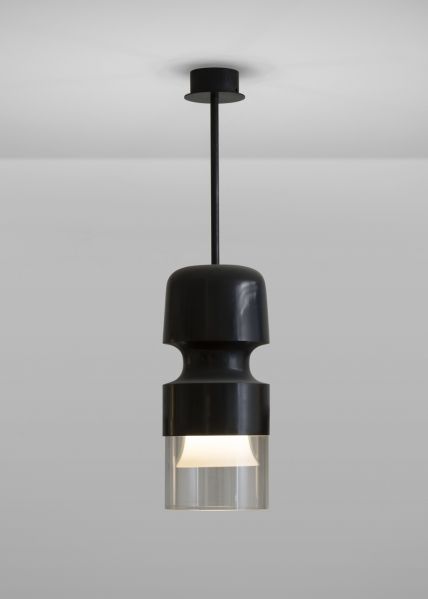
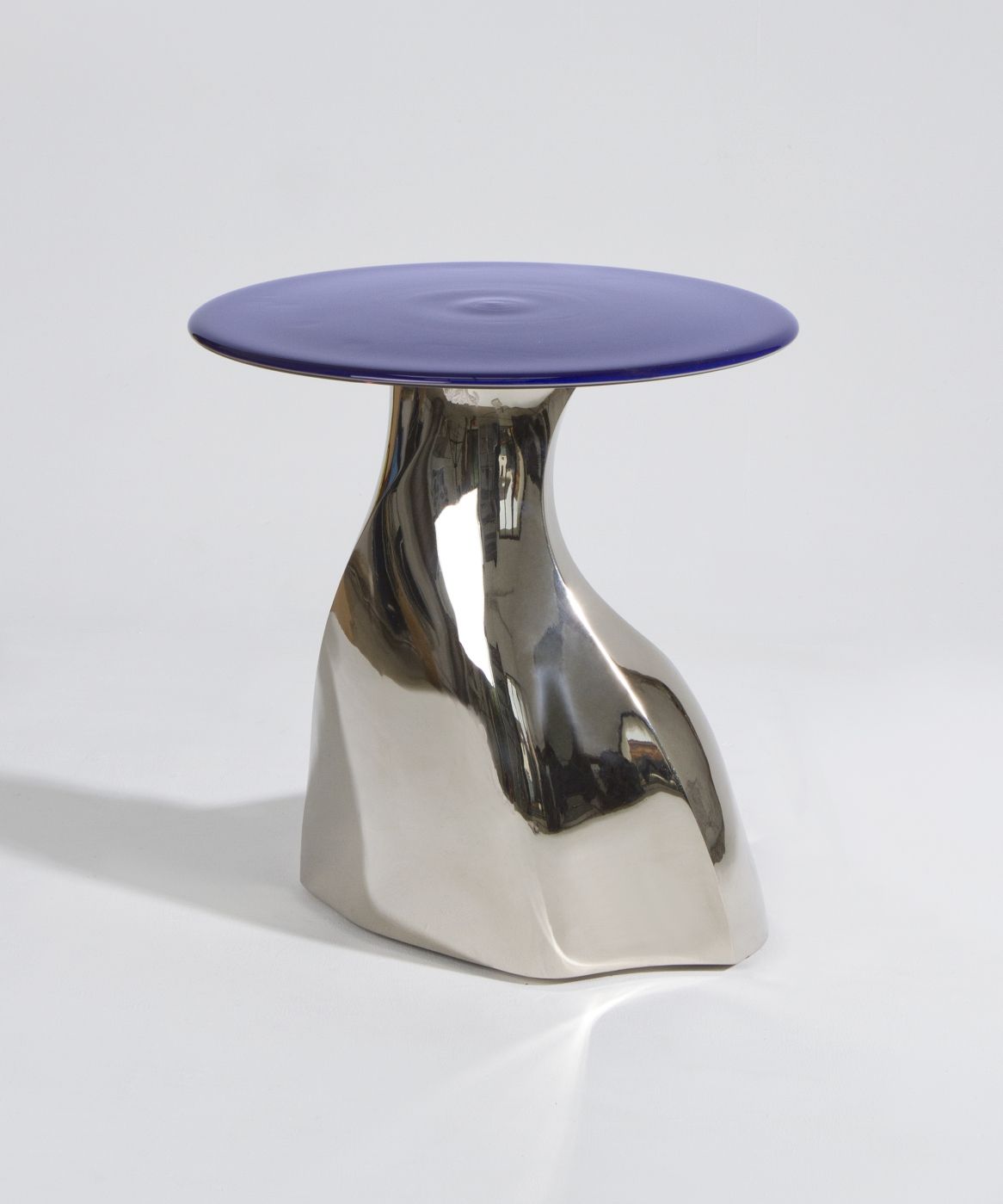
5 MIN · 19 May 2026In his Parisian studio in the fourteenth arrondissement, on rue Pernety, Eric Schmitt casts. Bronze, brass, plaster, sometimes clay: the raw material receives the hand first, then the fire, then time. What comes out — tables, lamps, vases, sculptures that hesitate to be one or the other — resembles no known furniture. And that is precisely what makes his signature, more than forty years after his first casts upon leaving the Arts Déco. Schmitt is now exhibited in Paris, London and New York, collected by Marc Newson as much as by Karl Lagerfeld in his lifetime, yet he continues to work alone, without an assistant, in the same studio as in 1986.
A door that does not look like a studio
From the outside, nothing suggests you are entering a sculptor's. An ordinary carriage door in the fourteenth arrondissement, a paved inner courtyard, a tiled corridor you follow without knowing where it leads. Then, without transition, the studio — about a hundred and twenty square metres beneath a glass roof five metres high, a legacy of the craftsmen's workshops that occupied the back courtyard before the War. Large tables covered with plaster moulds, bronze pieces in mid-patina lined up like an army of Egyptian figurines, pencil sketches pinned at random on the white walls. A northern light, hard, unforgiving, that reveals every surface flaw — which is why he chose it.
The gesture before the object
Schmitt always begins with a graphite pencil drawing — not to fix an exact form, but to set down an intention, a posture, a relationship to the ground. Then comes the plaster: modelled directly by hand, sometimes thrown against a board to break the regularity, sometimes stroked for hours to obtain a true curve. This stage is the longest and the most invisible — a client never sees the plaster, which is destroyed after the moulding. Bronze follows, cast at a Normandy foundry with whom Schmitt has worked for thirty years. The patina, at the end, can take weeks: he layers the coats — verdigris, brown-black, terracotta, sometimes gold — as a Trecento painter would have laid his glazes on a wooden panel.
"I don't draw a lamp. I draw a presence. The lamp comes after."
Three materials, never more
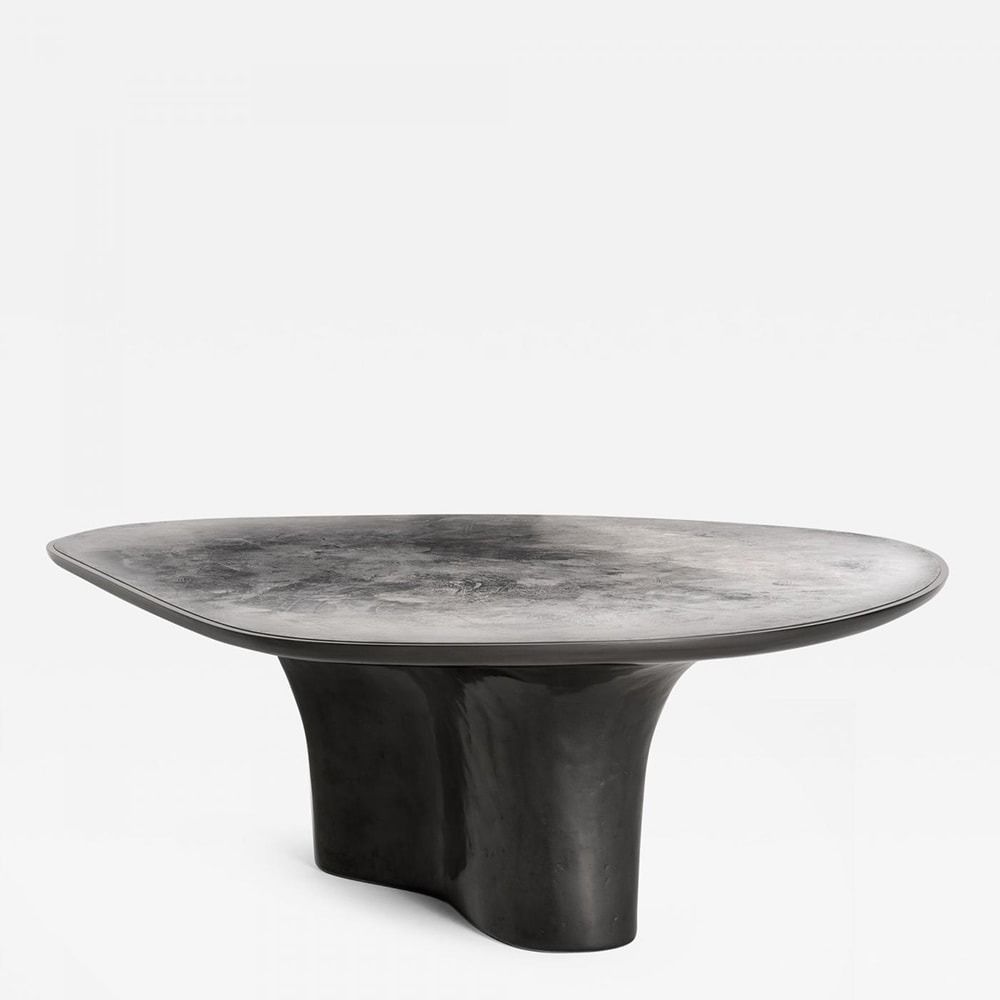
Bronze, plaster, sometimes ceramic. That is all. Schmitt has resisted diversification for forty years, despite solicitations from gallerists who would like to see him try glass, marble, wood. He politely declines, and almost never explains himself in public. This discipline gives his work an immediate legibility: you recognise a Schmitt in two seconds, with no need to look for the label. The pieces share a stable grammar — anthropomorphic silhouettes (a standing figure, a faceless head, an abbreviated torso), surfaces that seem to vibrate under certain lights, heavy bases set on the floor like funerary stelae. It is this coherence across four decades that makes him a rare name in contemporary design: following him is not tiring.
Brancusi, Africa, childhood
His references, when asked, are always the same — a stable answer for twenty-five years, to the point that it has become a signature in itself. Brancusi for absolute simplicity, for the way of reducing a bird to seven centimetres of polished bronze without losing the bird. African art (Dogon, Senufo, Mossi) for magical verticality, for those statuettes that stand upright without one knowing quite why, anchored in the ground like trees. And childhood — the objects one drew in pencil before knowing what design was, before having absorbed the grammar of furniture. It is this third source that makes his pieces legible to anyone, even a six-year-old child: they look like things one might have dreamt at six, precisely.
The Normandy founder, the other signature
A word should be said about the foundry. Schmitt has worked since 1995 with the Atelier Coubertin (Saint-Rémy-lès-Chevreuse), one of the last three art foundries in France still practising sand casting and lost-wax casting according to nineteenth-century methods. All of Schmitt's pieces are cast, patinated and chased there. This long relationship — thirty years, the same foreman, the same alloys — is part of the work in the same way as the initial drawing. A client who buys a Schmitt is also buying, without knowing it, Coubertin craftsmanship embedded in the piece.
Galleries, and after
His pieces are at Carpenters Workshop Gallery (Paris, London, New York), at En Attendant les Barbares (the historic showroom on the faubourg Saint-Antoine), and in private collections that buy them as one buys a sculpture, not as one buys furniture — a distinction that changes everything, not least for insurance and taxation. The border between design and art has always been porous in Paris since the nineteen-thirties — Schmitt erodes it further. His lamps are not shown in a furniture department at auction: they appear under "Twentieth-Century and Contemporary Decorative Arts", on the same footing as a ceramic by Lucio Fontana or a bronze by Diego Giacometti. They live in the drawing room like a figurehead, never as a functional piece of furniture.
Why bronze, and why now
Bronze is making a major comeback in 2026, whether bought from Schmitt at ten thousand euros a piece or from small emerging sculptors at fifteen hundred. Three reasons. First, fatigue with the chrome and stainless steel of the 2010s, now markers of a decade gone by. Then the search for objects that take on a patina — bronze evolves, stainless steel never changes, and what does not change ends up wearying. Finally, the safe-haven value: an art bronze, unlike edited furniture, gains value over time if the artist is followed by a gallery. Schmitt, already rated, has seen his nineties pieces double in price on the secondary market since 2023.
What the studio teaches us
That slow making is still possible, economically viable, even at the scale of a single man producing fewer than forty pieces a year. That three materials, truly mastered, are enough — that there is more to dig into the depth of a single material than into the surface of ten. That the furniture we keep for a long time is not the one we chose the fastest, but the one we have learnt to see the longest. And that in a world continuously producing disposable novelty, voluntary scarcity — a studio without an assistant, three materials, forty years — becomes in itself a political statement.
One photo, every piece identified.
Your room, a shop window, an inspiration screenshot: send the photo, we find the pieces and their alternatives at every price.
On iPhone, the app does the same from your camera.
Gallery
6 images