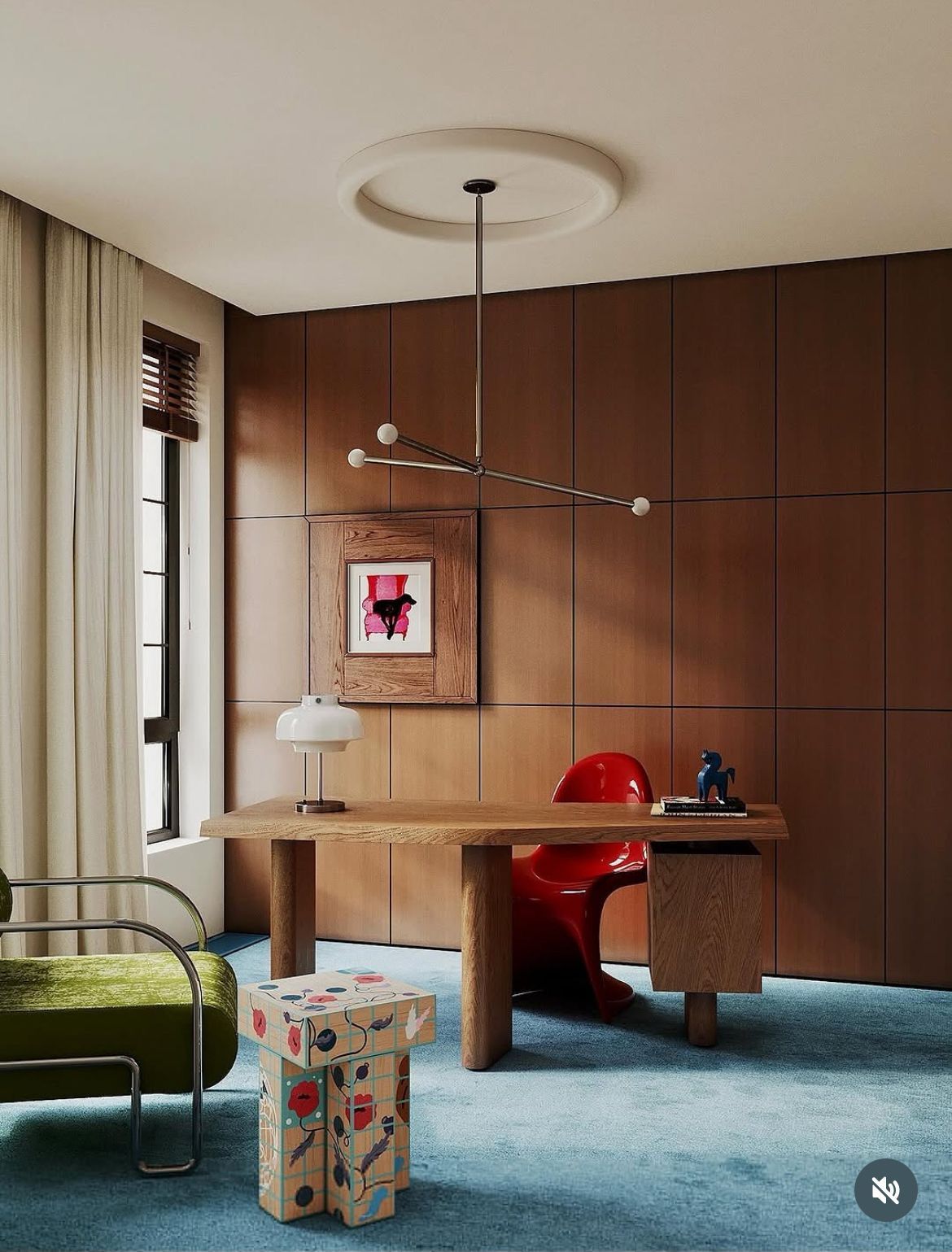
The desk as a world, with an illustrator in the eleventh
A desk is not a piece of furniture. It is a portal into the imagination of whoever sits there — and the place that makes the work possible.
5 MIN · 2 OBJECTS IDENTIFIEDA desk is not a worktop. It is a world. Every object set there — the lamp, the lithograph on the wall, the notebook left open at the day-before-yesterday's page, the mug holding water that will go undrunk — summons a specific part of the head that sits down opposite. And it is this world, painstakingly composed over years, that makes creation possible. We spent a morning at Léon's, an illustrator settled in the eleventh for fifteen years, to understand how a desk unlike any other comes together — and why, in his case, it is the desk that produces the work, and not the other way round.
The desk as portal
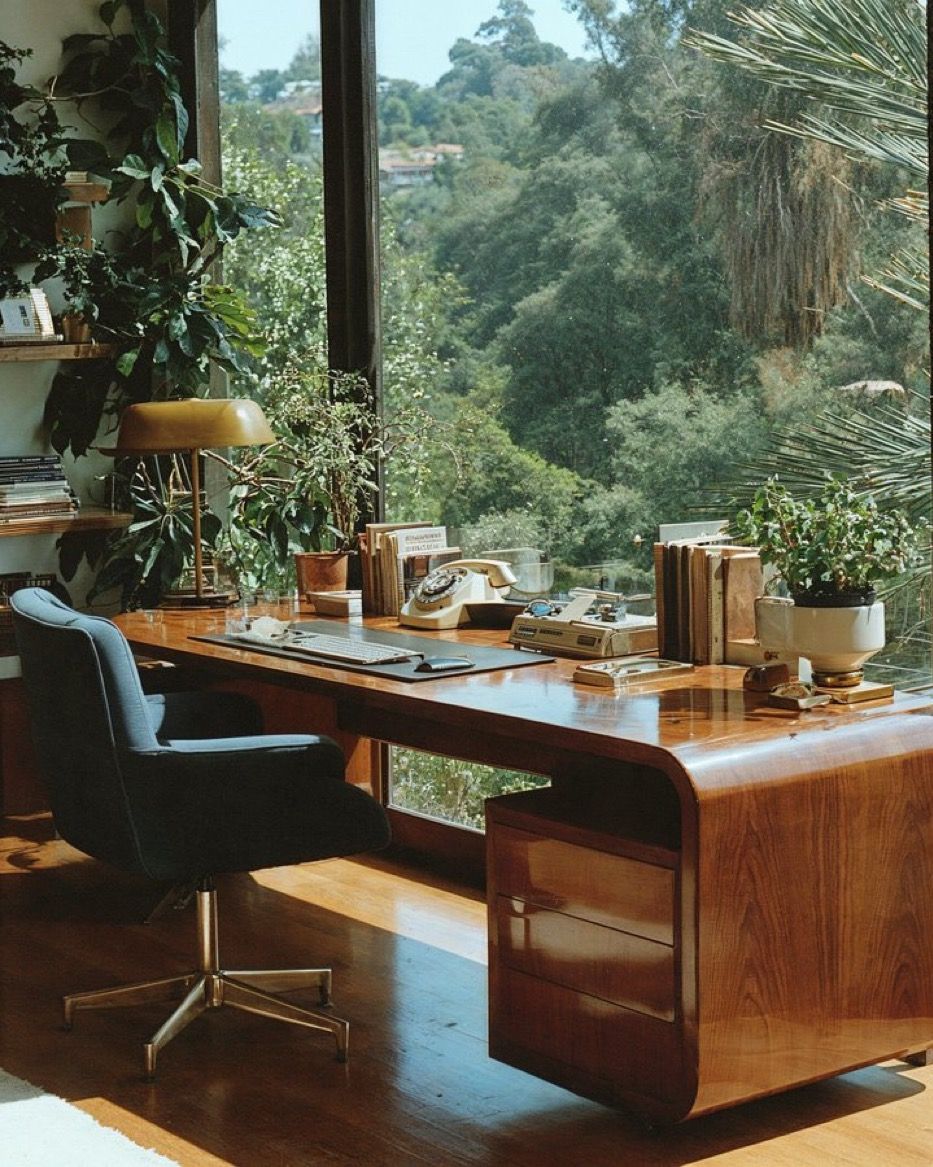
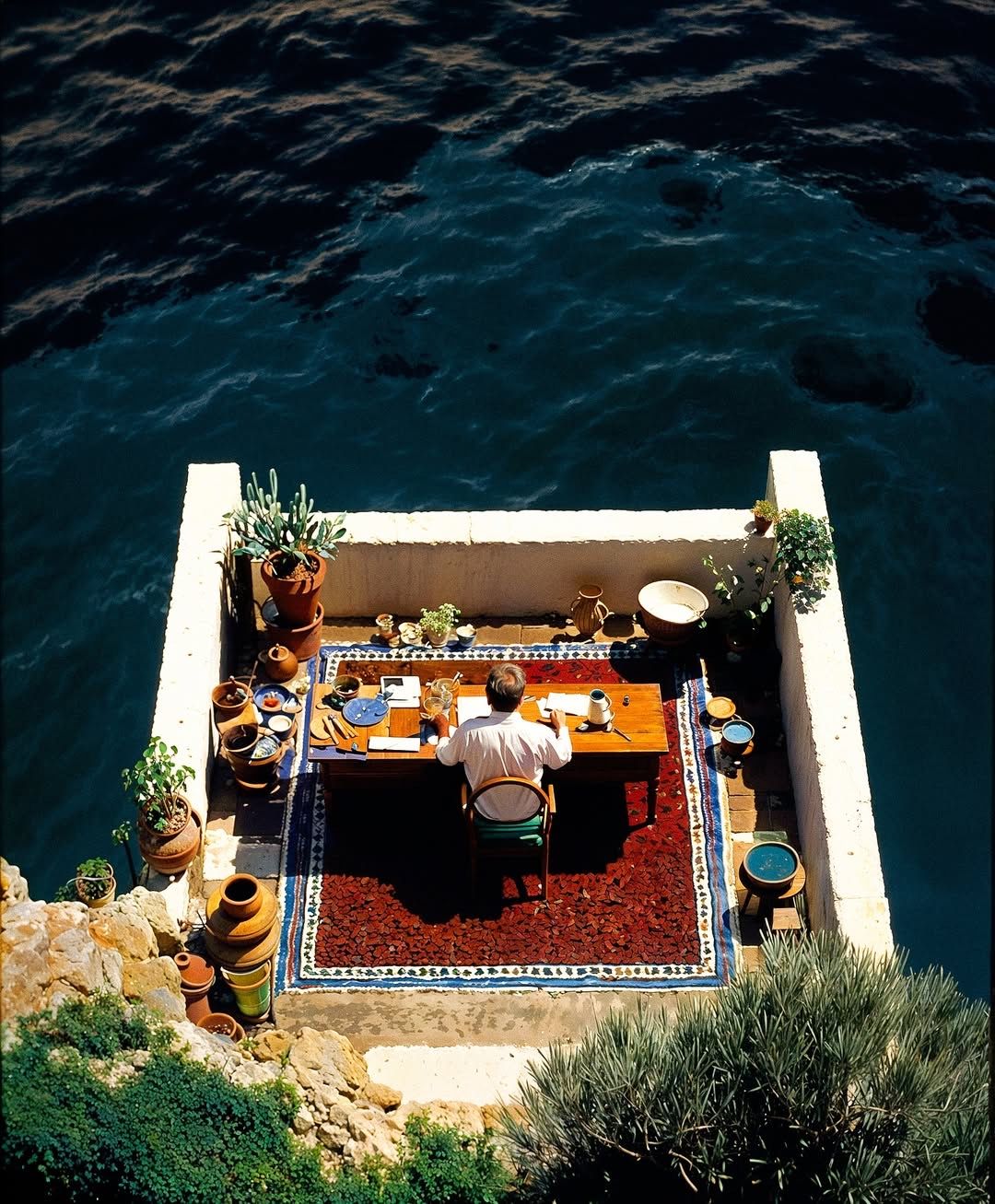
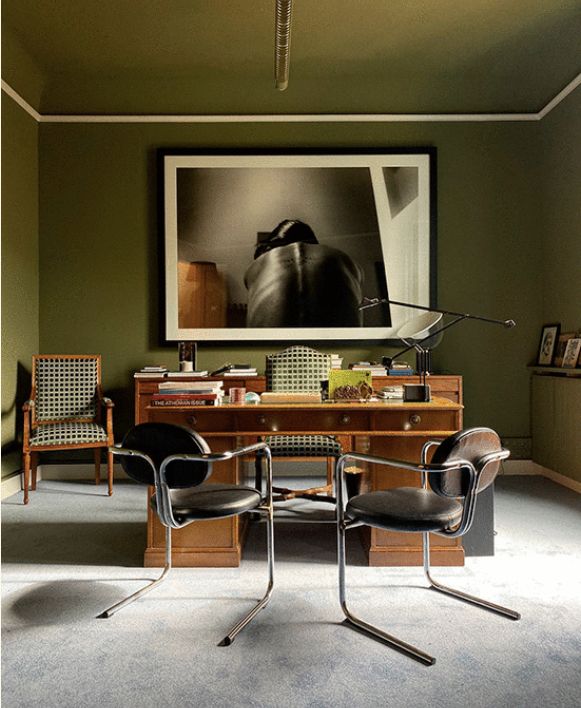
Léon is a freelance illustrator — covers for Gallimard and Allia, posters for the Théâtre de l'Étoile, series for Le Monde diplomatique. His studio sits in a former scullery in the eleventh arrondissement, rue Saint-Maur, twenty square metres on a silent courtyard, a skylight overhead and a sealed-up fireplace he uses as a shelf for his rare books. When he sits down at six-thirty in the morning, he is not sitting down in front of a piece of furniture: he is stepping into a mental room. The Saul Steinberg lithograph above the desk, bought at Drouot in 2014 for four hundred euros, opens a door onto a particular humour — ironic, dry, halfway between the New York press cartoon and the poetry of the Parisian salon. The ceramic sculpture set to his right — an anonymous eighteenth-century Japanese piece — stands in as a silent presence, a witness that does not judge. The bouchara rug on the floor, brought back from Istanbul at twenty for three hundred francs, places the room in a geography that has nothing to do with Paris. The desk is the airlock. Work begins once all these signals are aligned.
The objects do not decorate — they summon
Every thing he has put there carries an intention. The pot of sixty Caran d'Ache pencils — exclusively the Luminance 6901 range, never the Néocolor — is not desk paraphernalia: it is the promise of a precise gesture, sharpened with an Olfa blade, repeated for fifteen years at the same hour and in the same way. The open Clairefontaine spiral notebook is not a note — it is the state of the ideas in progress, reworked in washable blue ink each morning and revised each evening. The blown-glass carafe was not chosen for its design: it belonged to his paternal grandmother, a schoolteacher from Lorraine who died in 2008, and every sip of water through the day brings him back to her. Decor, here, is too light a word, too magazine. One would speak rather of talismans or, to borrow a term he uses himself, working companions.
"My desk is the place where I am never alone. I work there with ten presences."
An ecosystem, not a set
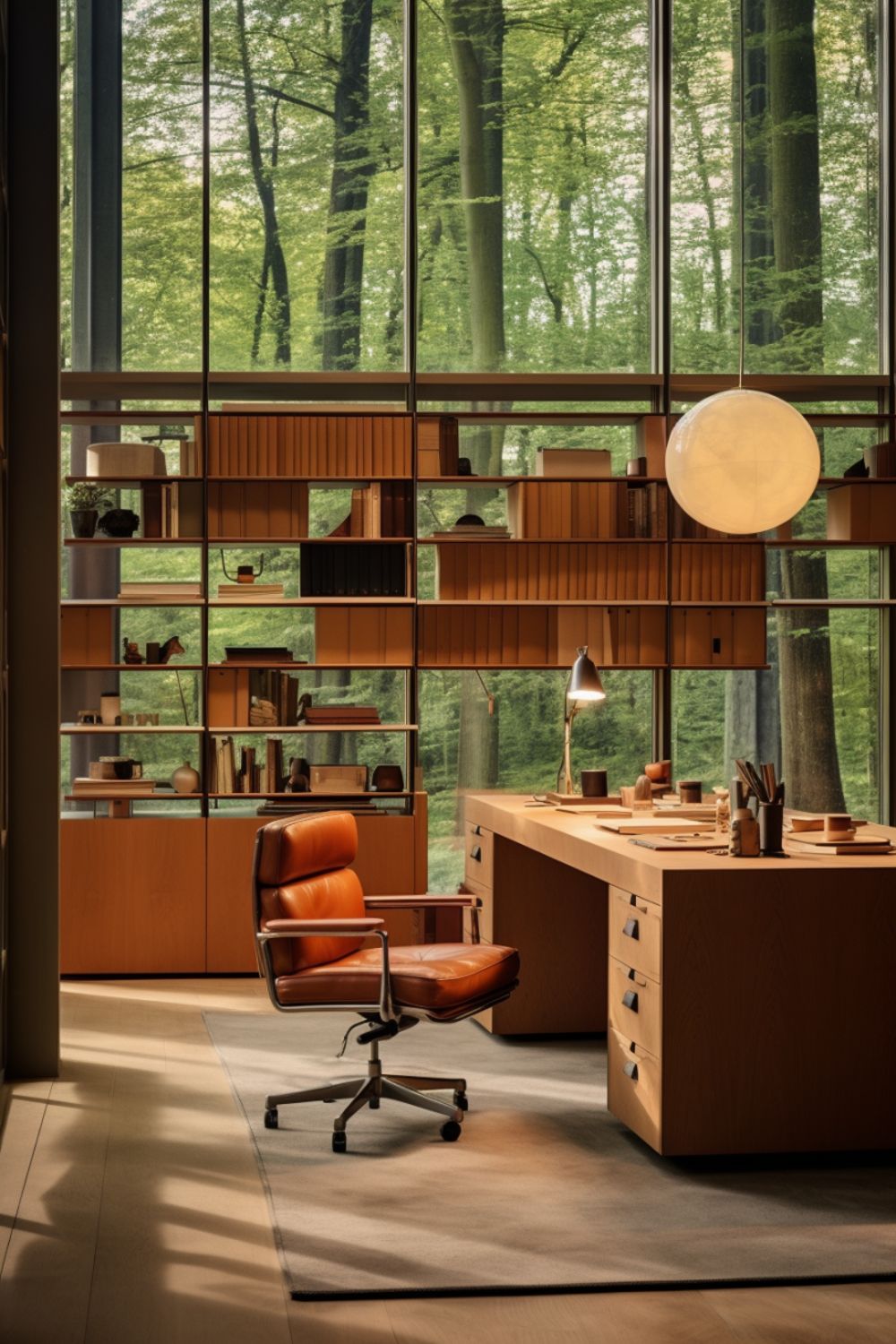
What strikes you, visiting his studio, is that nothing is decorative in the strict sense — nothing that does not serve. Everything serves several times over. The Artemide Tolomeo Mega lamp tilts because he draws standing as much as sitting — he alternates every twenty minutes to spare the lower back diagnosed in 2019. The second-hand Aeron, bought at Volpato (the used Herman Miller dealer on rue de Belleville), carries eight hours a day without pain or pressure point. The raw pine wall shelves, fitted by a joiner on rue Oberkampf, hold the books at exactly the distance you can reach without standing up — eighty centimetres from the seat, no more, no less. Even the golden Pothos trailing from the top shelf has a function: it marks the corner where the light from the skylight falls just right, and the rhythm at which it is watered (every other Saturday) cuts the week into two cycles useful for keeping track of time when you work freelance and quickly lose the sense of Mondays.
The desk that makes the projects possible
Ask him why he produces so much — around forty covers a year, plus thirty or so commissioned posters — and he does not speak of discipline, of organisation, or of task-management software. He speaks of the room. "When I arrive here in the morning, half the work is already done. The room is waiting for me. It tells me what there is to do." The desk, in his case, is not a place where one tries to muster motivation through Pomodoro timers and green plants bought at Truffaut. It is a place that motivates in your stead. Everything is tuned so the impulse sets off on its own, without one having to consciously throw the switch. Léon says it is a question of infrastructure: if the infrastructure is right, the work follows without psychological effort.
Composing one's own world, a method
The lesson Léon gives without spelling it out is that the ideal desk is not the most beautiful, nor the most up to date, nor the one you would photograph for a design magazine. It is the one that holds — physically and symbolically — the imagination of whoever works there. Once that world is composed, any further object becomes parasitic noise, a distraction calling elsewhere. And any object that leaves it takes a share of the impulse with it — in 2021, Léon experimented with removing the ceramic sculpture to lend it to an exhibition for three months; he says his productivity dropped by forty per cent over those three months, with no other cause he could identify.
Fifteen years of letting it breathe
Léon took fifteen years to arrive at this balance. A few pieces have been there from the start (the solid oak desk bought from a cabinetmaker on rue de la Roquette in 2010, the Aeron chair). Others passed through without leaving a trace (two different lamps, three side chairs, a modular IKEA bookcase he dismantled after six months). The rule, he says, has become simple with time: nothing comes into the desk if nothing leaves it. It is an economy of the imagination as much as a discipline of objects — rather like the "one book bought, one book given" rule found among certain bibliophiles. And it is no doubt that economy — silent, slow, intuitive — that keeps the studio fit for creation, day after day, without wearing him out.
What one can borrow from Léon, without copying
Three transposable principles for composing one's own desk-world. First: each object should have at least two functions, one of them non-functional (the carafe pours water and recalls someone). Second: light dictates the layout, not the other way round — Léon set his desk facing the skylight, and everything else arranged itself around it. Third: give it time. A true desk composes itself over five to ten years, not over an IKEA weekend. Haste produces sets; patience produces ecosystems.
One photo, every piece identified.
Your room, a shop window, an inspiration screenshot: send the photo, we find the pieces and their alternatives at every price.
On iPhone, the app does the same from your camera.
The pieces, at your budget.
Every piece mentioned, with its alternatives — from vintage to dupe.


Gallery
5 images