Galerie Patrick Seguin, rue de Charonne
How to read a genuine Prouvé in thirty seconds.
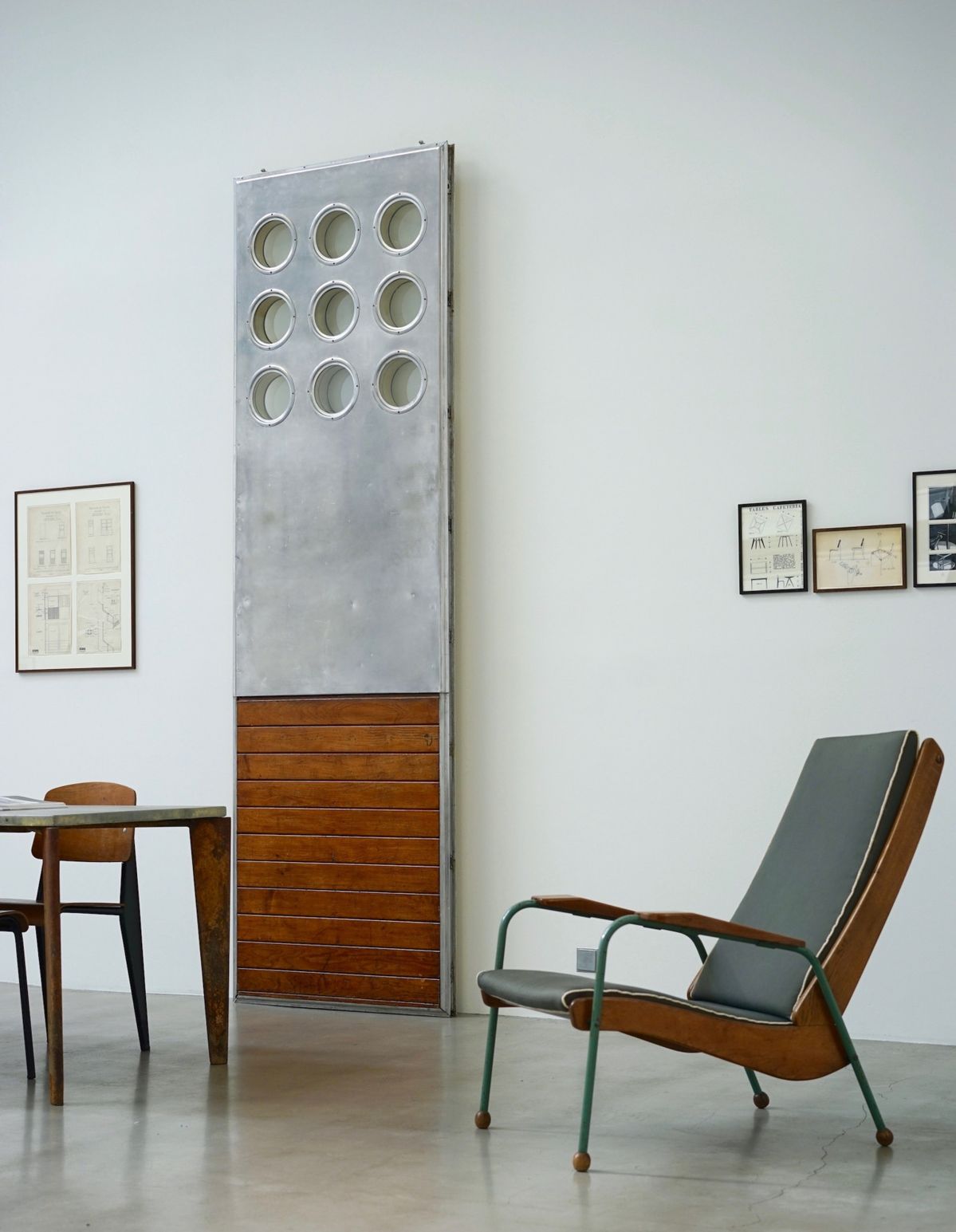
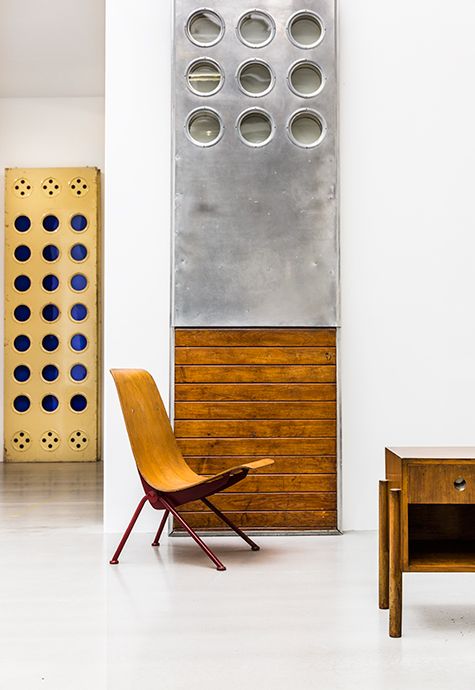
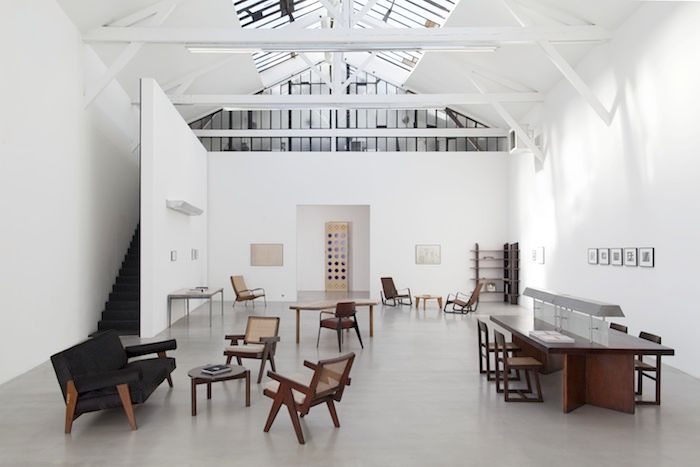
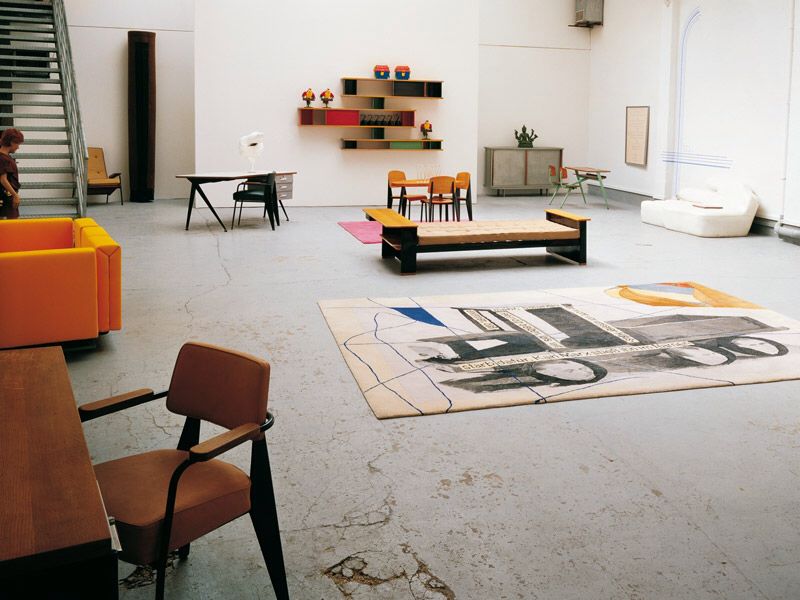
5 MIN · 5 OBJECTS IDENTIFIEDNinety-one, rue de Charonne — actually 5 rue des Taillandiers, its real address, but everyone says "Charonne" because that's the way you come in. A black metal door with no sign, a polished concrete floor that rings underfoot, and behind it, one of the three galleries in the world with authority over Jean Prouvé. If you want to learn to see a Prouvé — not just identify one, but see it — this is where you go. Twenty minutes by taxi from the Marais, and an education no one else will give you, not at the Pompidou, not at the Musée des Arts décoratifs, not in any school of architecture.
How Patrick Seguin built the authority
He started in 1989, in a small shop in the eleventh, on rue de Charonne as it happens. At the time nobody wanted post-war French furniture — Prouvé had died in 1984 in near indifference, his pieces sold poorly at the flea market, his demountable houses in the Vosges were being stripped for scrap. Seguin bought up everything he could find, sometimes by weight, sometimes in bulk. His wife and partner, Laurence Macarez, archived, restored, documented. Thirty years on, the ratio has flipped: his gallery sells a Standard chair at over twenty thousand euros, an Antony chair at five thousand, and he is the one who, single-handedly, built most of the contemporary Prouvé market — so much so that the designer's heirs work directly with him on authentication.
Today the gallery has three addresses (Paris, London's New Bond Street, New York's Madison Avenue) and shows Charlotte Perriand — whose market Seguin also established — Le Corbusier, Jean Royère, as well as Prouvé demountables restored one by one. Patrick Seguin has published fifteen monographs in thirty years, and the Prouvé catalogue raisonné brought out by the gallery has become the global academic reference, cited by every museum curator.
What you look at when you walk in
The demountables — those kit-of-parts houses Prouvé designed between 1944 and 1947 to rehouse the displaced of the Vosges, in response to a commission from the Ministry of Reconstruction — are sometimes reassembled in the gallery's back courtyard, sometimes laid out flat on the floor to show the ingenuity of the assembly system. That's where the journey begins. A 6×6, a 6×9, occasionally a Métropole cabin (1949 model, nearly impossible to find today). Inside, the original furniture: a Standard chair, a Compas desk, a Potence wall lamp — everything Prouvé had thought up for a complete habitat, mass-produced in two weeks.
The demountable is not a model, it's full-scale architecture you can walk through. That physical confrontation changes everything: in three minutes you understand why Prouvé is modern — not through style, but through the method of assembly that brings industry into the home without submitting to it.
Three signs that distinguish a genuine Prouvé
1. The fold
Prouvé invented a way of folding sheet steel that doubled as a leg and a structure. On the Standard and Antony chairs, the rear leg is not a tube: it's a plate folded at 90°, widened at the bottom to absorb the load on the back, narrowed at the top so as not to crowd the seat. A copy — and there are hundreds of them, Italian, Vietnamese, Chinese — uses a bent tube, faster to make, far less accurate to the eye. The test: hold the chair up to the light. On the original, the shadow of the rear leg forms a stretched V; on a copy, a straight line. Once you've seen it, you can't unsee it.
2. The riveting
Genuine pieces show their rivets. Prouvé refused to hide them — he believed manufacture should be legible, that technical honesty was part of the aesthetic. On a contemporary copy, fixings are welded and ground flush. If you see a hexagonal bolt exposed on the seat or the base, you are probably looking at an original. On Standards made after 1950, the rivets are a copper alloy that patinas to verdigris — a patina impossible to reproduce industrially.
3. The mark under the chair
Stamped "Atelier Jean Prouvé Maxéville" for pieces made between 1945 and 1953 in the Maxéville factory (outside Nancy). "Les Constructions de la Maxéville" later, after the break between Prouvé and the man who took over the factory. For sixties pieces, you sometimes find "Steph Simon" — the Paris editor who continued the catalogue after Maxéville closed. No stamp = serious doubt, unless the piece is documented by the gallery itself or by the catalogue raisonné.
The particular case of the Vitra editions
Since 2002, Vitra has officially produced Prouvé pieces in agreement with the rights holders. These reissues are made with the original tooling where possible, and marked "Vitra" under the seat. They are not counterfeits — they are legitimate reissues, sold for between twelve hundred and three thousand euros depending on the model. They don't appreciate on the secondary market, but they make it possible to bring a Prouvé into a reasonable budget. Patrick Seguin, notably, does not sell them — he sticks to the original.
What you can buy without being a millionaire
The gallery sells nothing under four thousand euros. But you can look, touch (carefully), open a catalogue, take notes. And that is the public service it provides: once you've held a real Antony chair — the unexpected weight, the rigidity of the sheet steel, the slimness of the plywood seat — you'll recognise copies at ten metres for the rest of your life. It is, no exaggeration, the best free education in post-war French design there is.
To buy authentic Prouvé under four thousand euros, three routes. Drouot — its 20th-century design sale every quarter, Antony between three and four thousand, Standard between five and eight, Potence lamp sometimes under two thousand. Vinterior and 1stDibs — occasionally, keep an eye on British sales where Prouvé is less identified, you can find a Compas side table at two thousand five hundred if you're patient. Cornette de Saint Cyr and Artcurial — themed sales twice a year, where downgraded lots sometimes pass through (mismatched chair, leg in need of restoration).
Practical
Galerie Patrick Seguin — 5 rue des Taillandiers, 75011 Paris (between Bastille and Ledru-Rollin). Tuesday to Saturday, 11am–7pm. Free entry, no appointment required. Best to give notice by email (info@patrickseguin.com) if you want to see a particular piece or consult an authentication file. The Prouvé catalogue raisonné is available for consultation on site, sold at two hundred and twenty euros a copy.
One photo, every piece identified.
Your room, a shop window, an inspiration screenshot: send the photo, we find the pieces and their alternatives at every price.
On iPhone, the app does the same from your camera.
The pieces, at your budget.
Every piece mentioned, with its alternatives — from vintage to dupe.



Gallery
4 images