Internet's Favourite Chair — May 2026: Marcel Breuer's Cesca
Three hundred and ninety-two thousand pins this month, seventy-eight posts a day. May 2026's chair is the Cesca — drawn in 1928, copied since 1932.
3 MIN · 5 OBJECTS IDENTIFIEDThree hundred and ninety-two thousand pins on Pinterest this month. Seventy-eight posts a day under #cesca on Instagram. And a revival that has not slowed in eighteen months. The most-saved chair of May 2026 is Marcel Breuer's Cesca — drawn in Dessau in 1928, copied since 1932.
The context
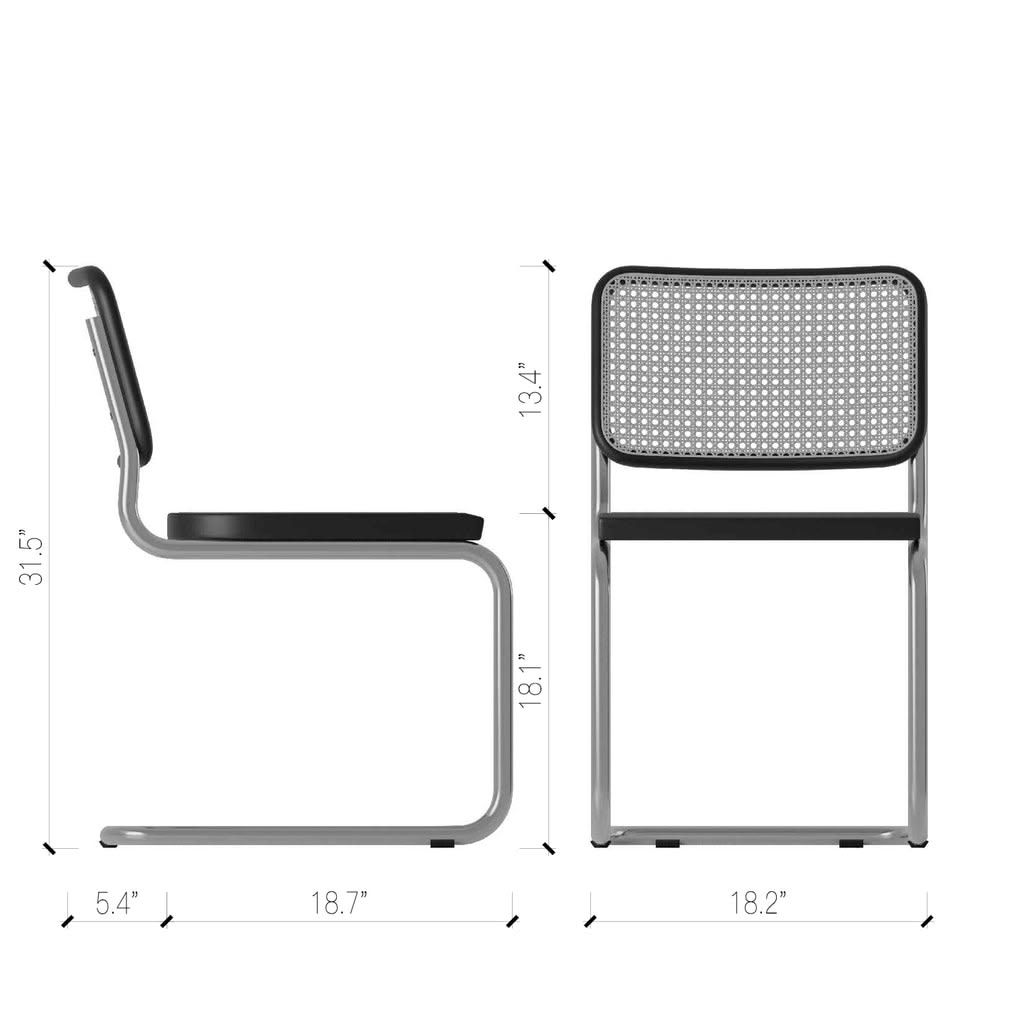
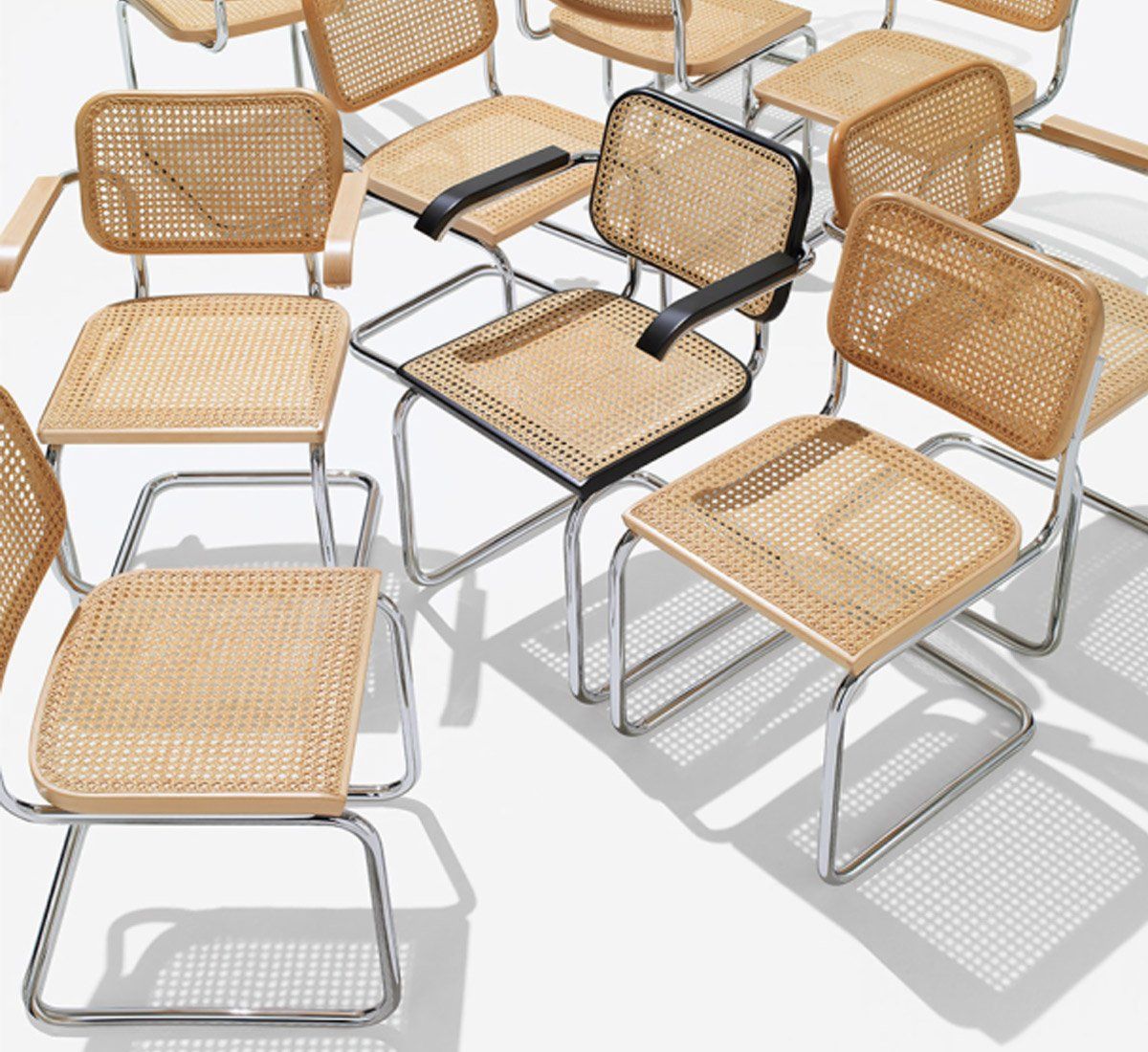
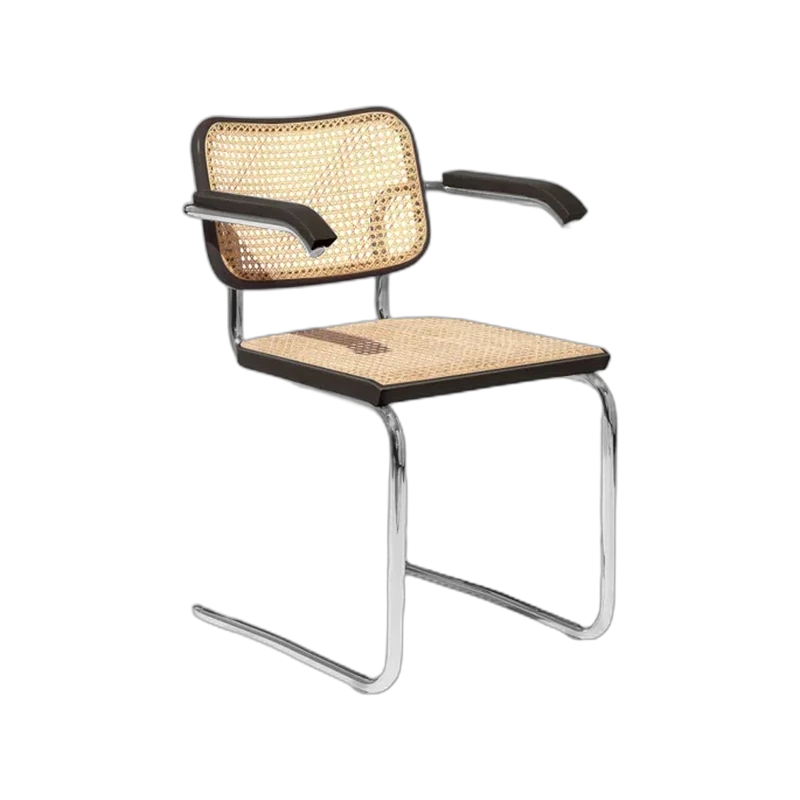
Marcel Breuer drew it at the Bauhaus at twenty-six. The first cantilever chair (no back legs) in chromed steel tube, with a steam-bent beech seat and back covered in hand-woven Vienna cane. A formal and industrial revolution: the chair stands on the sole tension of the bent tube, which was mathematically new.
The patent was contested for thirty years between Breuer, the Dutchman Mart Stam (who had filed a similar cantilever patent in 1926) and the German lawyer Anton Lorenz. The Berlin court ruled in 1962: Breuer kept authorship of the design, Stam that of the technical principle. The Cesca is today officially produced by two houses.
How to spot it
The real one: Knoll or Thonet
Knoll holds the rights in the United States, Thonet in Europe. Continuous chromed steel tube (never welded at the front), hand-woven Vienna cane, seat in solid steam-bent beech. "Knoll Studio" stamp engraved on the outer tube of the frame, or Thonet mark on the back of the backrest. Count 1,280 euros at Thonet, 1,480 at Knoll. Ten-year warranty.
Vintage (1932–1980)
Early Gavina versions (Italy, 1962–1972, before the Knoll takeover), Stendig (US, 1971–1990), or German editions from the 60s and 70s. Look for the patina on the chrome — bluish grey rather than bright silver — cane that has yellowed slightly, and beech worn by use. Count 400 to 900 euros in good condition at Selency, Proantic, or eBay Germany.
The dupe
Maisons du Monde "Pomeria": 89 euros. Tikamoon "Frida": 220 euros. AliExpress under "Cesca-style": 38 euros. No stamp, machine-woven synthetic cane, thinner hollow tube. In an Instagram picture, indistinguishable. In use, the chair warps within two years — the tube gives way under the weight.
Why now
Four factors are fuelling the revival. First, the return of cane, seen as early as 2024 in the windows of Hermès, Saint Laurent and Totême — a fashion signal that always trickles down to interiors with a two-year lag. Then, the saturation of japandi and its appetite for visible structure (the metal tube, the right angle). The Cesca offers that grammar without falling into pure, austere Bauhaus.
Third factor: adaptability. The Cesca works everywhere — dining room, study, hallway, dressing table. Fourth: the entry price. At 89 euros in the Maisons du Monde dupe, it has become the market's IKEA-killer chair — affordable for an entire flat without blowing the budget.
How to use it
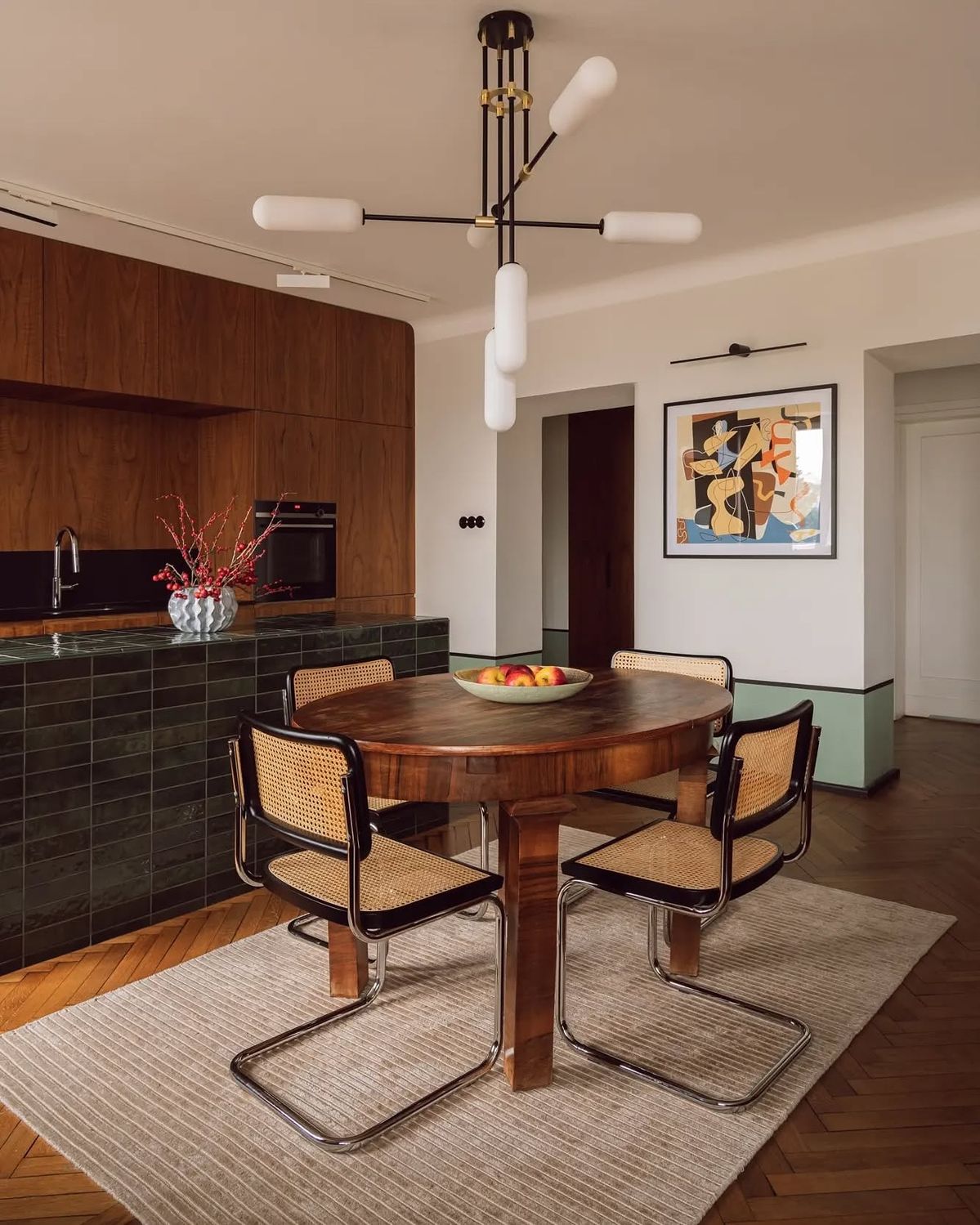
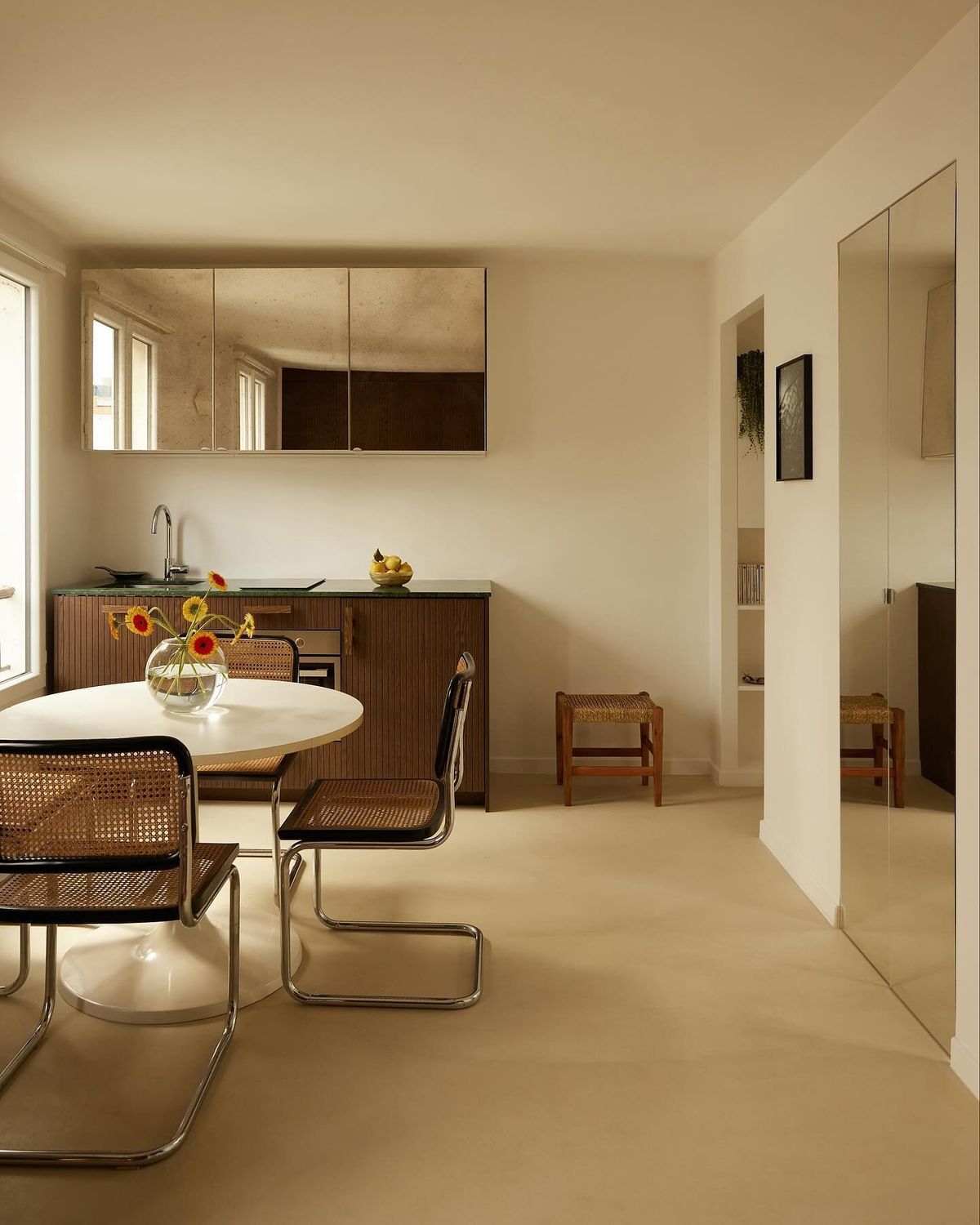
In a set of four around a raw oak dining table: instant Bauhaus, no austerity. As a single desk chair: a blend of professionalism and design, better than a black ergonomic seat. In a pair in a hallway, with cane tinted black or gold: breaks the "seen it everywhere" feel while keeping the iconic silhouette.
Avoid: the Cesca in lacquered white (eighties kitsch), with white plastic cane (dead on arrival in daily use), or around a glass table (too seventies dental clinic).
Practical
Knoll Studio — Knoll boutique Paris, 268 boulevard Saint-Germain, 75007. Thonet — distributed via Silvera, ECC, Made in Design. Vintage — Selency, Proantic, eBay.de under "Cesca Marcel Breuer". Always check the stamps before buying.
One photo, every piece identified.
Your room, a shop window, an inspiration screenshot: send the photo, we find the pieces and their alternatives at every price.
On iPhone, the app does the same from your camera.
The pieces, at your budget.
Every piece mentioned, with its alternatives — from vintage to dupe.


Where to find Maisons du Monde
At the house itself, or at the retailer that stocks it.
Gallery
4 images