A bookseller from rue de Bretagne, in ten objects
Thirty-five square metres, no big-name brands, and three Mathieu Matégot pieces found at Emmaüs.
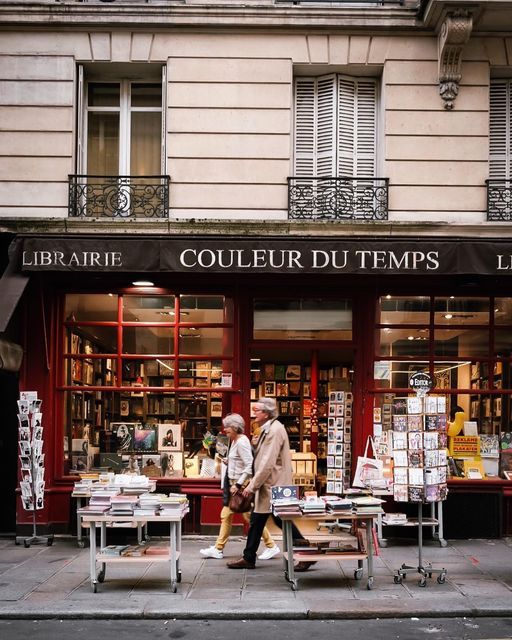
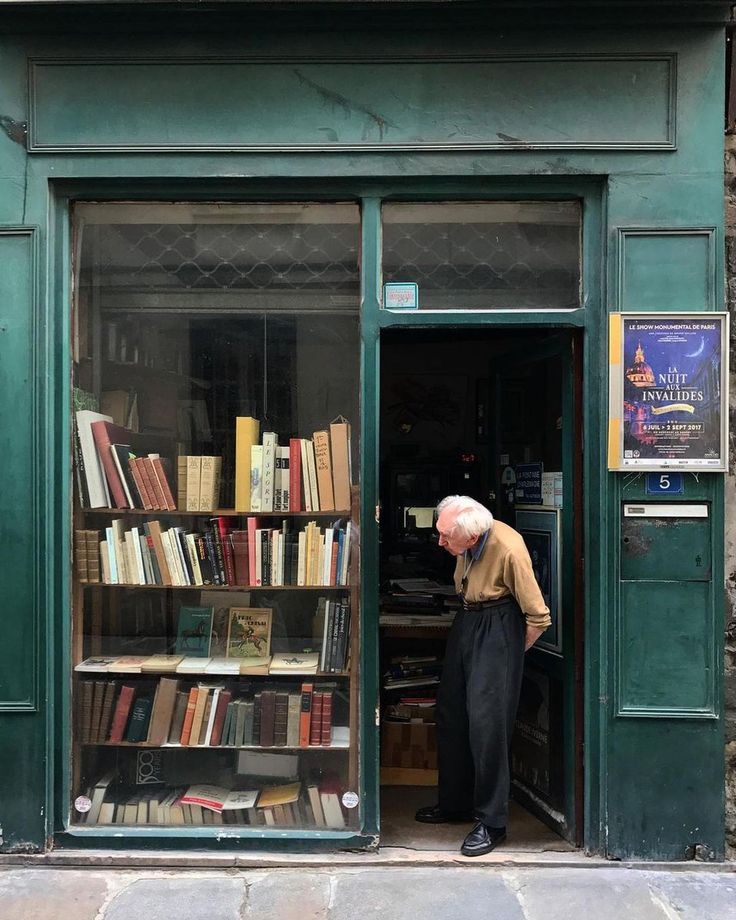
6 MIN · 5 OBJECTS IDENTIFIEDHer name is Margot, she is thirty-two, she has run a bookshop on rue Charlot for five years — one of those small independent bookshops in the northern Marais that survive on loyalty rather than passing trade — and she lives two streets away, in thirty-five square metres on the fifth floor with no lift, under a zinc roof that heats up in summer and creaks in winter. Her main room, around twenty square metres in an L-shape under the eaves, is one of the most precisely judged we have seen this year. No Liaigre, no AMPM, not a single recognisable brand — and yet you feel, immediately, that you have come to the right address. Here, in ten objects, is what makes it up.
1. A bookshelf running across three walls, made by a carpenter from the eleventh
Raw pine, neither stained nor varnished, fixed to the wall with simple invisible brackets. Six hundred euros at the time (2021), for about twelve linear metres of shelving. She says she paid a third of what Made.com would have charged her for a piece she would have thrown out within two years. The carpenter, whom she found through a notice from the building manager, came back twice to add shelves as the library grew. Today it is overflowing — and that is precisely what she wanted.
2. A folding table in perforated metal, signed Mathieu Matégot
Found at Emmaüs Charenton for forty-five euros, one autumn Saturday morning in 2022. She thought it was a copy — the object was dusty, the label gone. It was the original, nineteen-fifties, never restored, just a little rust on the legs. She uses it as an occasional desk (she answers the bookshop's emails there in the morning) and as a dining table for two. Current value at Drouot: between twelve hundred and two thousand euros depending on condition.
3. A Matégot Nagasaki chair, from the same Emmaüs, sold with the table
Recognisable by its Rigitulle weave, that perforated folded-sheet mesh Matégot patented in 1952. Fifteen euros. She says the woman at the till thought it was a poor-quality garden object to be cleared out. She did not contradict her. Today, an original Nagasaki in good condition fetches over fifteen hundred euros at Parisian design dealers — and circles around twenty-two hundred at Artcurial sales.
4. A third Matégot — a wall-mounted magazine rack
Bought three years later from a dealer at the marché Vernaison (Saint-Ouen), who, this time, knew what he was selling. She paid four hundred and twenty euros, after half an hour of haggling. It joined the other two in the same flat, by chance and by coherence. Three Matégots in twenty square metres: without planning it, she has assembled a miniature specialist's cabinet. She says that at this stage, she hesitates to complete the set, for fear of slipping into pastiche.
5. A two-seater sofa in washed ecru linen
No brand. A seamstress in Belleville, recommended by a friend who is a decorator. Five hundred euros, removable cover, machine-washable at thirty degrees. She says she had it made because no sofa on the market was slim enough for her entrance corridor — one metre forty of available width, sloping ceiling. The frame is solid pine, the seat high-density foam, the padding recycled feathers. Six years on, the cover has yellowed a little: she loves it all the more.
6. A Berber rug on the floor, beige on ecru
Brought back from a trip to Marrakech in 2022, but not picked up in a souk — bought directly from the Tighmert cooperative, near Guelmim (southern Morocco), where she went by overnight bus after finding the address on Instagram. Hand-woven, undyed wool, around two metres fifty by one metre eighty. She paid three hundred and twenty euros on the spot — French equivalent: between twelve hundred and two thousand, depending on the dealer. She says it is the only purchase in the flat that has gained in value.
7. An original Anglepoise desk lamp, in brushed aluminium
Bought in London in a stationery shop that was closing in 2019 — the kind still hanging on, in Bloomsbury, near the British Museum. It worked, the cable was original (black braided fabric). She brought it back by train, in a backpack that would not close. She bent the base slightly on the way — she says it suits her, and that an Anglepoise without a dent is not really an Anglepoise. Model 1227, designed in 1934 by George Carwardine for Herbert Terry & Sons. Current value of a period 1227 in good condition: between four hundred and seven hundred euros.
8. A ceramic from Sète, set on the floor beside the sofa
Earth brown, matte glaze, around forty centimetres tall, signed by a potter she came across at the market in the Halles de Sète and who works in his studio near Mont Saint-Clair. She uses it as a hollow umbrella stand — a prosaic function for a fine object. It is, she says, a rule she imposes on herself: every decorative object must serve a purpose, or it ends up becoming magazine furniture.
9. A photographic print by Sabine Weiss, simply framed
Found at Drouot in 2023, in a sale with only three bidders that day (a Wednesday in July, the worst possible date for a sale). Period print, one hundred and twenty by ninety millimetres, signed on the back, dated 1955. One hundred and eighty euros on the hammer, two hundred and forty with fees. She had it framed by a framer on rue Beautreillis, no passe-partout, in a plain mahogany moulding. She says she long thought she could never afford a real auteur photograph. She was wrong — and she says that today one Drouot sale a month is enough to build a collection in five years.
10. A stack of books, laid flat on the mezzanine
Not a library spilling over — a deliberate pile. Seven books she rereads. Les choses by Perec on top, Just Kids by Patti Smith at the bottom, and between the two Les vies minuscules by Pierre Michon, L'Amant by Duras, Cocteau's diary, Le Trésor des humbles by Maeterlinck, and a battered Sebald. It is, she says, her signature piece — the one she points to when a visitor asks who she really is.
Margot's method, in three principles
After following her over two Saturdays of flea-market rounds, we identified three rules she has set for herself. First rule: never buy what you are looking for. It is by hunting for a vase that you miss the chair. She walks into a brocante without a list. Second rule: know one designer in depth, not ten on the surface. She can spot a Matégot at ten metres under the dust, and that is what gives her the edge over Sunday hunters. Third rule: pay cash, leave with the object. No transfer, no hold, no "I'll come back tomorrow" — whoever comes back tomorrow goes home empty-handed.
What this flat taught us
You can compose an interior of character without living in Saint-Germain and without buying at Liaigre. Margot has two things money does not give you: an eye, and patience. Three Matégots in five years means three Emmaüs visits a month, hours of scrolling Le Bon Coin, and precise knowledge of a single designer.
The lesson is less romantic than it sounds: a well-judged interior is not a budget, it is a subject. Margot chose hers — Matégot, raw linen, potter's ceramic, humanist photography — and her whole flat tells the same story. What comes out of it is less a décor than a portrait.
One photo, every piece identified.
Your room, a shop window, an inspiration screenshot: send the photo, we find the pieces and their alternatives at every price.
On iPhone, the app does the same from your camera.
The pieces, at your budget.
Every piece mentioned, with its alternatives — from vintage to dupe.


Gallery
6 images