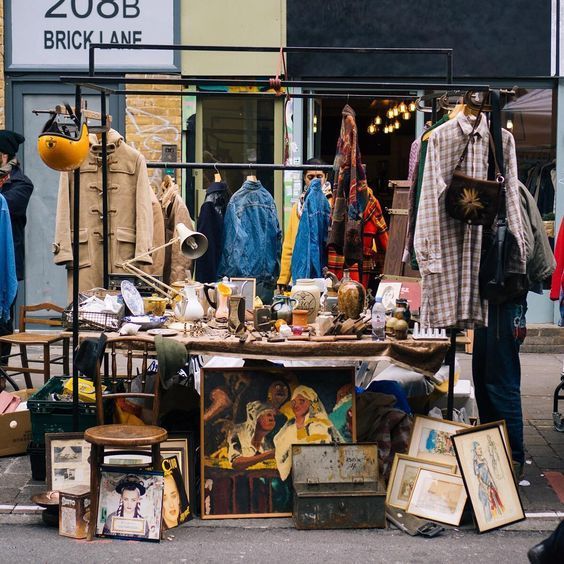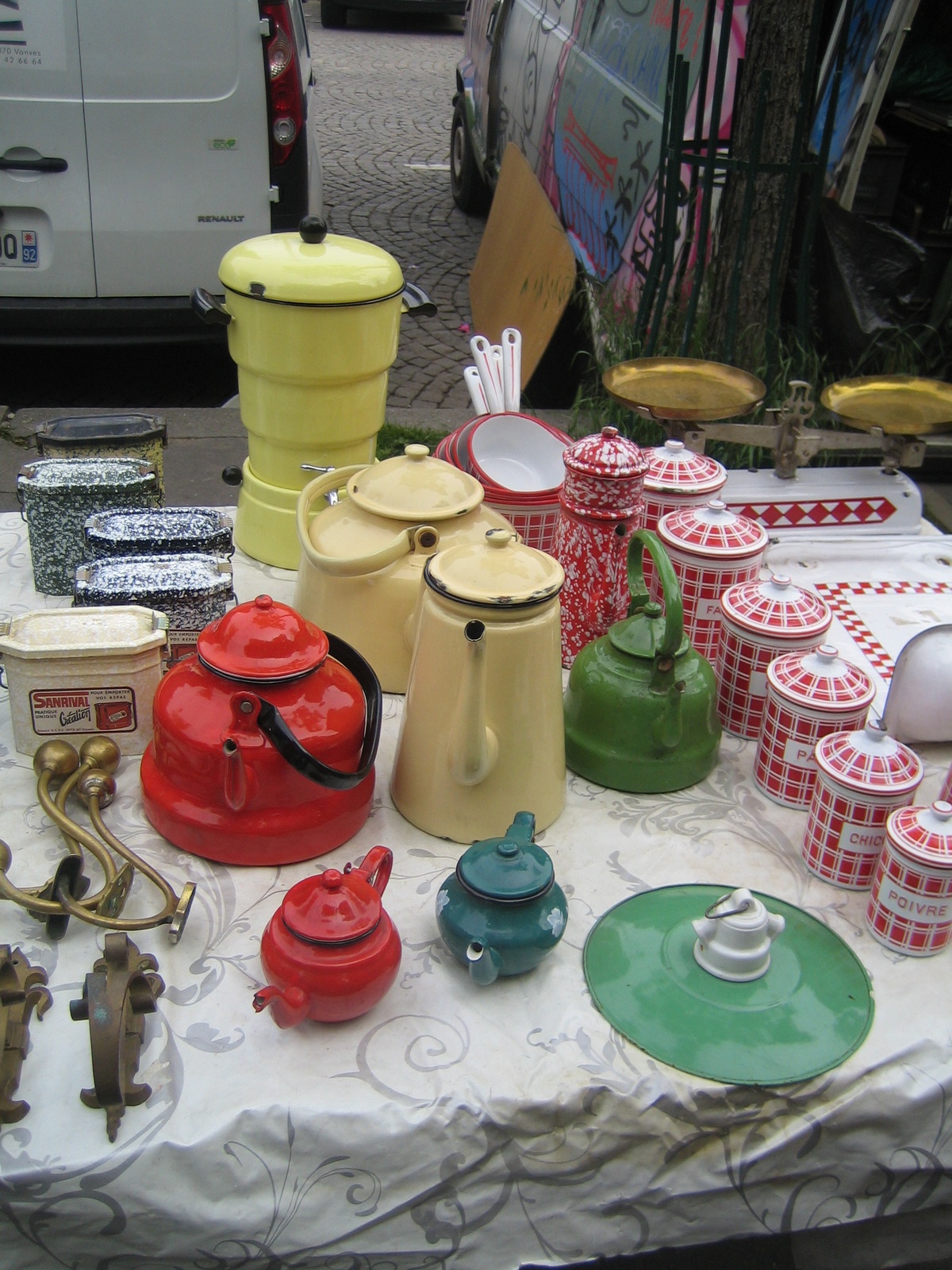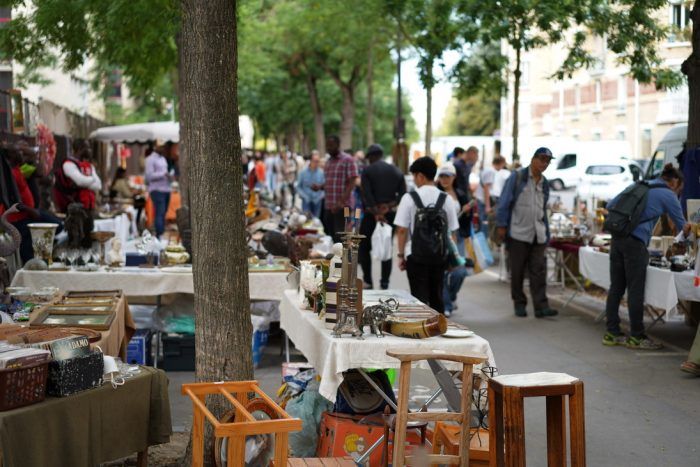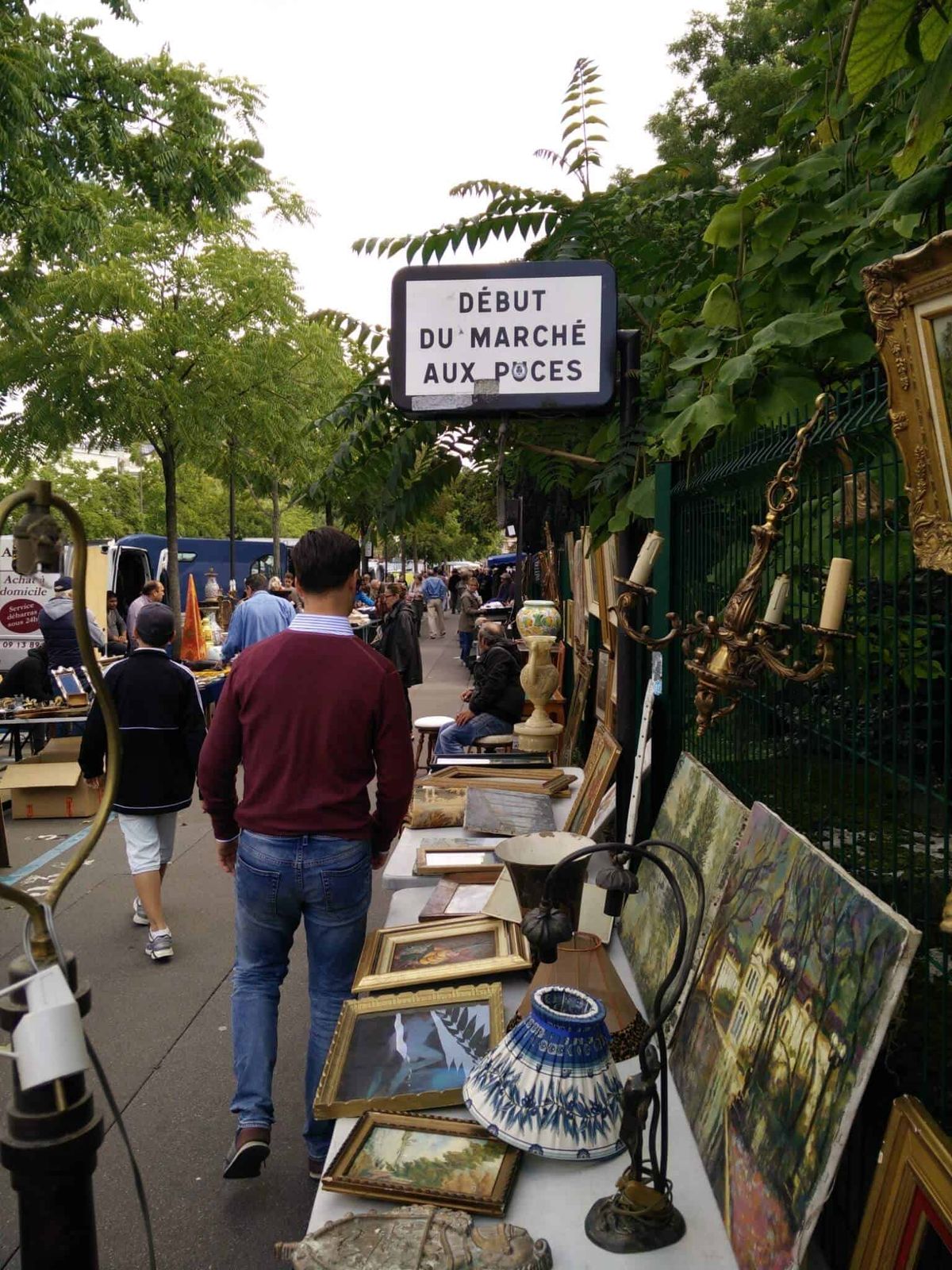
Vanves flea market, a Sunday morning
Five hundred sellers, two boulevards, six hours on foot. How to hunt without getting fleeced.
5 MIN · 5 OBJECTS IDENTIFIEDSeven in the morning, avenue Marc Sangnier. The first dealers are still unpacking — wooden crates, old army blankets, lamps wrapped in yellowed newsprint. At this hour the light is raw, coffee is taken standing at the corner of rue Maurice Arnoux, and the best pieces vanish within fifteen minutes — often less. This is the Vanves flea market, where the finest interiors finds of Parisian Sundays change hands. Not the most expensive, not the rarest — the most intelligent. A short guide for those who want to get started without being flattened.
Why Vanves rather than Saint-Ouen
Saint-Ouen has become a tourist institution, with its coachloads of Koreans, its gallerists in tailored suits, its prices aligned on 1stDibs. Vanves has remained a market for hunters, a market where you still carry a jute sack and where the sellers are on first-name terms within three minutes. Five hundred stalls strung along avenue Marc Sangnier and avenue Georges Lafenestre, from Saturday 7am to Sunday 2pm — roughly two kilometres of stands on foot (count three hours to do it all, six to do it properly). Prices run thirty to fifty per cent below Saint-Ouen for equivalent pieces, and most sellers are private individuals or part-timers topping up their income, not licensed gallerists. The upshot: less expertise, therefore more opportunities for those who know how to look.
Three rules to avoid getting it wrong
1. Arrive at 7am, not 10am
The hierarchy of hunters at Vanves is unforgiving. From 7am to 8.30am: the professionals are buying — Marais gallerists, Saint-Ouen dealers, decorators on a precise brief. They carry head torches, loupes, notebooks. They leave with what they will resell for two to five times the price within a fortnight. From 8.30am to 10am: the second wave — sharp amateur collectors, knowledgeable private buyers. After 10am: the strollers pick over what is left. To stand a chance of catching an undervalued Matégot, a Royère or a Pierre Guariche, you need to arrive before 8am, ideally at 7am sharp. Dealers begin unpacking from 6.30am but sell nothing before the official kick-off.
2. Cash only, and always negotiate
Marked prices are systematically inflated by 20 to 40 per cent, sometimes more if you look like a well-off Parisian (Garrett Leight glasses, independent-bookshop tote bag: the profile is known). Haggling is not rude — it is expected, even required. A simple rule: offer half, settle on three quarters. If you are told "that's my price" without hesitation, it is probably true and the piece is rare. If a thirty per cent discount comes immediately, that is what it was worth in the first place. Cash is essential for anything under two hundred euros: card readers are scarce, and using PayPal Friends & Family requires mutual trust built over three visits, not five minutes.
3. Ask where the piece comes from
A good dealer knows where his piece comes from — an estate in Bourges, a car-boot sale in Tours, a lot bought at Drouot, the clear-out of an antiques shop closing down. A trader who dodges the question is often selling fakes or restored items passed off as original. The concrete question to ask: "have you had it long?". If he says "no, it just came in", press for the immediate provenance. At Vanves, traceability is worth almost as much as the piece itself — and a seller who tells the whole story is almost always reliable.
The best stands in 2026
Allée Sangnier, even-numbered side, 4th stand past the café. Madame Lacroix, seventy-two, has been selling for thirty years: ceramics from the Manufacture de Sèvres and Vallauris pieces from the 1950s (Capron, Picault, sometimes an Innocenti). Honest, fair prices, never any bluff, always a story. She will bring the price down herself if she senses you are hesitating on budget.
Allée Lafenestre, far end of the market, odd-numbered side. A bearded man in a sailor's cap, dealing in Scandinavian furniture (Wegner chairs, Danish sideboards by Arne Vodder, Henningsen lamps). He knows what he is selling, so the prices are fair — a rarity at Vanves. Reckon on one thousand five hundred for an original CH24 chair, nine hundred for a period Korean copy. Ask him to show you the stamp.
At the crossing of the two avenues, under the plane tree. A stand of industrial lighting (old Jielde workshop lamps, enamelled Sammode ceiling fittings, stage spotlights) run by a former cinema electrician. Original patina, never refurbished, and he guarantees the wiring — rare at Vanves, where half the lamps on sale no longer light up.
Allée Sangnier, middle of the market, antique textiles stand. Madame Sayed sells Berber cloths, Afghan kilims, Uzbek suzanis. Her reserve is in the basement of a building on the next street — ask to see "the back pieces" if she trusts you, that is where the best lots are kept.
Three classic traps to avoid
The fake folded-sheet Prouvé. If you spot a Standard chair at three hundred euros, it is a Vietnamese copy — the supply chain is well known, the fakes have been arriving at Vanves in lots of twenty since 2018. A real Standard never drops below twelve hundred euros, even in poor condition. Fake patinated brass. A brass object that smells of nitric acid was aged chemically in forty-eight hours, not over forty years. The Berber rug that is too new. A genuine old Berber rug shows irregular weave, visible knots on the reverse, stray fibres. A recent machine-made rug, imported from industrial Morocco, is too regular — the back will tell you in three seconds.
Where to end the morning
At Le Petit Vanves, place de la Mairie, for a café crème and an œuf mayonnaise at the counter. Or, for those who have truly found something and want to celebrate, at the Rotonde de la Muette (twenty minutes by taxi, in the sixteenth) for lunch at an outside table. For tighter budgets, the baker Mauboussin on the corner of rue Castagnary makes an olive fougasse to eat standing up, walking towards the métro, the rug on your shoulder.
Practical
Marché de Vanves — avenue Marc Sangnier and avenue Georges Lafenestre, 75014. Saturday-Sunday 7am-2pm (the real hunters arrive at 7am sharp). Métro Porte de Vanves (line 13). Official map on pucesdevanves.fr. No market in very bad weather: if heavy rain is forecast, check the night before on the Instagram account @marche.de.vanves, which announces cancellations at midnight.
One photo, every piece identified.
Your room, a shop window, an inspiration screenshot: send the photo, we find the pieces and their alternatives at every price.
On iPhone, the app does the same from your camera.
The pieces, at your budget.
Every piece mentioned, with its alternatives — from vintage to dupe.


Gallery
4 images