Velvet, Leather, Rattan, Travertine: What Each Material Does to a Room
A guide to materials in interiors: how they age, what they pair with, and which to choose for real use.
2 MIN · 5 OBJECTS IDENTIFIEDA successful room is decided less by colour than by material: it is material that catches the light, carries time and makes you want to touch. The guiding principle fits in a single sentence — mix at least three materials per room, one of which ages well.
Velvet: depth
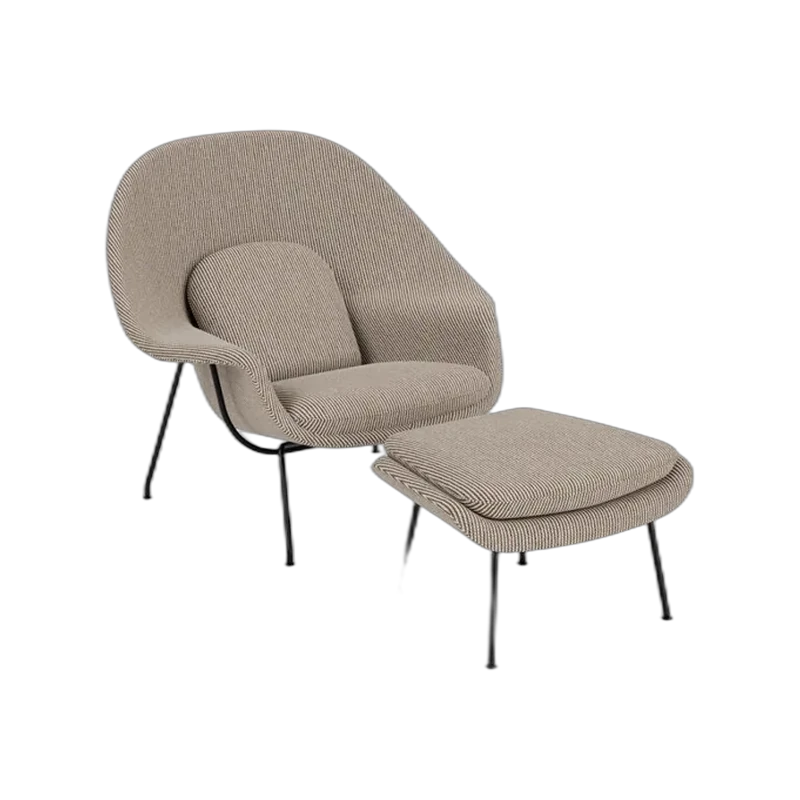
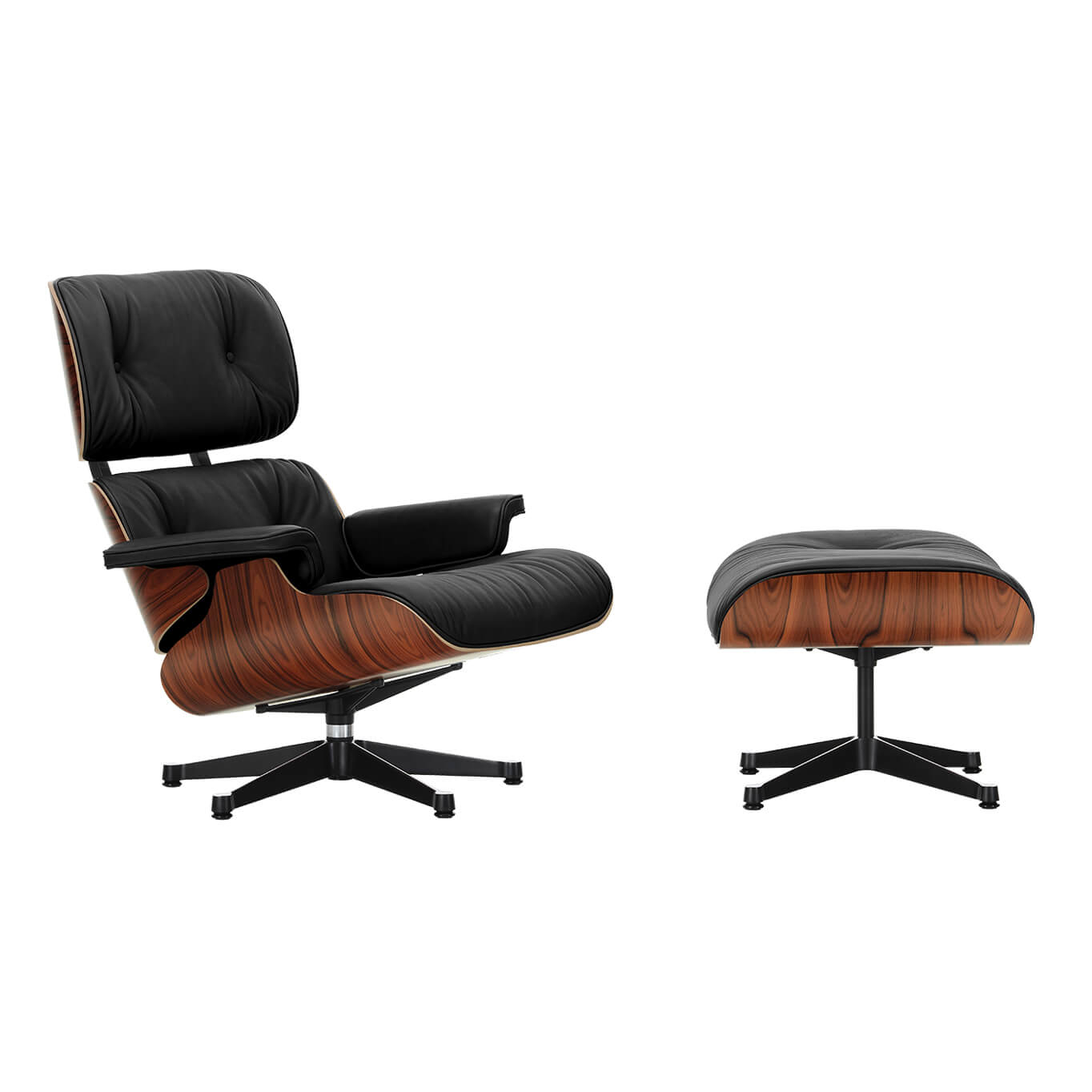
Velvet shifts colour with the angle and the stroke — it turns any shade into depth. Hard-wearing in its ribbed version, more delicate in short-pile, it likes generous shapes: see our selections of sofas and velvet armchairs.
Leather: patina
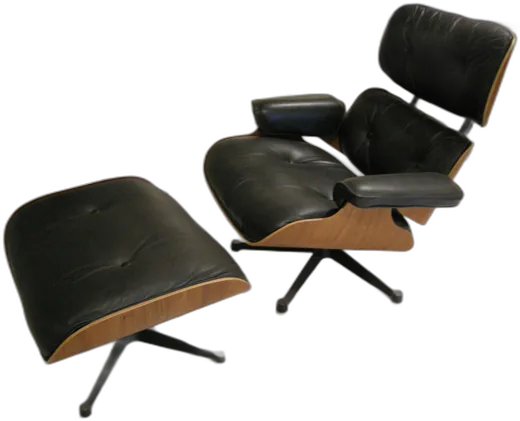
The only material that grows more beautiful as it wears. Insist on full-grain (bonded leather cracks within a few years); cognac ages better than black, which turns green. The vintage leather armchair is often the best deal on the market: the patina is already done, the price halved.
Rattan and cane: lightness
They bring air into dense rooms and something natural into graphic interiors. As an armchair, a pendant light or a headboard, a single woven piece is enough to loosen up a sitting room that takes itself too seriously. It dreads the dryness of central heating — a light mist now and then.
Wood: solid, veneer, and the rest
Solid wood can be sanded and passes down the generations — see the wooden dining tables. Veneer (a leaf of fine wood over a panel) can be superb: Danish teak sideboards are proof. What ages badly is faux-wood laminate. A simple rule: two wood species per room at most, one light, one dark.
Travertine and marble: minerality
Travertine — a Roman stone, matte, veined with hollows — has replaced polished marble in current taste: see the travertine coffee table. Porous, it stains (oil, wine): letting it patinate is part of the deal. White marble remains the ally of classic kitchens and Saarinen tabletops.
Brass, chrome, steel: the metals
Brass warms (lamps, handles, gilded mirrors), chrome cools and recalls the 1970s and 80s, black steel gives structure. Same rule as wood: two metals per room, not three.
Finding the material for real
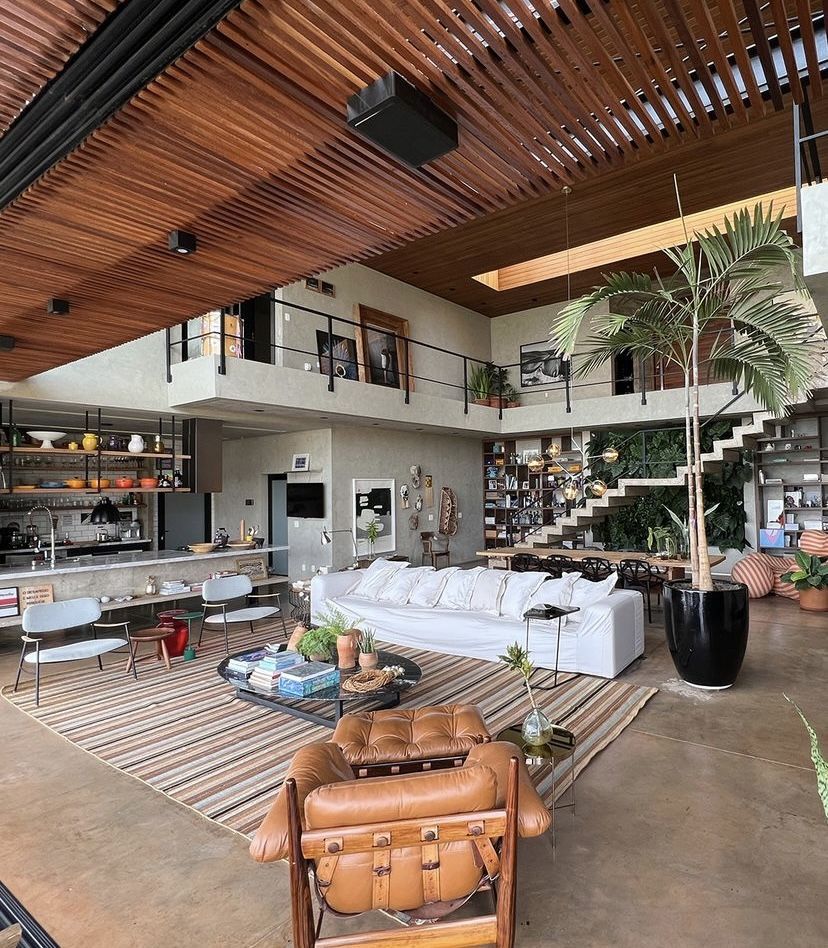
Every Beyit selection pairs a piece of furniture with a material, from premium to affordable. And if a material intrigues you in a photo, scan it: Beyit identifies the piece and its alternatives.
One photo, every piece identified.
Your room, a shop window, an inspiration screenshot: send the photo, we find the pieces and their alternatives at every price.
On iPhone, the app does the same from your camera.
The pieces, at your budget.
Every piece mentioned, with its alternatives — from vintage to dupe.