Mixing Materials & Textures — Why Interiors Copy Fashion
Fashion's four-material rule applied to interiors. Three combinations that work, three mistakes that kill a mix, and a fashion-to-decor lag shrinking from six seasons to two.
3 MIN · 5 OBJECTS IDENTIFIEDSaint Laurent spring-summer 2026: cotton gabardine trousers, lambskin top, suede boots, horsehair bag. Four materials, four touches, one single look. Five months later, the same mix arrives in interiors: cream bouclé, veined marble, cognac leather, heavy linen. Interiors copy fashion two seasons late — and 2026 marks the moment that lag becomes invisible.
Fashion's four-material rule
Fashion stylists have known the rule for twenty years: a successful look mixes between three and five different textures, never fewer, never more. Fewer than three = monotonous, the eye slides off. More than five = chaotic, the eye gets lost. Four = structural chic.
Saint Laurent, The Row, Bottega Veneta apply the rule to the everyday look. Phoebe Philo codified it at Céline in the 2010s. Today it has become the silent grammar of contemporary fashion taste — the rule that separates the considered look from the accidental one.
The same rule, applied to interiors
A successful sitting room in 2026 mixes four principal materials, never fewer. Here are the three combinations that work — all seen in the Yovanovitch, Studio KO, Apparatus and Studio Giancarlo Valle interiors of the year.
Combination 1: Tactile calm
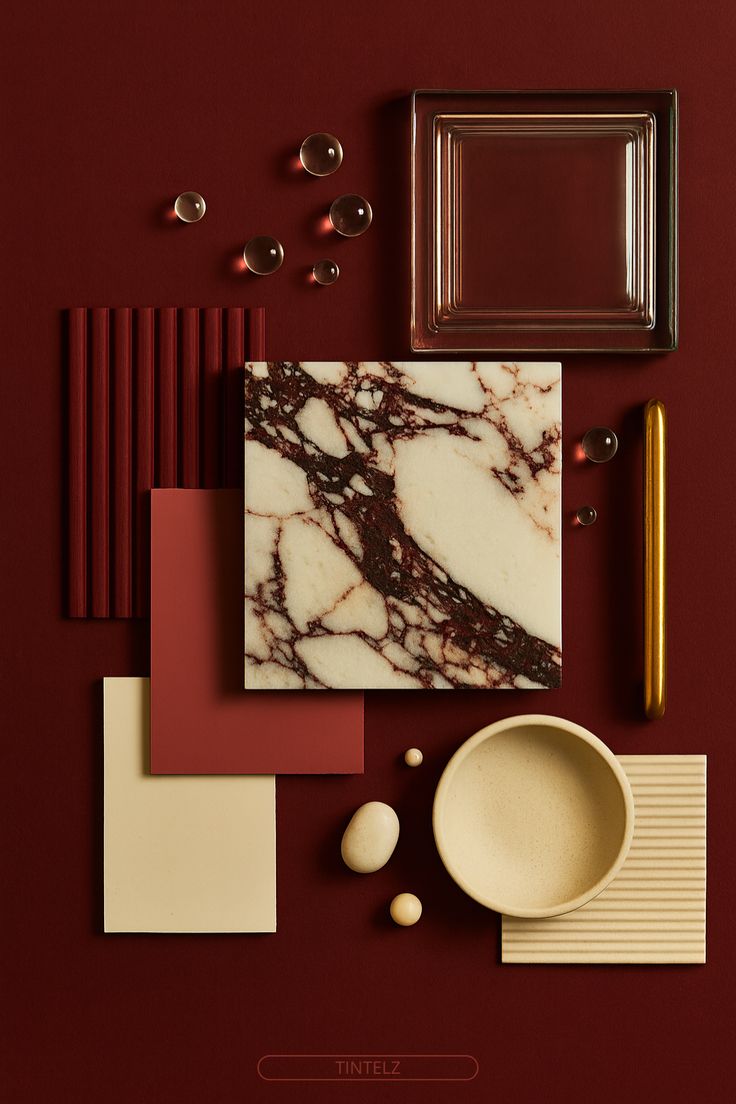
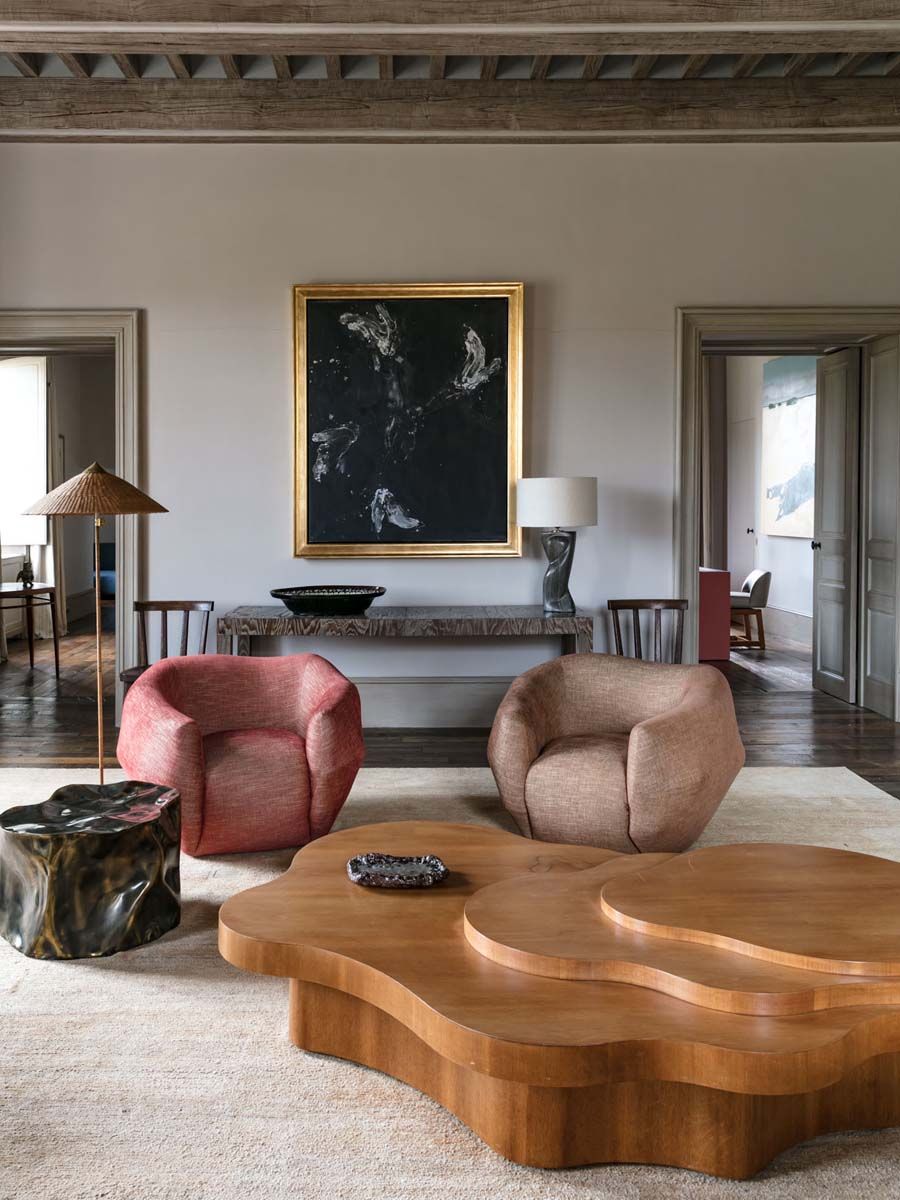
Cream bouclé (sofa), veined marble (coffee table), patinated cognac leather (armchair), heavy linen (curtains). All warm, all matt, all tactile. Not a single gloss, not a single transparency. The effect is enveloping, sophisticated, timeless. The dominant grammar of 2020-2024 interiors — still valid, but now read as "classic" rather than "avant-garde".
Combination 2: Italian contrast
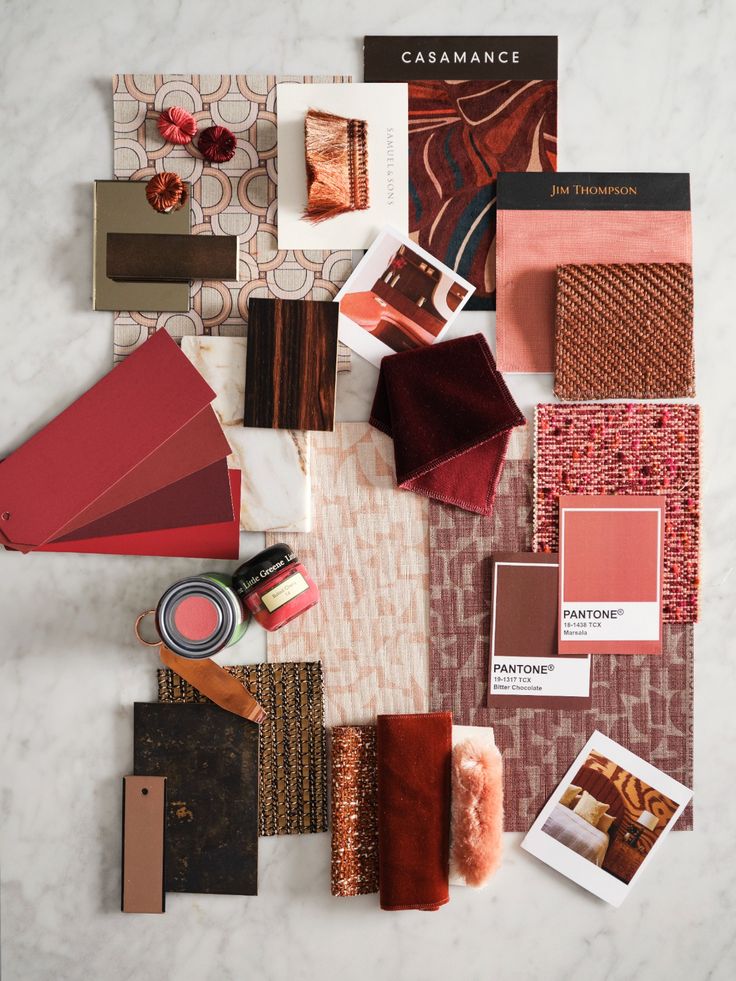
Saturated velvet (sofa in burgundy or deep green), polished chrome (lamps, frames), smoked glass (coffee tables, vitrines), glossy exotic wood (rosewood, ebony). A 1970s Italian mix. Each material is doing something: velvet absorbs, chrome reflects, glass passes through, wood anchors. The rising grammar of 2026.
Combination 3: Mediterranean brutalism
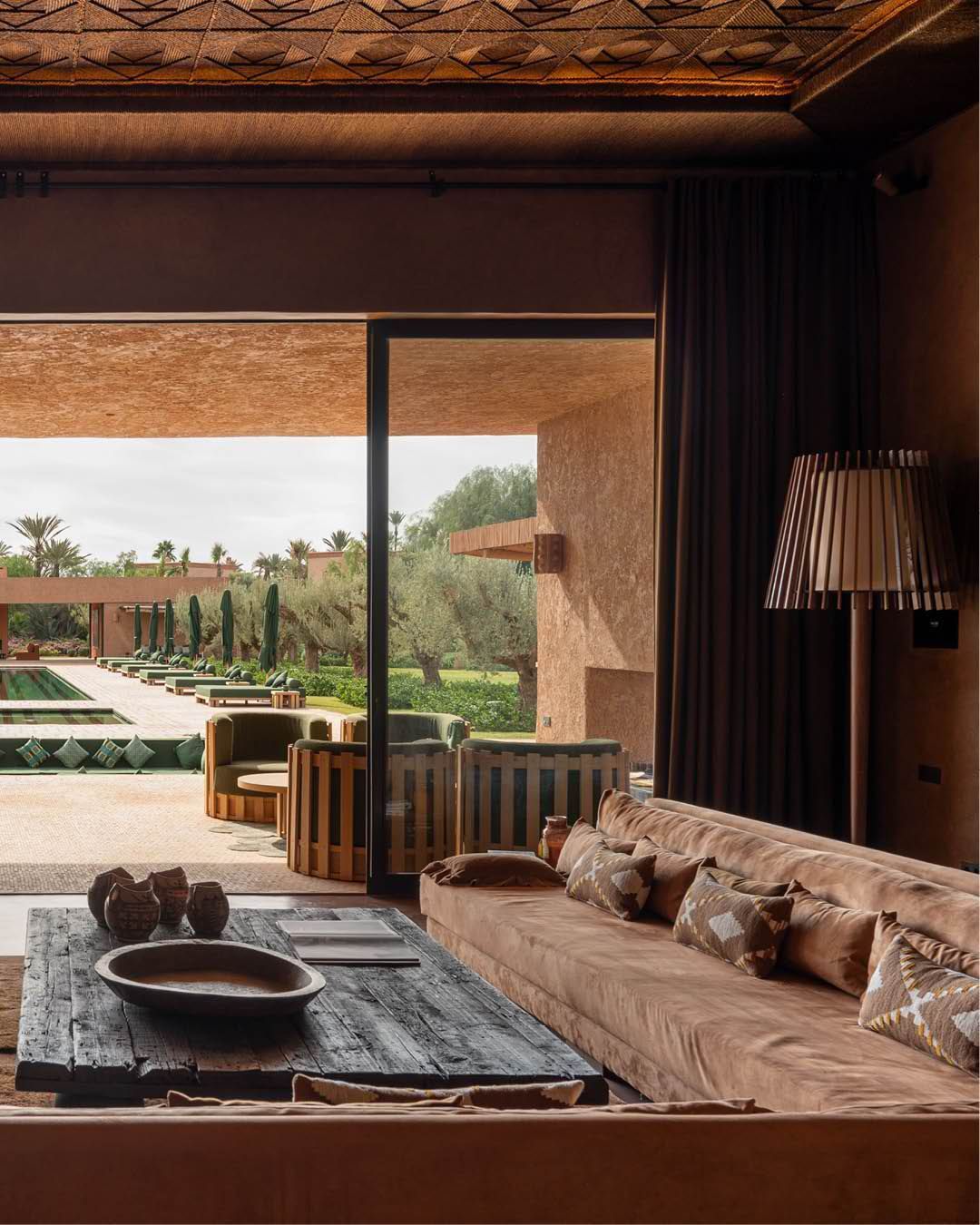
Polished concrete (floors, worktops), thick ecru linen (curtains, throws), raw wood (beams, sculpted furniture), matt ceramic (tableware, lamps, vases). A reference to Studio KO and Vincent Van Duysen. Four archaic materials, no chrome, no glass. The effect: "Mediterranean monastery". The grammar at the other end of the spectrum.
The mistakes that kill a mix
Mistake 1: The single-material mix
Four pieces of furniture in wood = dead. Four pieces in velvet = heavy. Four different textiles = bland. The rule is four different materials, not four variations of the same one. The brain does not read the difference between oak / walnut / beech / ash — it reads "all wood".
Mistake 2: The mix without hierarchy
Giving the four materials equal weight (25/25/25/25%) creates visual chaos. The rule: 50% for the dominant material, 30% for the second, 15% and 5% for the remaining two. Bouclé dominates, marble signs, leather anchors, linen breathes. Without hierarchy, every material cancels out the others.
Mistake 3: Mixing temperatures
A "warm" material (bouclé, velvet, patinated wood) set against a "cold" one (chrome, glass, pure white marble) creates tension. That is not always bad — the 1970s Italians embraced it — but when it is poorly handled, the eye no longer knows where to settle. The safety rule: pick one dominant temperature (warm or cold) and introduce the other only in touches (5-15% max).
The fashion-interiors parallel is accelerating
Before 2020, interiors copied fashion with a four-to-six-season lag. Today the lag has fallen to one or two seasons. Phoebe Philo launches her furniture collection six months after her clothing line. The Row shows its table in Milan in September, its sofa in April. Hermès Maison now synchronises its collections with Hermès ready-to-wear (spring and autumn). The border is dissolving.
For anyone watching fashion attentively: you can now predict interiors six to twelve months in advance. Saturated velvet at Bottega Veneta autumn 2025 = velvet sofas at every editor of Salone del Mobile Milan in April 2026. Horsehair at Saint Laurent = horsehair armchairs at Sancal six months later. The walnut-stain brown at Hermès spring 2026 = the wall colour of autumn.
One photo, every piece identified.
Your room, a shop window, an inspiration screenshot: send the photo, we find the pieces and their alternatives at every price.
On iPhone, the app does the same from your camera.
The pieces, at your budget.
Every piece mentioned, with its alternatives — from vintage to dupe.


Where to find Hermès Maison
At the house itself, or at the retailer that stocks it.
Gallery
4 images