Officine Universelle Buly, rue Bonaparte
A perfumery opened in 1803, closed in 1956, brought back in 2014. How Ramdane Touhami rebuilt the most truthful apothecary in Paris.
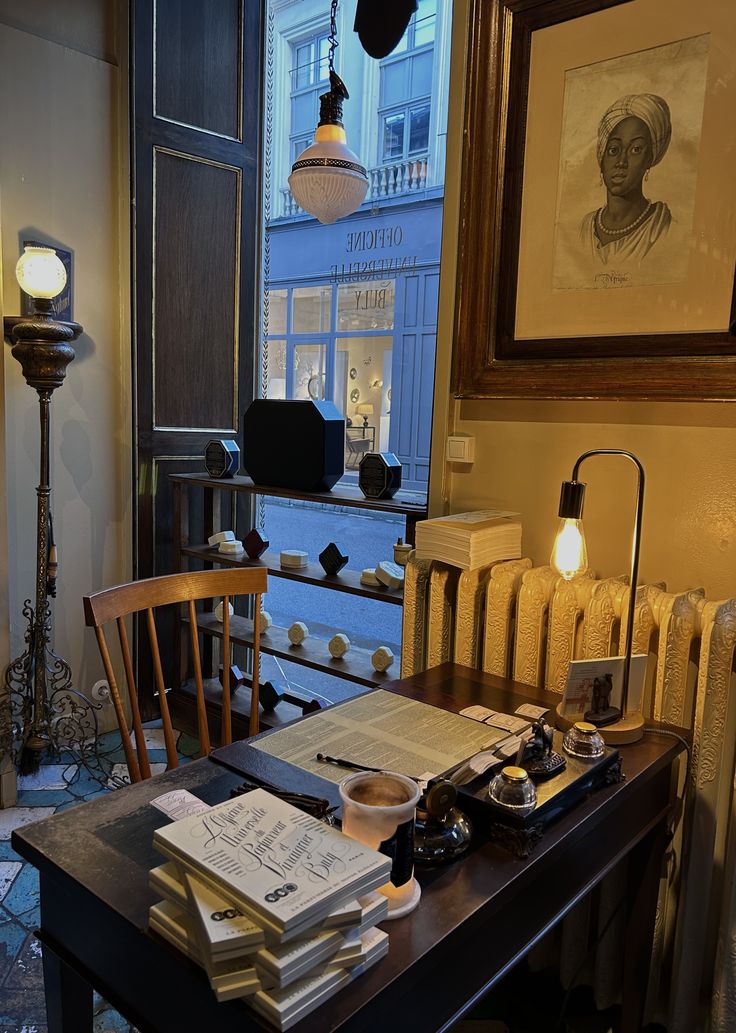
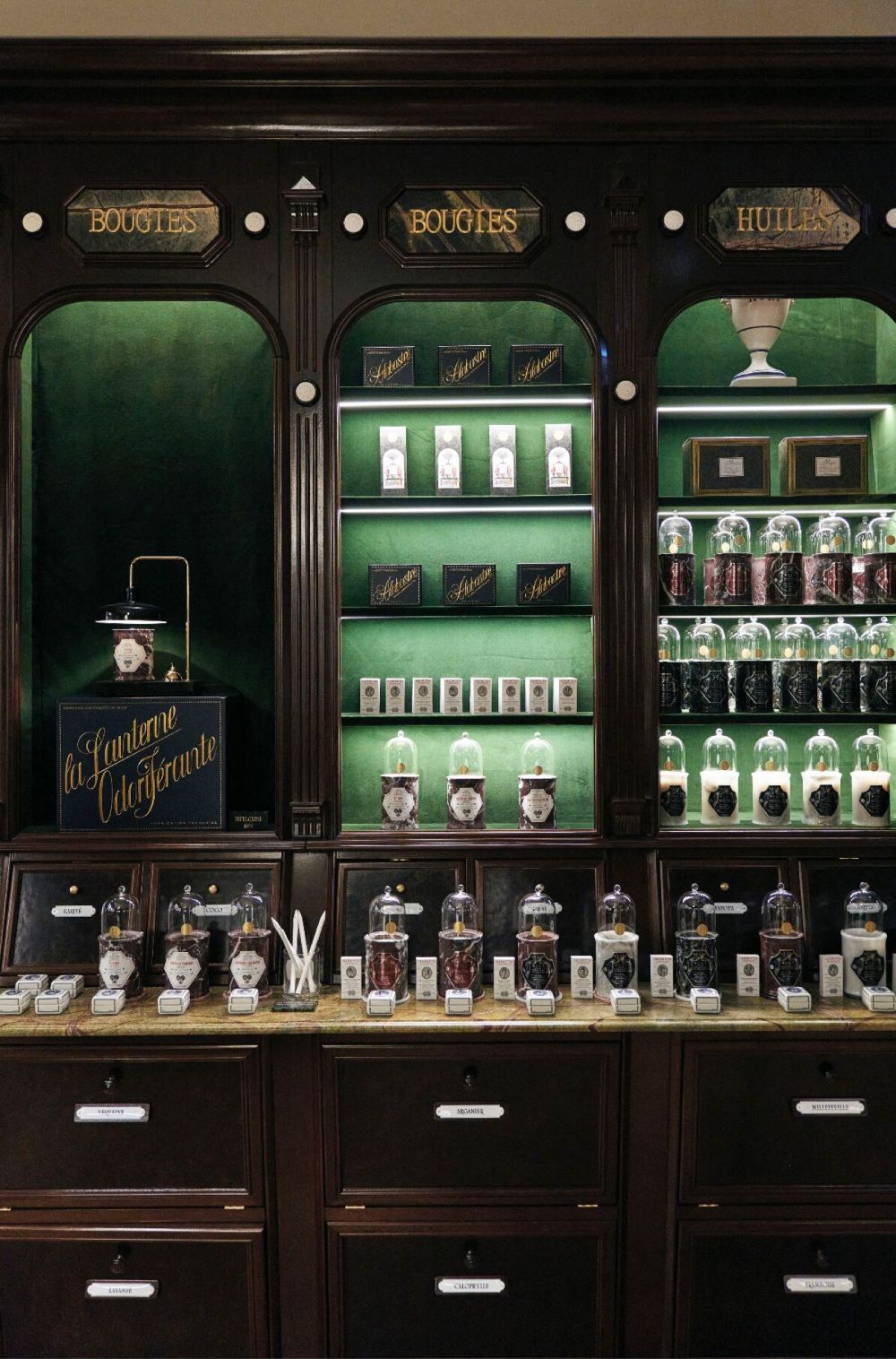
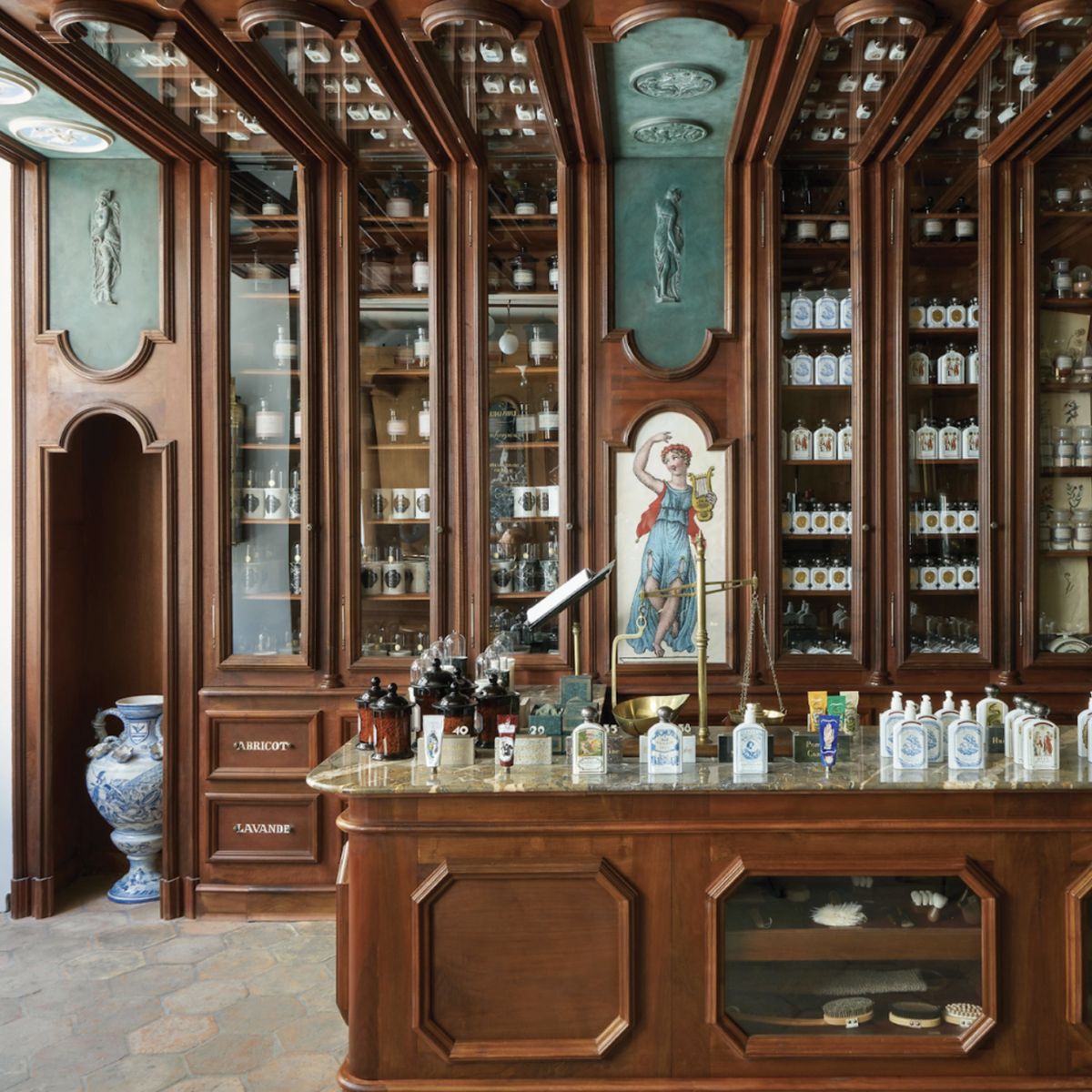
5 MIN · 22 May 2026Six, rue Bonaparte, a stone's throw from place Saint-Sulpice. A black wooden shopfront with gilt lettering laid in leaf, a period marble counter that gives off a dull echo when you set a phial down, shelves of hand-painted porcelain bottles lined up as in some apothecary from a Balzac novel. This is not a restored shop in the conventional sense — it is an apothecary that has crossed two centuries, that died once in the nineteen-fifties, and that one man, Ramdane Touhami, working alongside his wife and business partner Victoire de Taillac, brought back to life with an archaeologist's exactitude. Today it has become, almost without anyone noticing, the most copied shop in Paris — and the hardest to imitate.
The story of the house
Jean-Vincent Bully, a perfumer and apothecary from Versailles, opened his officine in 1803, under the Consulate, in a shop of around thirty square metres rented from a wine merchant. He invented the Eau triple, a facial preparation of distilled water and aromatic vinegar, which made the house's name for a hundred and fifty years and which Parisian doctors prescribed until the First World War. Balzac, a regular at the shop, immortalised it in César Birotteau under the barely altered name "Bully the perfumer". The shop survived Haussmann (it was listed as a historic monument by decree in 1894 before being delisted in 1947), the Belle Époque when it supplied all of Paris, the First World War when it sent ointments to the troops, the Second when it kept opening three days a week under the Occupation. It closed in 1956, in silence, with no interested heir, after a hundred and fifty-three years of unbroken trade. The premises became in turn a dyer's, a tourist gift shop, a chain bakery, then an empty shell for two years.
In 2014, Ramdane Touhami and Victoire de Taillac bought the brand for a derisory sum (around fifty thousand euros) from a collector of dead marques who held the rights without knowing what to do with them. Not the physical premises — they recovered only a name and a few formulas dug out of the national archives. Everything was rebuilt ex nihilo: the shopfront, the counter, the bottles, the floor, the labels, the interior furniture. But with a singular requirement, inherited from Touhami's training as a historian: no restoration should look new. Everything must seem to have always been there, to have crossed a century and a half without a single retouch. It is the exact opposite of the usual strategy of resurrected luxury houses (Schiaparelli, Vionnet, Poiret), which ostentatiously modernise the heritage to signal their return.
How to read the shop
The veined black marble counter
Not the original marble — it was cut in 2014 from a Pyrenean quarry that had stopped supplying since 1960, and which agreed to reopen its tunnels for a special order. Ramdane Touhami bought the last available blocks (seven pieces, twelve thousand euros apiece) and had them brought to Paris by tarpaulin lorry. The veining is unique, irreproducible, because the original sedimentary seam is exhausted. It is this invisible detail — a marble whose source no longer exists — that makes material copying impossible.
The porcelain bottles
All made in Limoges, in one of the last three workshops still practising hand-painting on biscuit, painted one by one by decorators trained over ten years. Each fragrance has its dedicated bottle, never standardised or rationalised. The shape of the bottle tells the perfume: the Eau triple in an octagonal bottle, Macassar in a tall narrow bottle like a hookah, Iris Pallida in a flared bottle reminiscent of Victorian jardinières. It is the costliest element in the shop — each bottle costs between twenty and eighty euros to produce — but also the one that makes the experience impossible to replicate anywhere else.
The labels in nineteenth-century typography
Reprinted on the original presses, kept in a typographic workshop in Belleville belonging to a retired printer who refused to sell his machines to the museums. Ramdane Touhami refused digital printing, even modern offset, because lead-set typography produces slightly irregular outlines that the eye unconsciously recognises as "old". Each label is applied by hand to the bottle, with a fish-paste glue — a glue used in the nineteenth century, which yellows slowly and gives labels that patina no modern adhesive can reproduce.
The mosaic floor, restored stone by stone
The original 1803 floor, a black-and-white geometric mosaic in a paved motif, had been covered with linoleum in the fifties, then with kitchen tiles in the eighties. Touhami had it chiselled clear over six months by two mosaicists from Naples, respecting the original fragments and filling the gaps with tesserae cut from the same Pyrenean black marble as the counter. Today you can no longer tell the original from the addition — proof that artificial patina can perfectly imitate time, provided you devote six months of manual labour to it.
The Touhami method, in three principles
What must be grasped is that Buly is not an isolated commercial gesture, it is the application of a method one finds in every project Ramdane Touhami has touched (from Cire Trudon, which he relaunched in 2007, to the Roger&Gallet shops reinvented in 2022). First principle: never signal the restoration. Everything must look as though it had always existed. Second principle: pay the real price of time. A label set in old-style type costs thirty times more than an offset label, but it is the visible difference between pastiche and resurrected authenticity. Third principle: recruit endangered artisans rather than contemporary designers copying a style. Material lineage matters more than aesthetic lineage.
What you can buy without breaking the bank
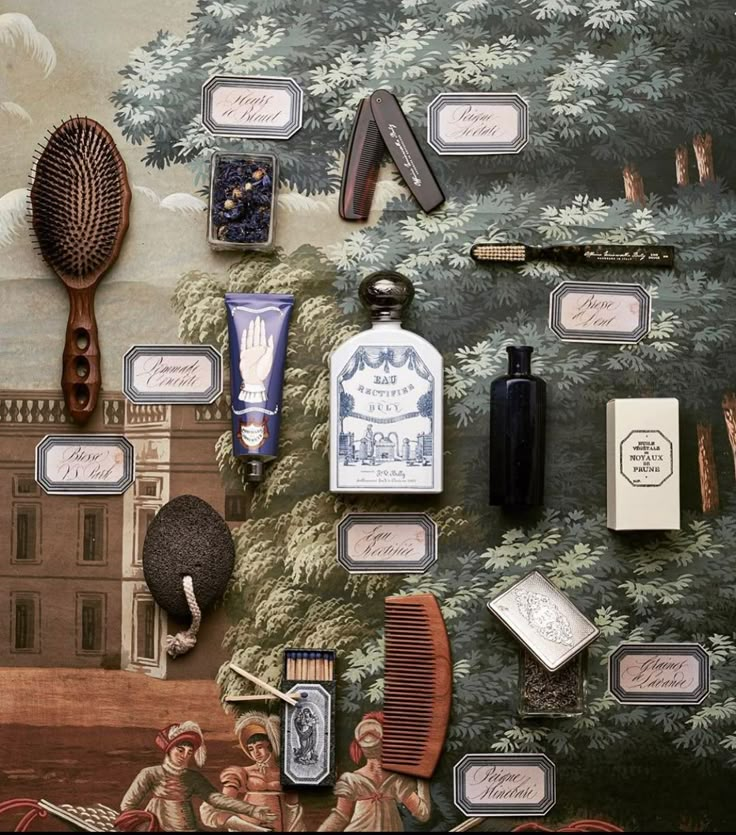
Eau triple, 75 ml: 65 euros — the 1803 formula, to be used morning and evening on a damp face after cleansing. An iris soap: 12 euros, made in Marseille according to the traditional cold process. The Concrète hand cream, a rich pomade in an enamelled pot: 38 euros, lasting about six months at one application a day. A Buly-signed Indian buffalo-horn comb: 24 euros, indispensable for anyone with long hair who wants to avoid the static of plastic combs. A signature eau de toilette: between 120 and 180 euros for 100 ml. Everything is wrapped in brown kraft paper sealed with red beeswax — a signature detail that turns the parcel itself into something to be kept, and which explains why these kraft papers can be seen reused as gift wrap throughout the sixth arrondissement.
Practical
Officine Universelle Buly — 6 rue Bonaparte, 75006 Paris (a stone's throw from place Saint-Sulpice and the Café de Flore). Monday to Saturday, 11am-7pm. Closed Sunday except in December. A practical tip: avoid Saturday afternoons (queues of tourists), prefer Tuesday mornings when the staff have time to talk you through the bottles. And now thirteen branches around the world (Tokyo, Kyoto, Seoul, London, Milan, New York, Los Angeles, Singapore, Hong Kong, Shanghai, Taipei, Bangkok), all decorated on the same principle — restoration truer than true — and each opening preceded by six to eighteen months of works carried out by the same European and Japanese artisans.
One photo, every piece identified.
Your room, a shop window, an inspiration screenshot: send the photo, we find the pieces and their alternatives at every price.
On iPhone, the app does the same from your camera.
Gallery
4 images