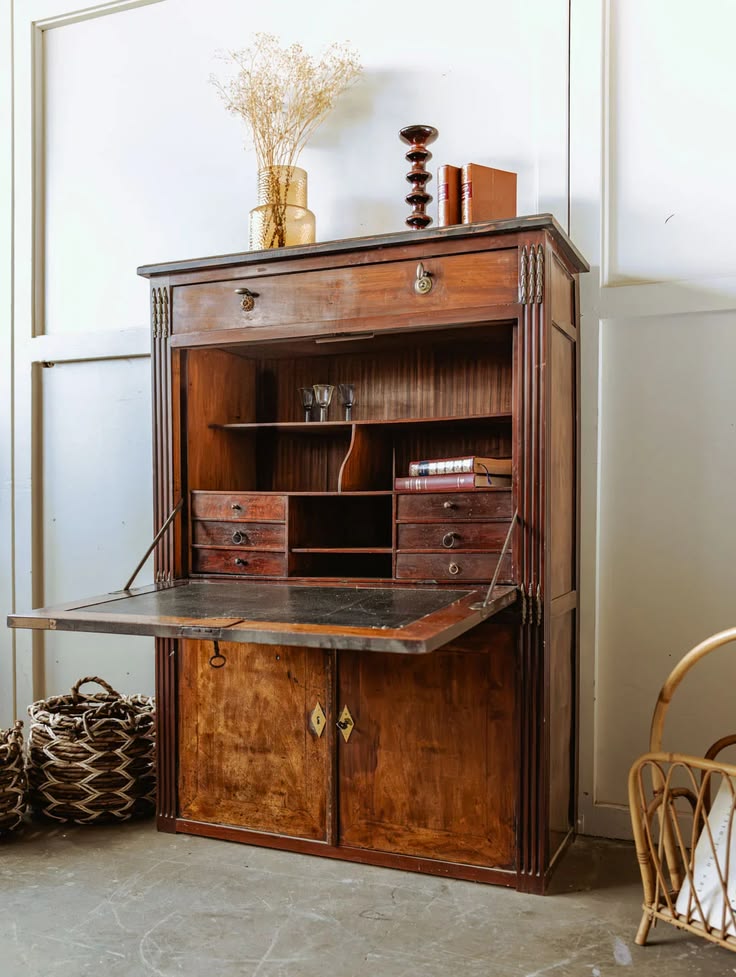

The Secretary Desk: From 1960s Scandinavian to the Antique Model
Flap closed, clutter gone: the secretary desk returns with remote work. The prized Scandinavian models, the undervalued antiques, and how to choose.
1 MIN · 1 OBJECT IDENTIFIEDRemote work has revived a piece of furniture the twentieth century had banished to the attic: the secretary desk. A flap that closes over the clutter at six in the evening — no modern desk offers that particular service.
The Scandinavian seam
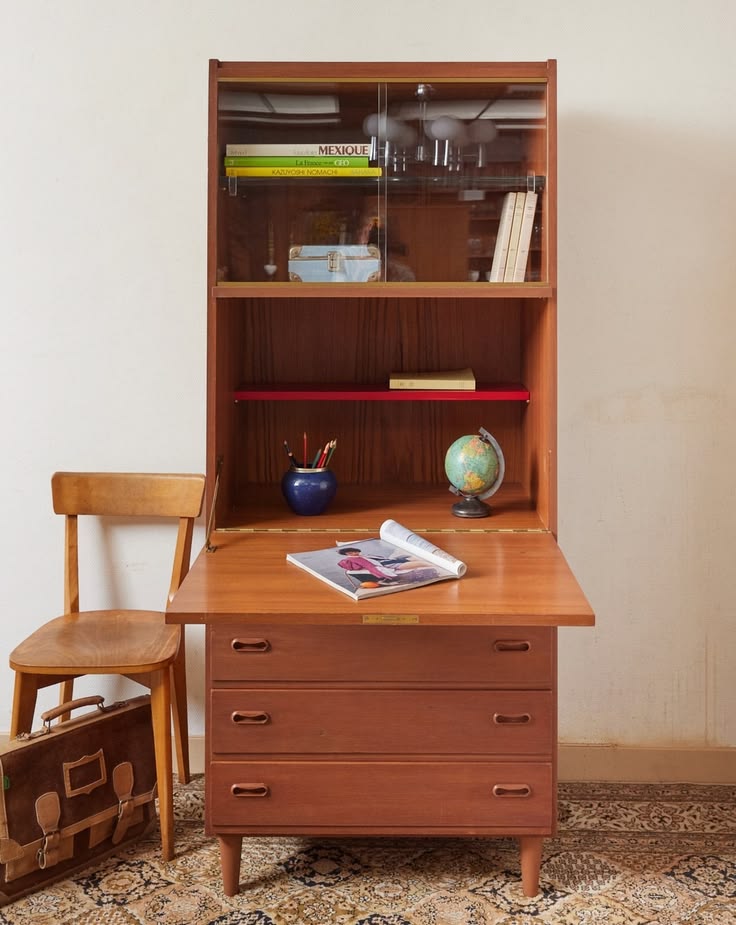
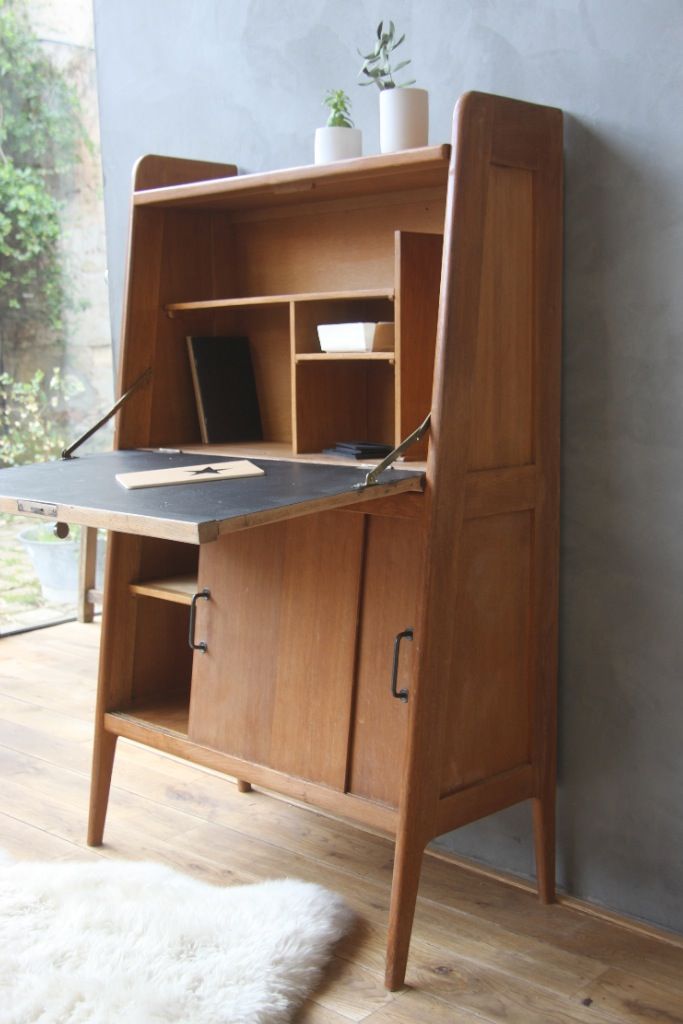
The Danish and Swedish 1950s and 60s produced thousands of secretary desks in teak and rosewood: slender lines, splayed legs, pigeonhole interiors. Signed pieces — Arne Wahl Iversen, the editions of the Danish Møbelfabrik — change hands at 800-2,500 € among specialist dealers; well-made anonymous ones, 300-700 € at the flea market. Prices have risen steadily for a decade: it is the most useful Scandinavian piece still within reach.
The antique, undervalued
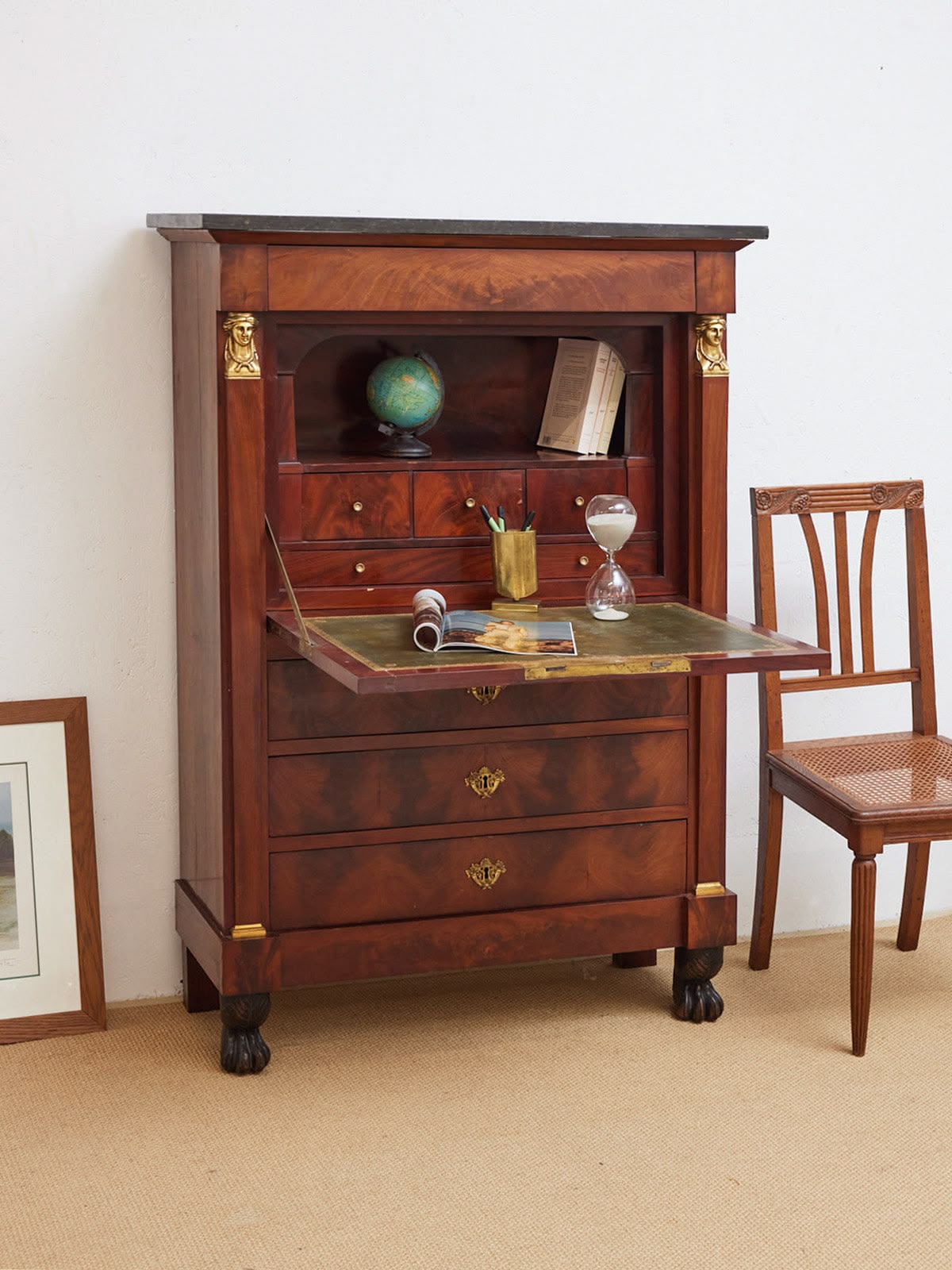
A market paradox: a Louis-Philippe secretary in walnut, straight-backed with a leather-lined flap, often sells for under 400 € at auction — less than a new panel desk. Brown antique furniture remains depreciated; for anyone willing to embrace it, it is the best value in furniture full stop.
Check before you carry it off
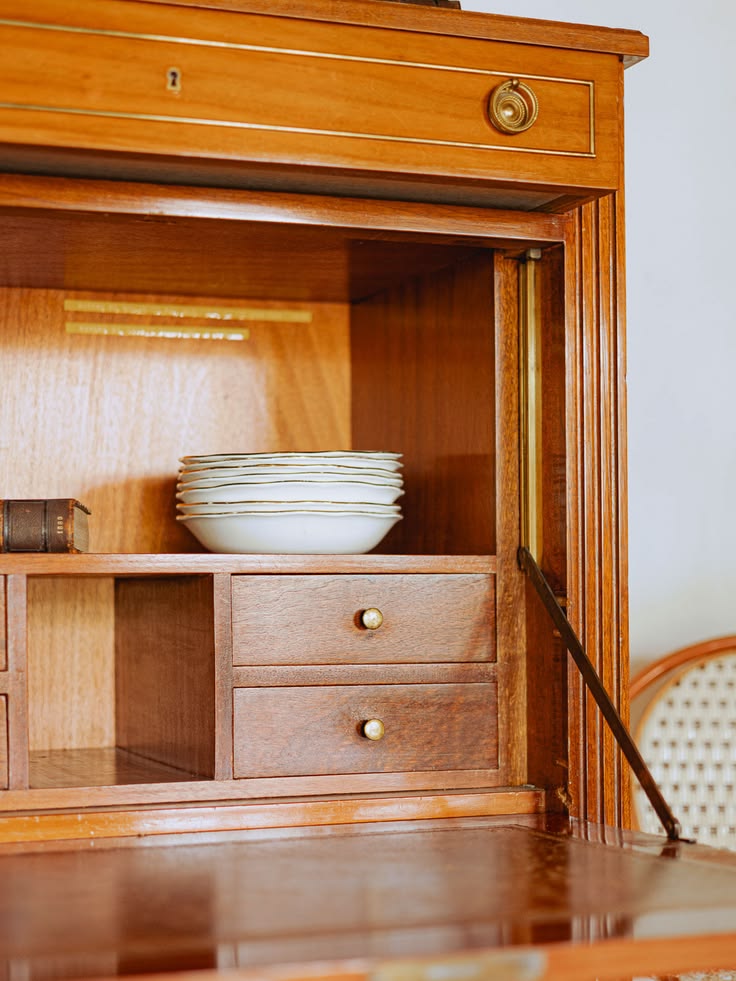
The flap is the weak point: torn-off hinges, tired stays, veneer reglued along the edge. Open it, rest your hand on it, write for ten seconds. A flap that sags can be repaired — but negotiate. And measure the opening: with the flap down, the piece takes up another 40 cm.
Spotted a secretary desk somewhere? Scan it on Beyit to place its era and its price.
One photo, every piece identified.
Your room, a shop window, an inspiration screenshot: send the photo, we find the pieces and their alternatives at every price.
On iPhone, the app does the same from your camera.
The pieces, at your budget.
Every piece mentioned, with its alternatives — from vintage to dupe.
Gallery
4 images