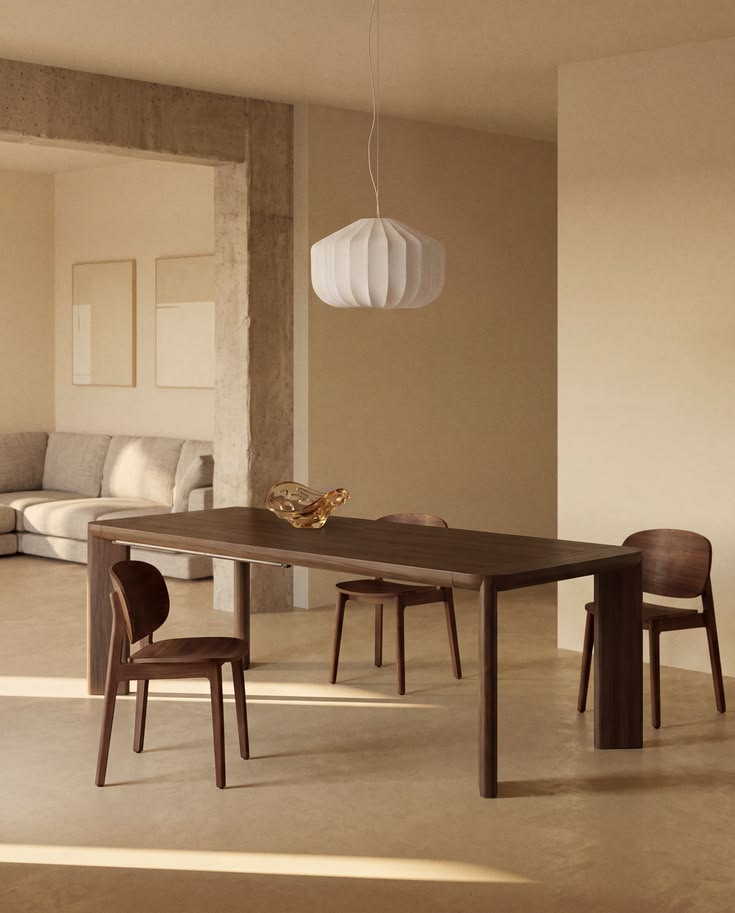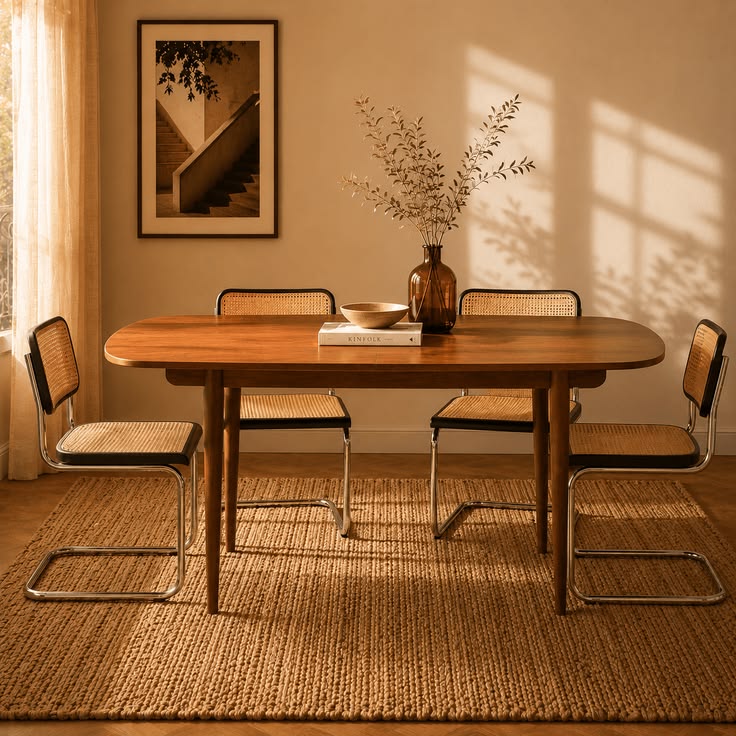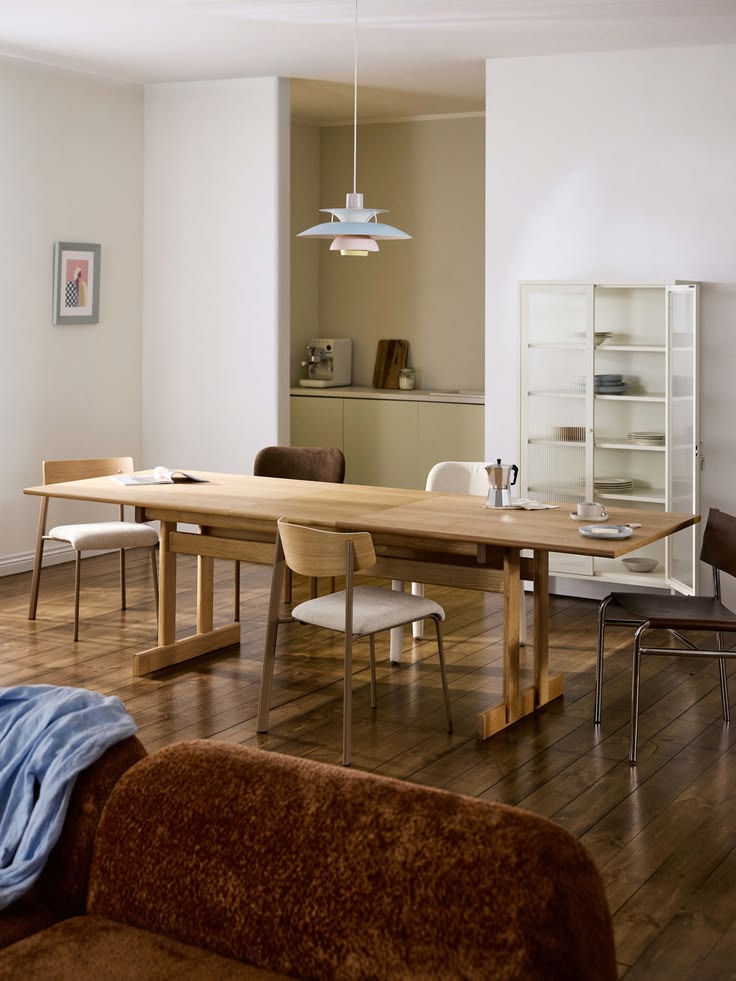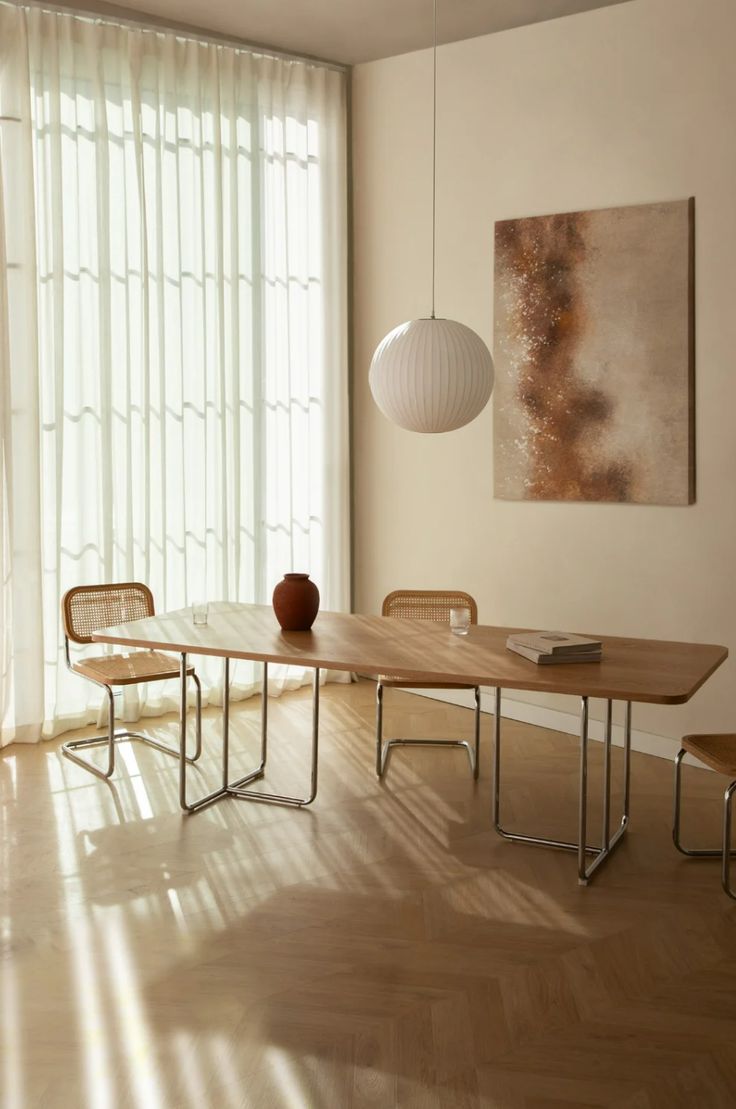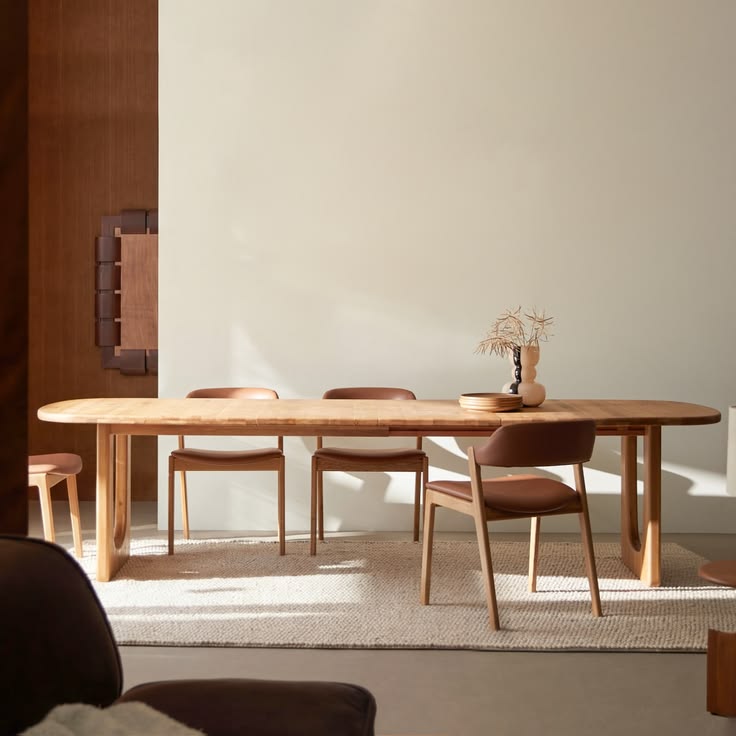

The Extending Table: Choosing Well, from Mechanism to Top
From six to ten places without spoiling the everyday: butterfly, folding or end leaves, materials, dimensions — what makes a good extending table.
1 MIN · 5 OBJECTS IDENTIFIEDThe extending table is a contract: small for daily life, large on the evenings that matter. What separates the one that lasts twenty years from the piece that jams at the third dinner is the mechanism.
Three leaf systems
The butterfly leaf, tucked under the top, unfolds at the centre in a single gesture: it is the best system for everyday use, with nothing to store. The folding leaf doubles the top by folding it back on itself — simple, sturdy, but the base must follow the centre of gravity. End leaves, slid onto the ends, offer the largest extensions but live in a cupboard; check that the tone of the wood ages with the table, not apart from it.
The dimensions that matter
Sixty centimetres of width per guest, one metre of clearance around the table to pull back a chair. A 140 × 90 seats six, a 180 seats eight, a 240 extended welcomes ten. Beyond that, it is a banquet — and another piece of furniture.
The top: the truth of materials
Solid oak takes everything and can be sanded down; wood veneer holds up well if it is thick; ceramic ignores hot dishes and glasses of wine — its drawback is weight. Glass, for its part, shows every fingerprint: reserve it for quiet houses. Under £350, a reliable mechanism is rare; this is the piece of the house where the price is felt with every handling.
Spotted a table somewhere? Scan it on Beyit: the model, the price, the alternatives.
One photo, every piece identified.
Your room, a shop window, an inspiration screenshot: send the photo, we find the pieces and their alternatives at every price.
On iPhone, the app does the same from your camera.
The pieces, at your budget.
Every piece mentioned, with its alternatives — from vintage to dupe.


Gallery
4 images