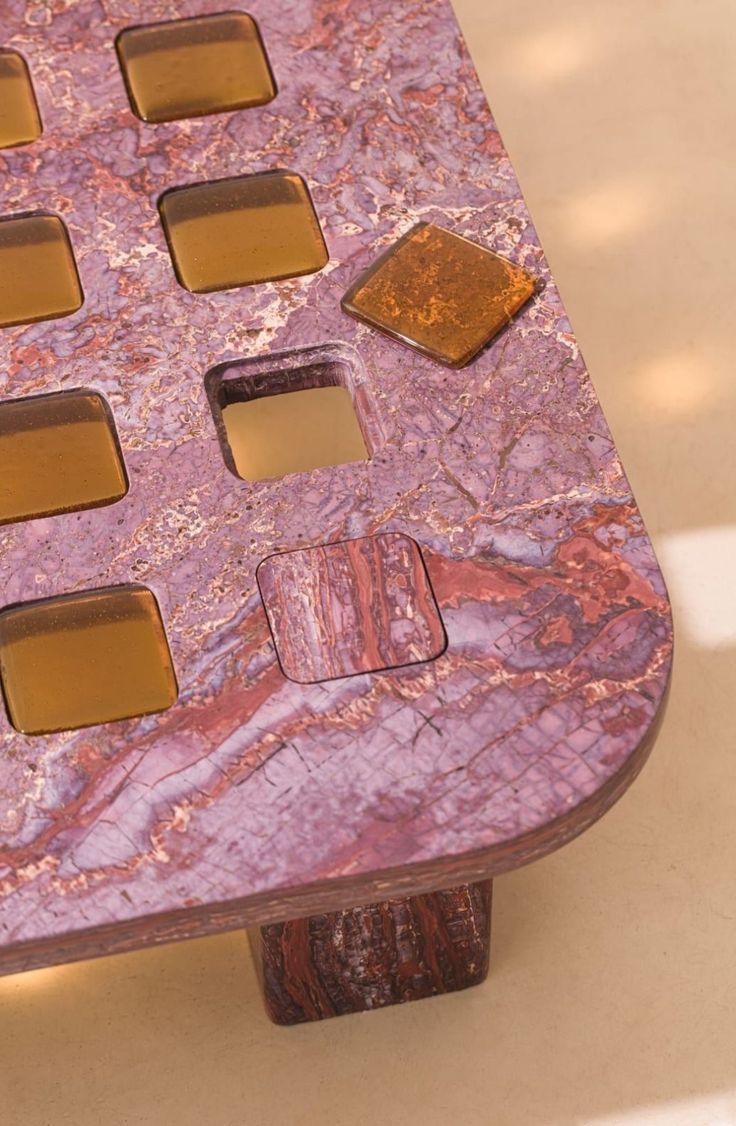

Terrazzo: From the Venetian Palazzo to the Tabletop, a Grand Return
Marble chips set in cement: terrazzo is six centuries old and resurfacing everywhere. Spotting the real thing, avoiding the printed imitation, choosing well.
1 MIN · 21 August 2026Venice, fifteenth century: stonemasons salvage the marble offcuts from the palazzi and sink them into lime. Six hundred years on, their thrifty solution has become one of the most photographed materials in decoration.
What it really is
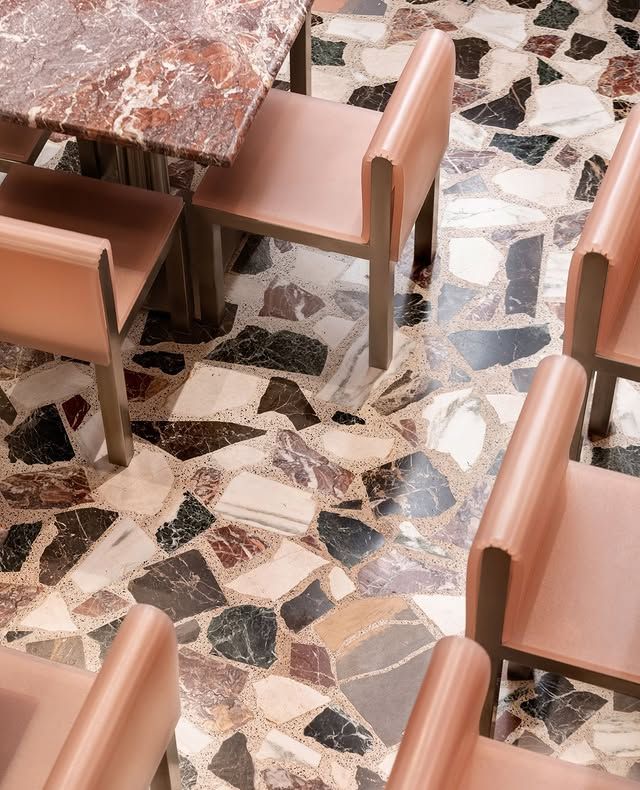
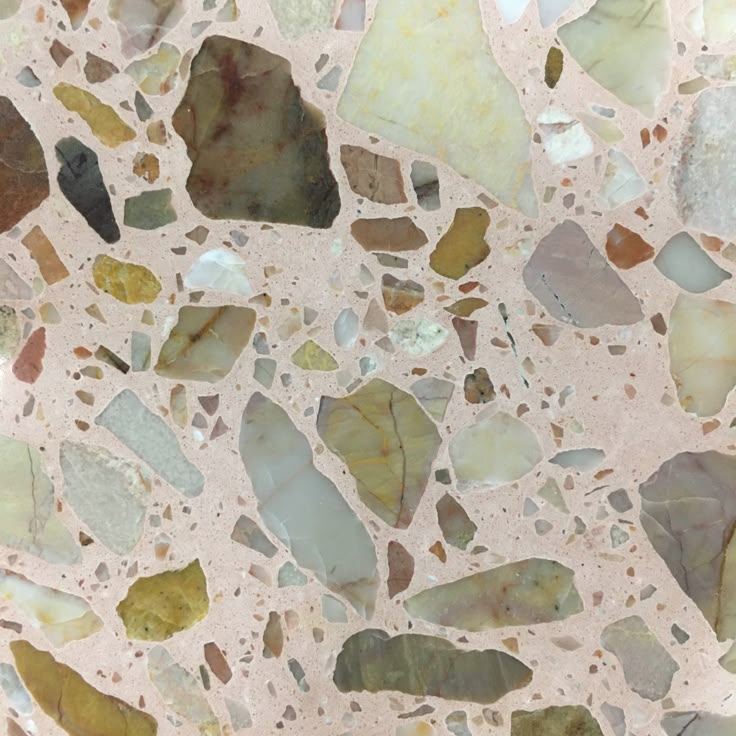
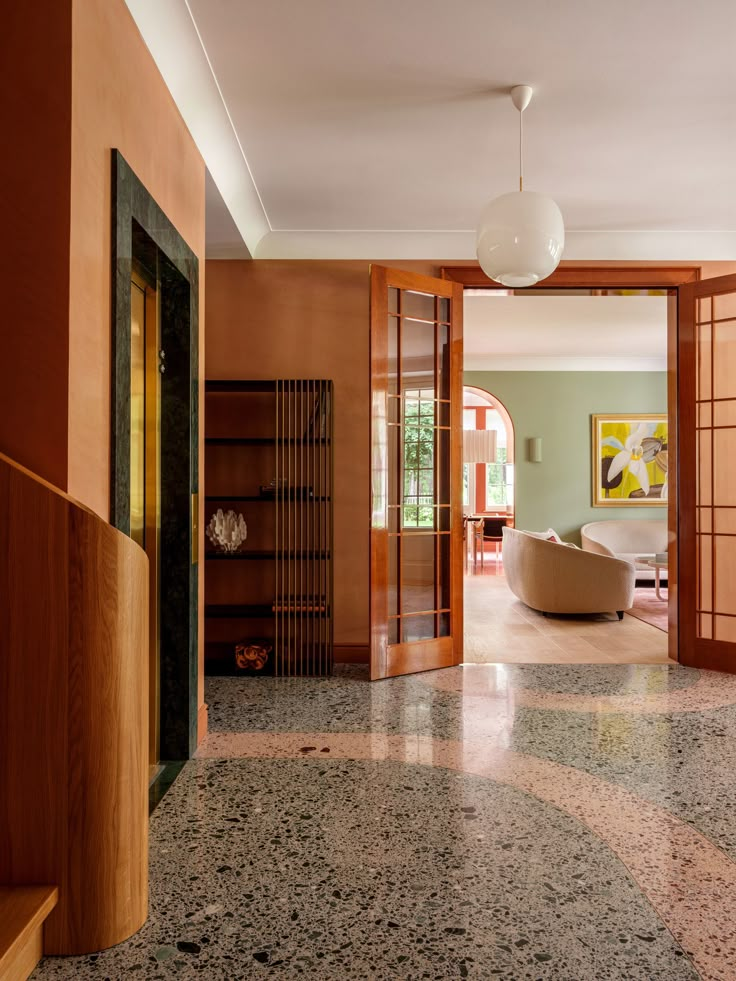
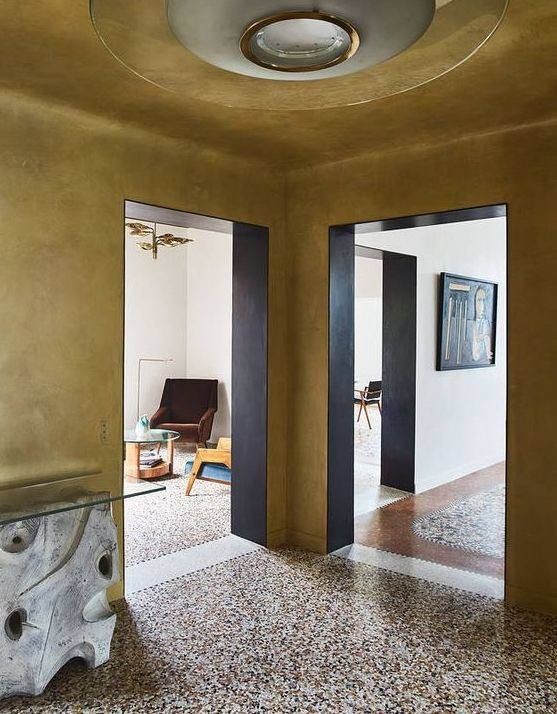
Authentic terrazzo is a composite: chips of marble, quartz or glass, bound with cement then ground down to a polish. Each slab is unique — that is its very definition. The floors of Italian palazzi, Haussmannian entrance halls, 1950s kitchen worktops: it has always been there, we have simply started looking at it again.
Real, reconstituted, printed
Three tiers are in circulation: true terrazzo, poured or in slabs, heavy and cold to the touch; lighter resin composites, fine for a tabletop; and the printed imitation — melamine or porcelain stoneware with a terrazzo motif — which gives itself away through the repetition of the pattern: two identical chips ten centimetres apart never lie.
Using it well
In touches: a tabletop, a lamp, a board, a basin surface. Over a large area it demands proper grinding and treatment — and high-contrast patterns tire quickly. Vintage pieces in real terrazzo, coffee tables or consoles from the 1970s and 80s, remain undervalued at the flea market.
Spotted a terrazzo piece? Scan it on Beyit to pin down its era and price.
One photo, every piece identified.
Your room, a shop window, an inspiration screenshot: send the photo, we find the pieces and their alternatives at every price.
On iPhone, the app does the same from your camera.
Gallery
4 images