
Famous design shelves and bookcases, from the String to the Carlton
String, USM Haller, Carlton, Nuage… The shelves and bookcases that made history, their story in three lines and alternatives at every price.
2 MIN · 5 OBJECTS IDENTIFIEDStorage is the design you notice only afterwards: it holds the books, then it holds the wall, then it holds the room. From the Swedish lightness of the String to Sottsass's Memphis totem, seven systems that tidy — or unsettle — with character.
1. The String shelf — Nils Strinning, 1949
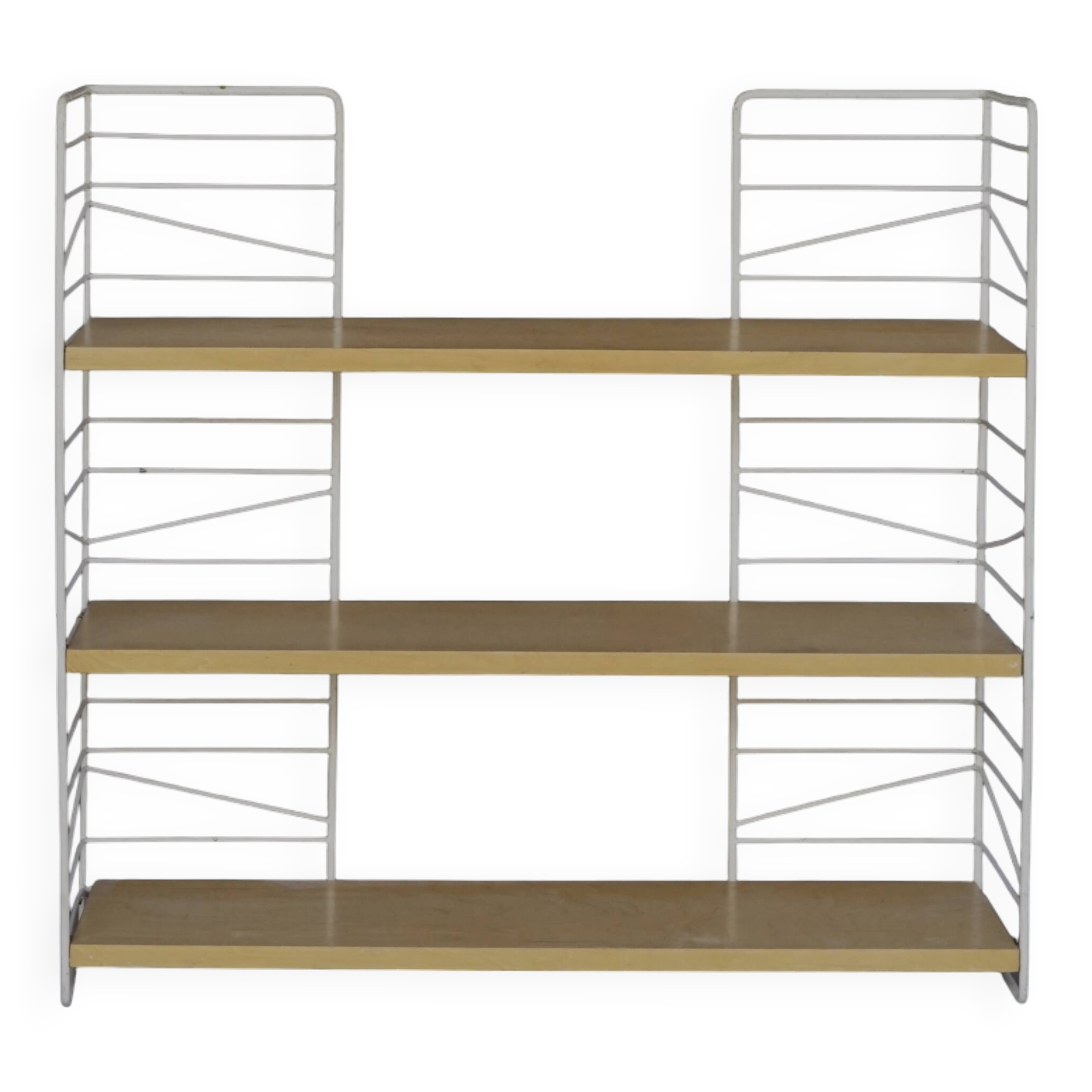
Ladders of plastic-coated steel wire, shelves that move by hand: in 1949 the String won the competition launched by the publisher Bonnier for a bookcase every Swede could afford. It has not left Scandinavian walls since. See the original and its alternatives →
2. The USM Haller system — Fritz Haller & Paul Schärer, 1965
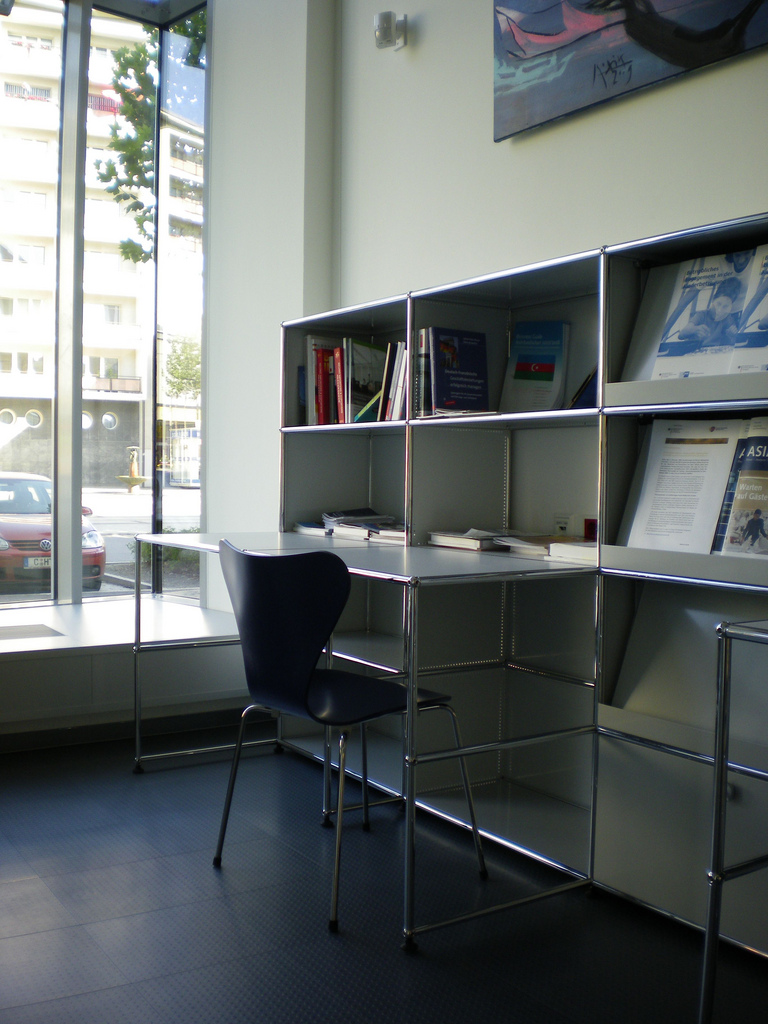
A ball of chromed brass, tubes, panels: the architect Fritz Haller designed for Paul Schärer's factory a system that assembles, dismantles and reconfigures endlessly. In the MoMA, adopted by architecture practices the world over — the piece that outlives every move. See the original and its alternatives →
3. The Carlton — Ettore Sottsass, 1981
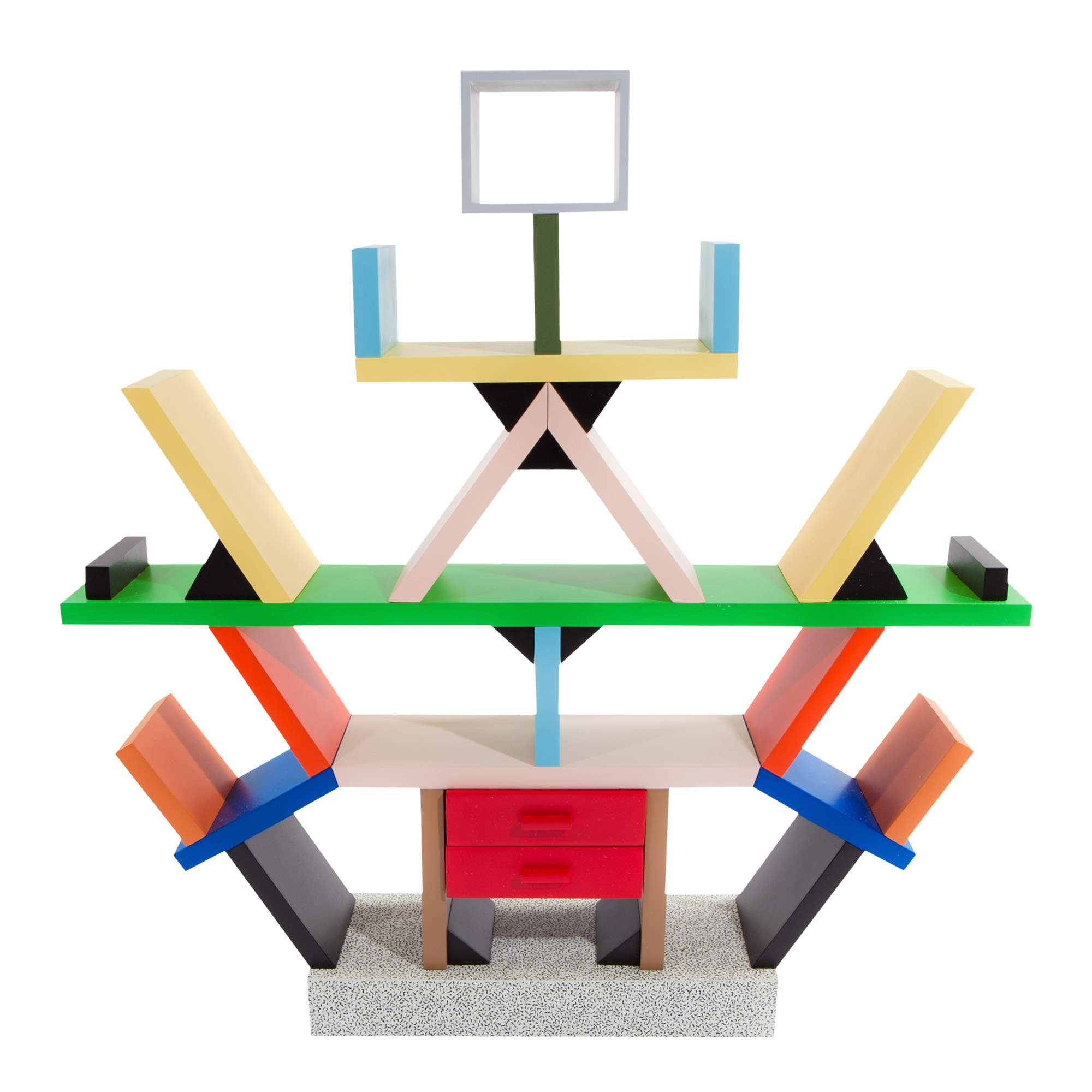
A totem of multicoloured laminate with slanting uprights, shown at the first Memphis exhibition in Milan in 1981. Half bookcase, half manifesto: Sottsass stores less his books there than good taste — the better to be rid of it. See the original and its alternatives →
4. The Nuage bookcase — Charlotte Perriand, 1956
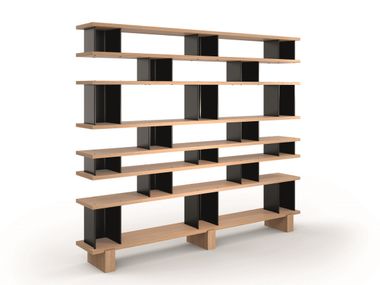
Modules of folded aluminium that float along the wall, with no imposed symmetry — a memory of the free shelving of the Katsura villa, which Perriand had studied at length in Japan. Produced by Steph Simon in 1956, reissued by Cassina: storage turned landscape. See the original and its alternatives →
5. The Eames ESU — Charles & Ray Eames, 1949
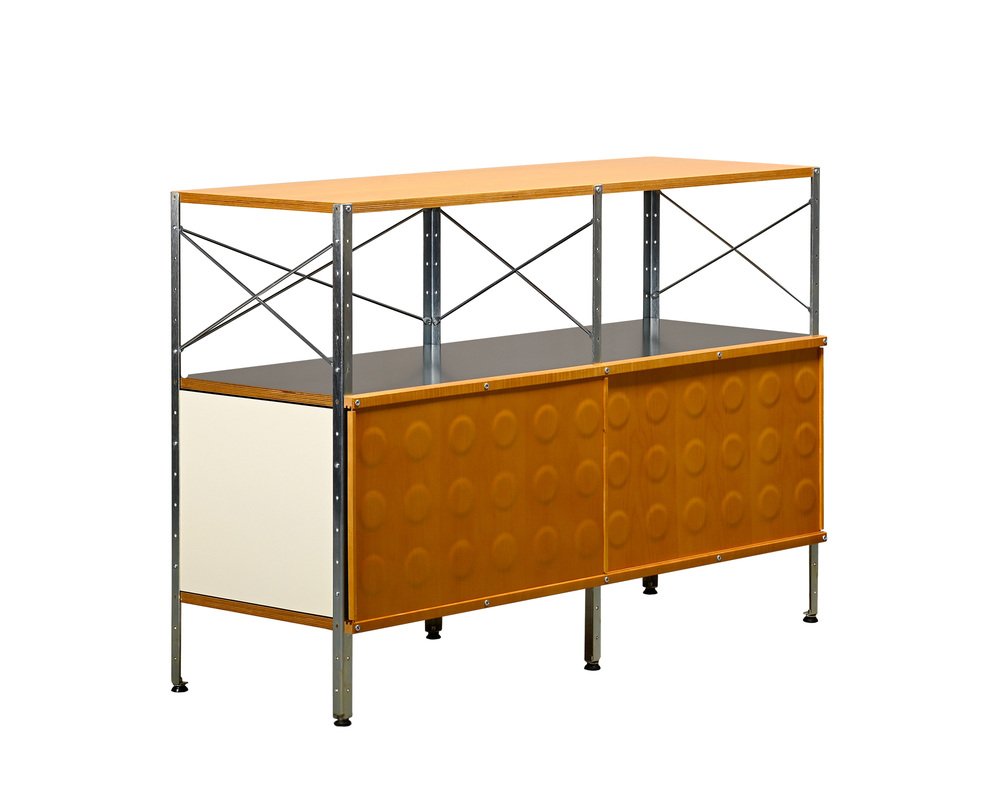
A steel grid, lacquered and perforated panels, primary colours: the Eames Storage Unit assembles like a Meccano set and carries the spirit of the house the couple were completing that same year at Pacific Palisades. The cheeriest storage of American modernism. See the original and its alternatives →
6. The Componibili — Anna Castelli Ferrieri, 1967
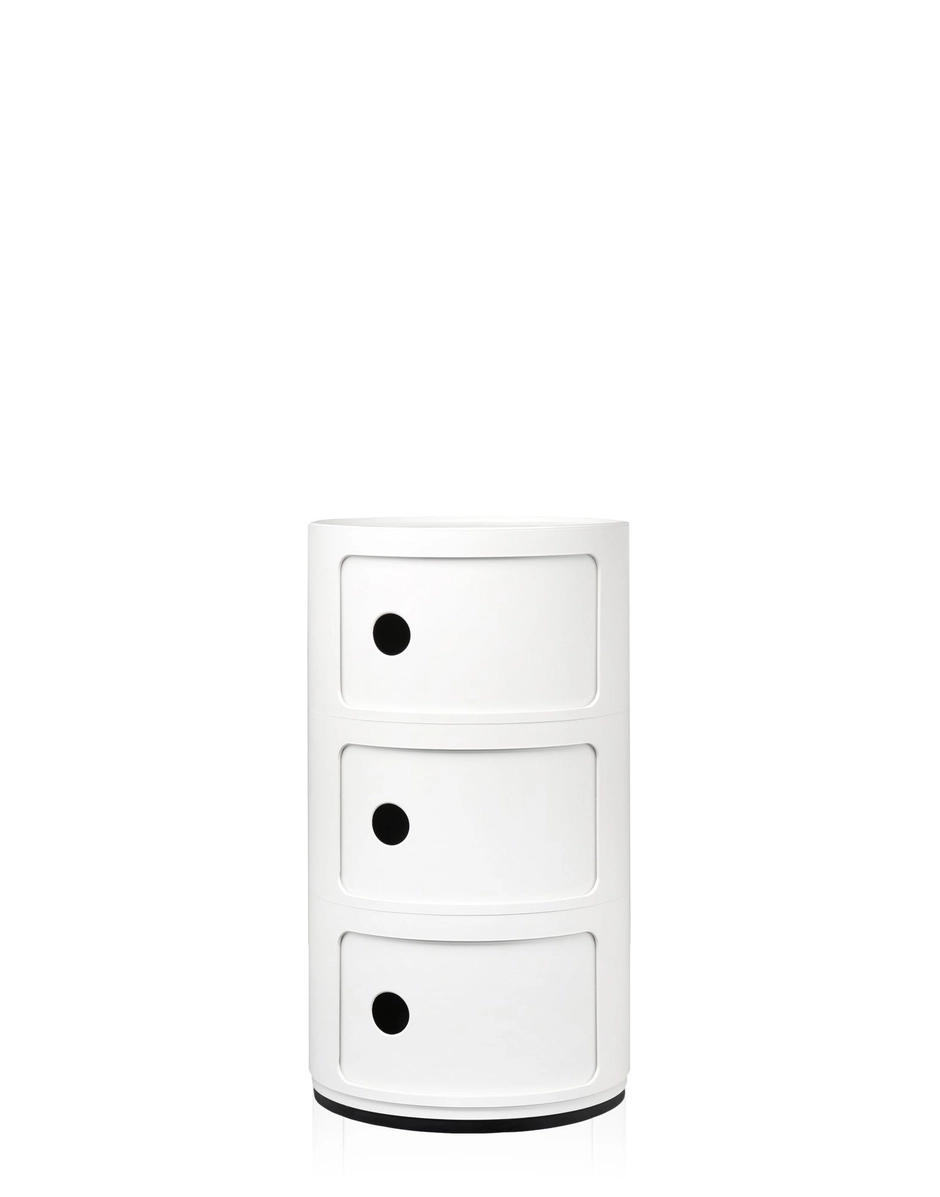
Cylinders of ABS that stack without a tool, designed by the architect who co-founded Kartell. At the MoMA as at the Centre Pompidou — and still at a price that does not sift its buyers. See the original and its alternatives →
7. The Boby trolley — Joe Colombo, 1970
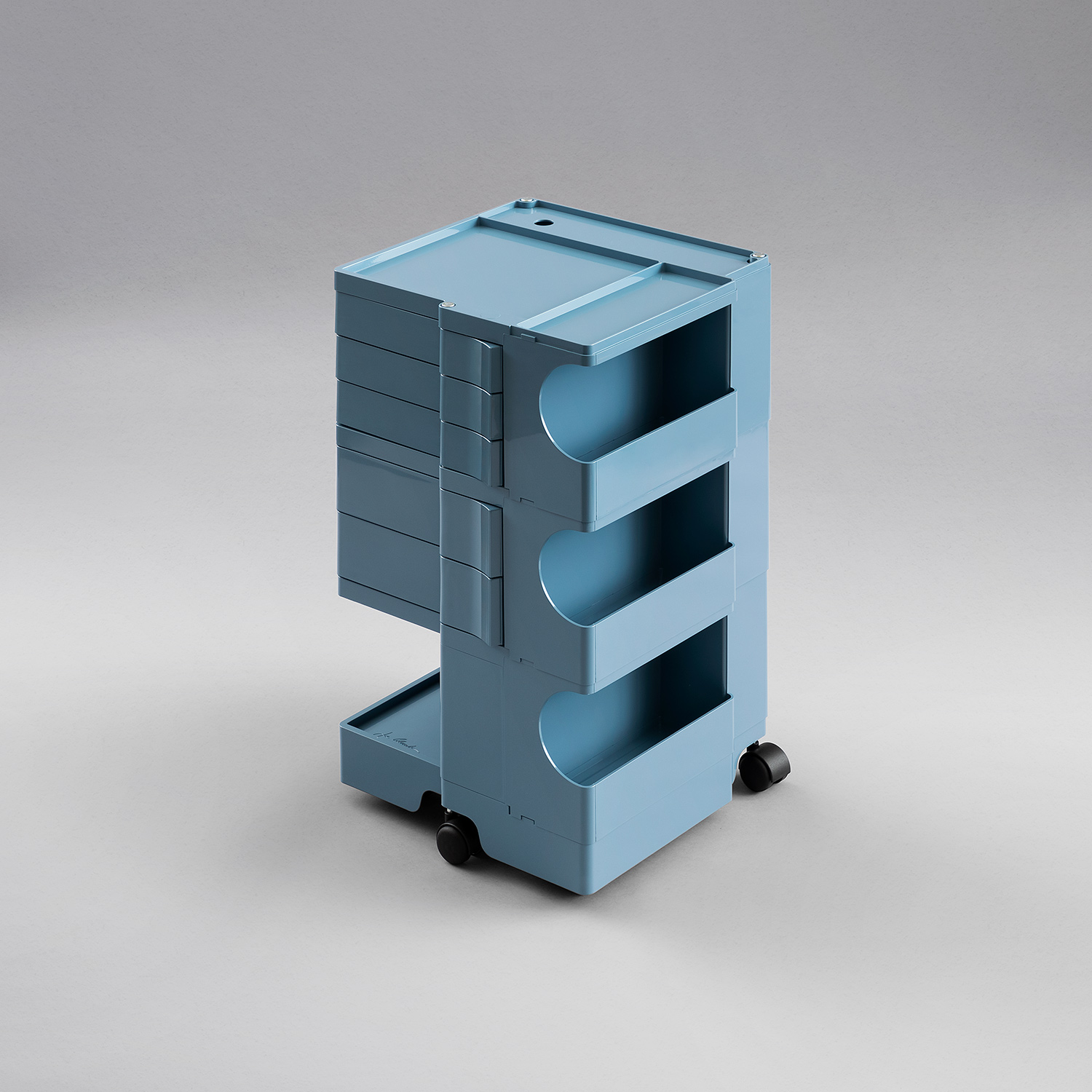
A tower of ABS on castors, drawers that swivel out like a fan, designed to follow the draughtsman around the table. Colombo died the following year, at 41; the Boby, awarded at the SMAU in 1971 and in the MoMA, still rolls — at B-Line. See the original and its alternatives →
And if you spotted one in a photo?
Every piece on this list has its reference page on Beyit, with the original, its story and alternatives at every price. And if a piece of furniture intrigues you in a photo — an Instagram interior, a film, a period house — scan it: Beyit will identify it.
One photo, every piece identified.
Your room, a shop window, an inspiration screenshot: send the photo, we find the pieces and their alternatives at every price.
On iPhone, the app does the same from your camera.
The pieces, at your budget.
Every piece mentioned, with its alternatives — from vintage to dupe.