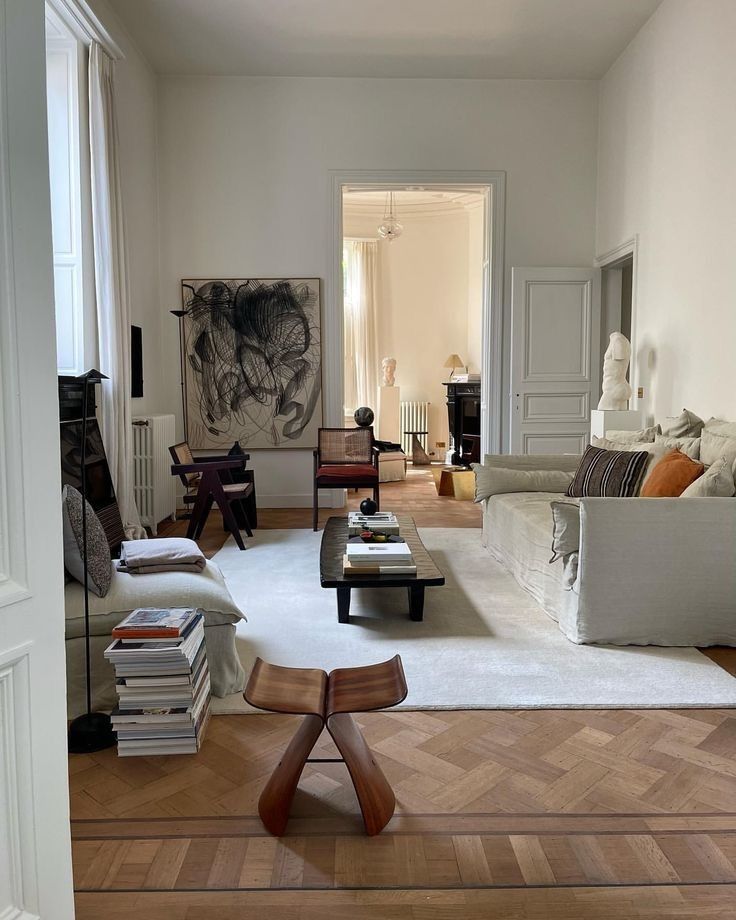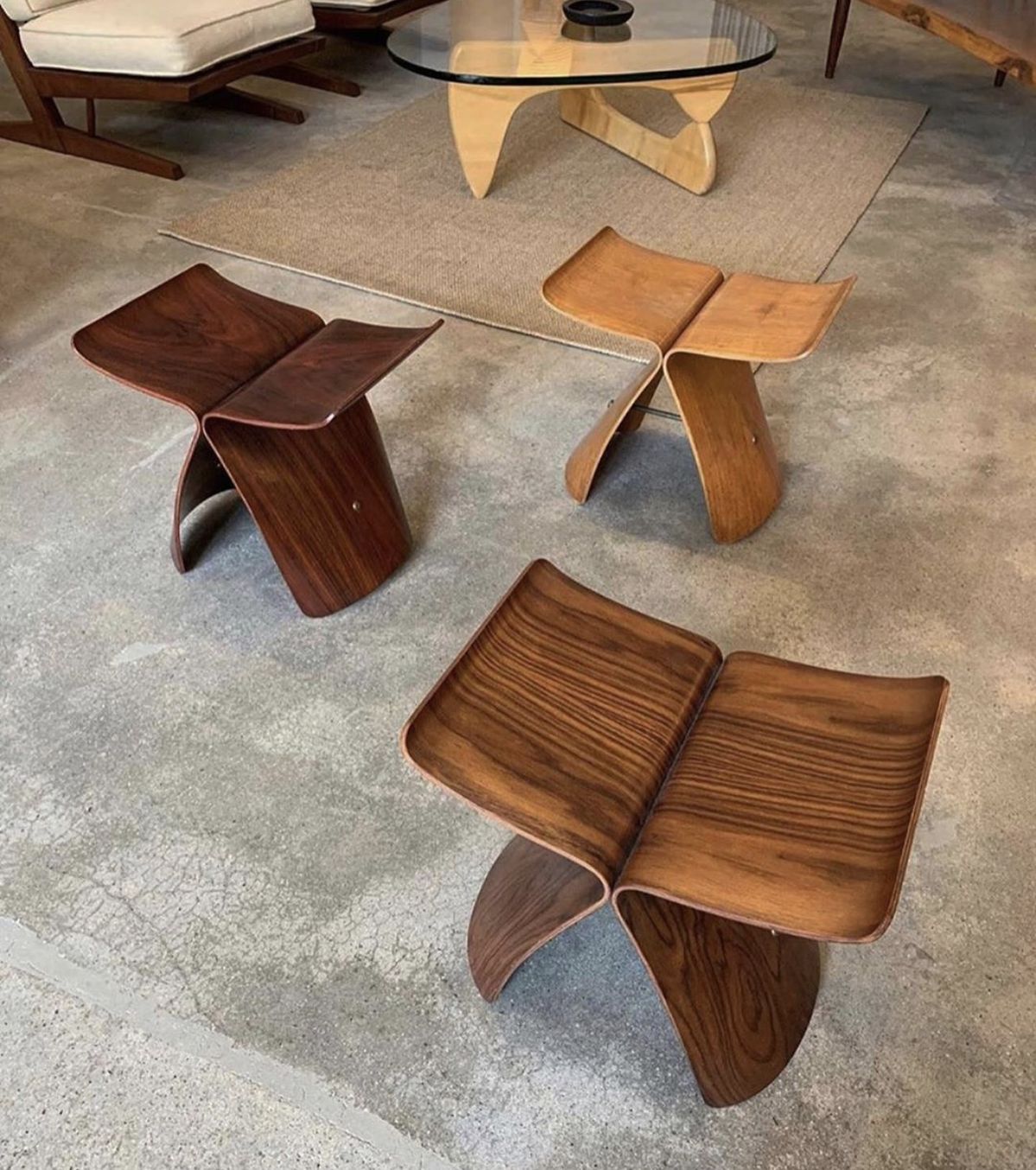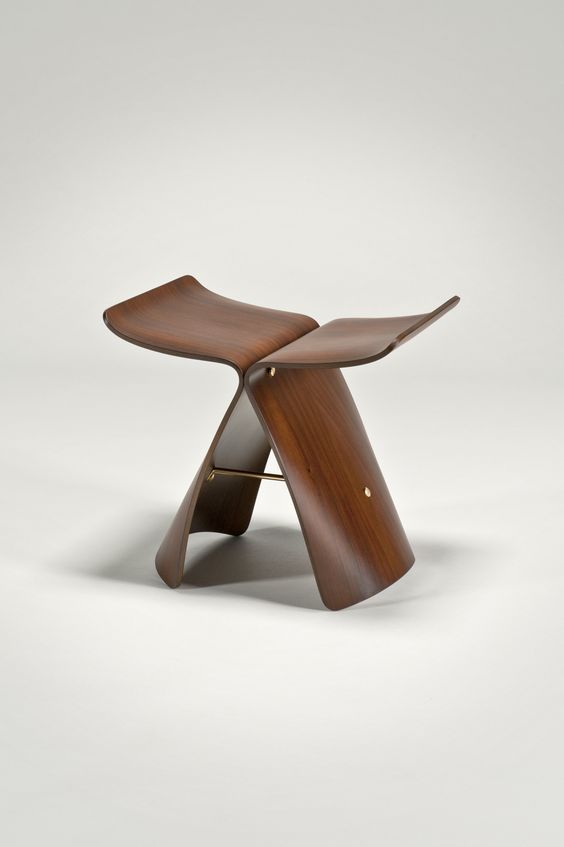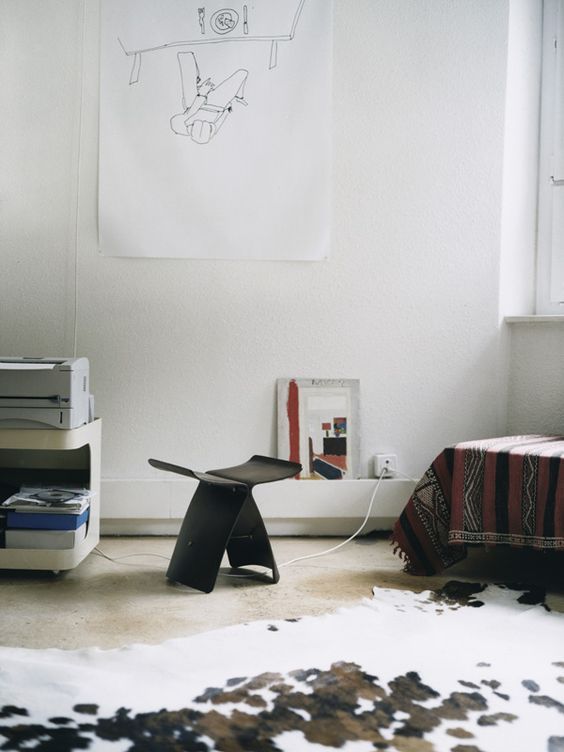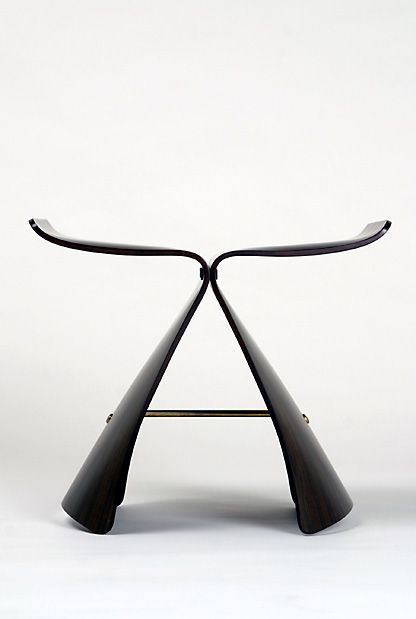

Yanagi's Butterfly Stool: the West folded the Japanese way
Two sheets of plywood, one brass rod, 1954. How Sori Yanagi reconciled Japanese craft with industrial production.
1 MIN · 1 OBJECT IDENTIFIEDA stool that resembles a butterfly, a torii, an ideogram. Sori Yanagi's Butterfly Stool (1954) is one of the objects that proved industry could produce poetry.
Two sheets, one rod
Two moulded plywood shells, identical, joined by a single brass rod. A Japanese economy of means married to the Western moulding technique (that of the Eameses).
A bridge between two worlds
Yanagi, son of the theorist of the Mingei movement (folk craft), sought the beauty born of use. The Butterfly is his answer: neither folklore nor cold machine — both at once.
Recognising it
Produced by Vitra and Tendo Mokko: markings beneath the seat, quality of the veneer (rosewood, maple), a clean brass junction. Copies betray a coarse plywood.
Seen one somewhere? Scan it on Beyit: original or copy.
One photo, every piece identified.
Your room, a shop window, an inspiration screenshot: send the photo, we find the pieces and their alternatives at every price.
On iPhone, the app does the same from your camera.
The pieces, at your budget.
Every piece mentioned, with its alternatives — from vintage to dupe.
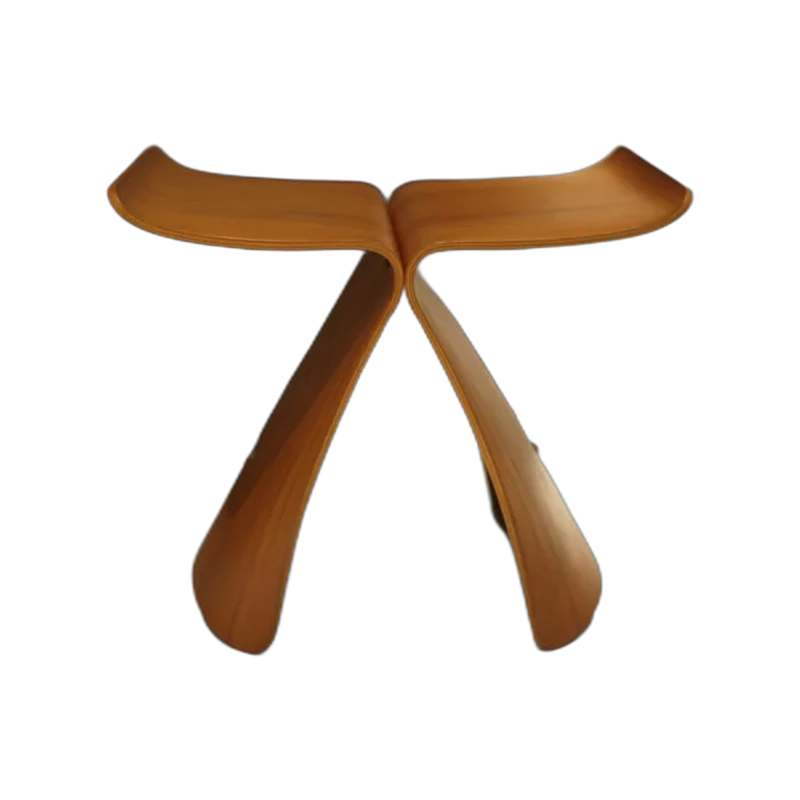
Gallery
4 images