
Seen from above, a long table under a pergola: a patterned cloth, plates that do not match, open tins of sardines left as they are, bread, olives, hands reaching in. It is the most pinned interiors image of these past two summers. It rests on no single piece of furniture: it rests on an accumulation of modest objects, chosen one by one.
Where to begin
With the plates, and never with a matching set. Old faience plates, mismatched, at £3 to £8 apiece at a flea market: Sarreguemines, Gien, Digoin, the Italian ones with a coloured rim. Then a cloth, just one, with a bold pattern: printed Provençal cotton, striped linen, madras. Then stemmed bistro glasses, thick, bought by the six for next to nothing. The budget for a first table of ten sits within a hundred pounds or so.
What is worth the detour
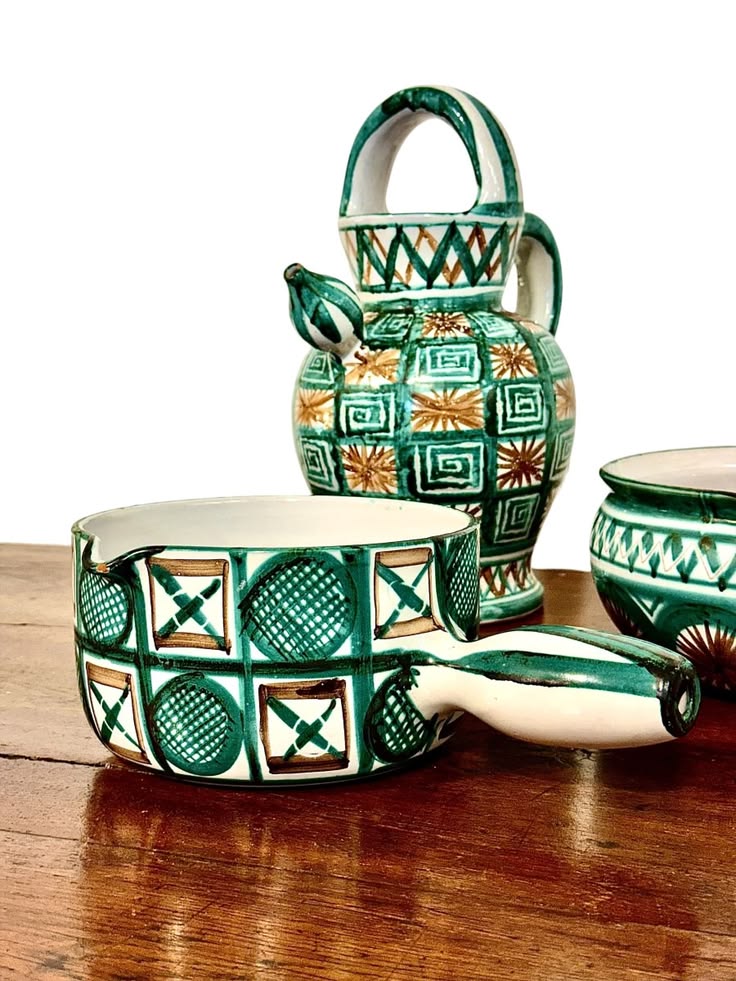
The signed faience that holds its value: Richard Ginori and its eighteenth-century patterns, Astier de Villatte (new, between £40 and £90 a plate), the hand-painted studio ceramics of Sicily and Puglia. The blown glass of Biot, its bubbles caught in the mass. And the object this look invented: the tin as a piece of tableware, Portuguese and Spanish sardines and anchovies whose graphics are worth those of a poster. You open them, you set them down, you do not decant.