The Nursing Chair: What Actually Matters — and Why a Good Design Chair Does the Job
Armrests, seat height, washable upholstery: the real criteria for a nursing chair, and the design chairs that meet them and stay.
3 MIN · 5 OBJECTS IDENTIFIEDThe nursing chair is a purchase you make while exhausted, for nights when every centimetre will count. The real criteria fit in one hand — armrests, seat height, backrest, upholstery, silence — and the good news is that a good design chair meets them as well as the models labelled “nursing”, while staying in the sitting room once the nights become nights again.
The armrests: criterion number one
It is the arm that holds the baby, and the armrest that holds the arm. It must be padded, continuous along the full length of the seat, and sit about twenty centimetres above it — high enough to support the elbow without raising the shoulder. Bare wood or thin metal armrests, superb elsewhere, bruise the forearm by the fourth night feed: here, the softness is not a comfort, it is a function.
Seat height and depth: rising without waking
The decisive move is not sitting down: it is rising with a sleeping baby in your arms, hands-free. That calls for a seat 42–45 cm from the floor — the standard of upright chairs — and a contained depth, around 55 cm, to keep your back against the backrest without a wedge cushion. The splendid low seats of the seventies, at 38–40 cm, are a trap here: you extract yourself in two stages, and the two stages wake the baby.
The backrest: high, and willing to take the head
A night feed lasts; the head always ends up seeking support. A high backrest, slightly reclined, lets you doze without a stiff neck — it is the structural advantage of enveloping chairs over low sitting-room chairs. If the backrest stops at the shoulder blades, the chair is a conversation chair, not a nursing chair.
Washable, or nothing
Spit-up, leaks, spilled bottles: the upholstery is chosen like that of a family sofa, only worse. Two valid answers: the machine-washable removable cover, or leather, which wipes clean in a single gesture and grows handsomer with age. Pale non-removable velvet is the classic mistake — superb in the shop, mapped out within three weeks.
Rocking or fixed
The rocking chair is the historic answer, and the sway lulls to sleep — parents included. But a fixed chair with the right armrests, paired with a footstool, does the same job without monopolising the movement: it is the footstool that truly eases the back, by raising the knees. If the rocker tempts you, check that the mechanism is silent — a creak at 3 a.m. is grounds for exclusion.
Why a design chair does the job
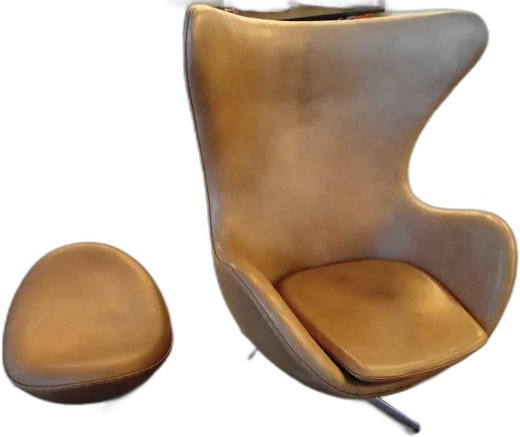
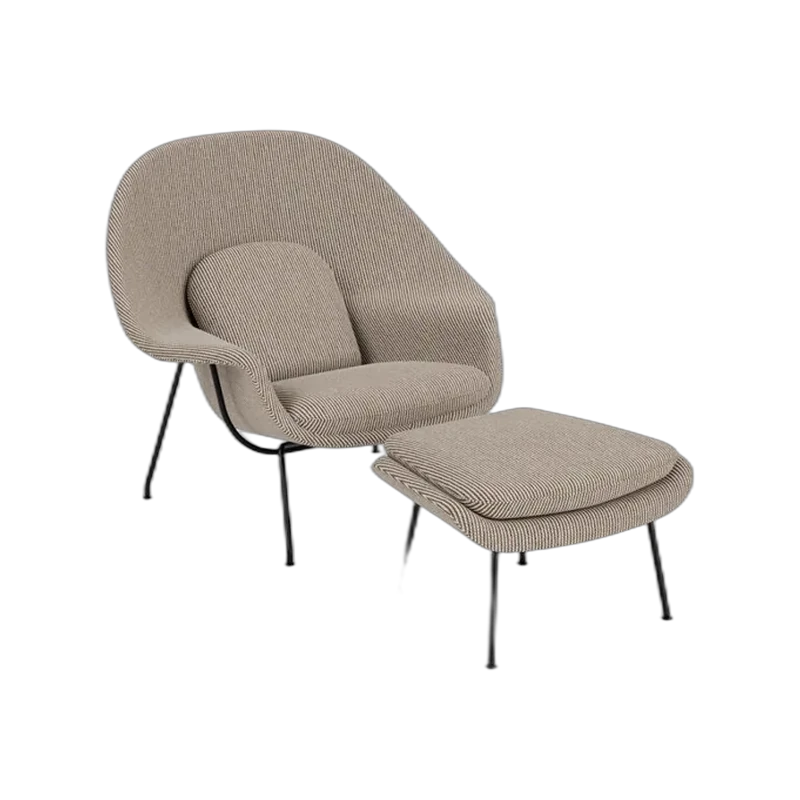
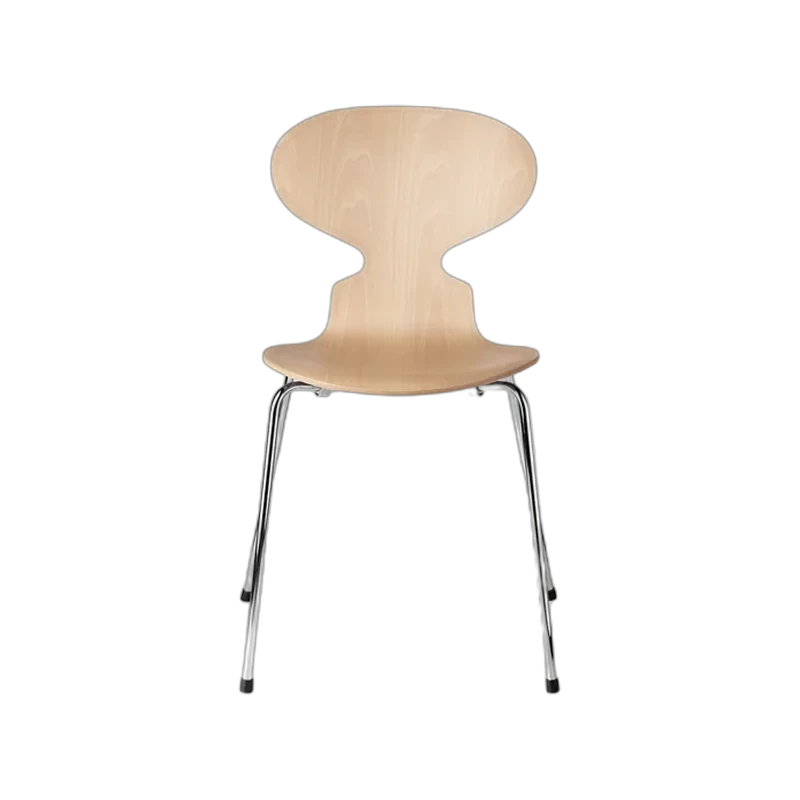
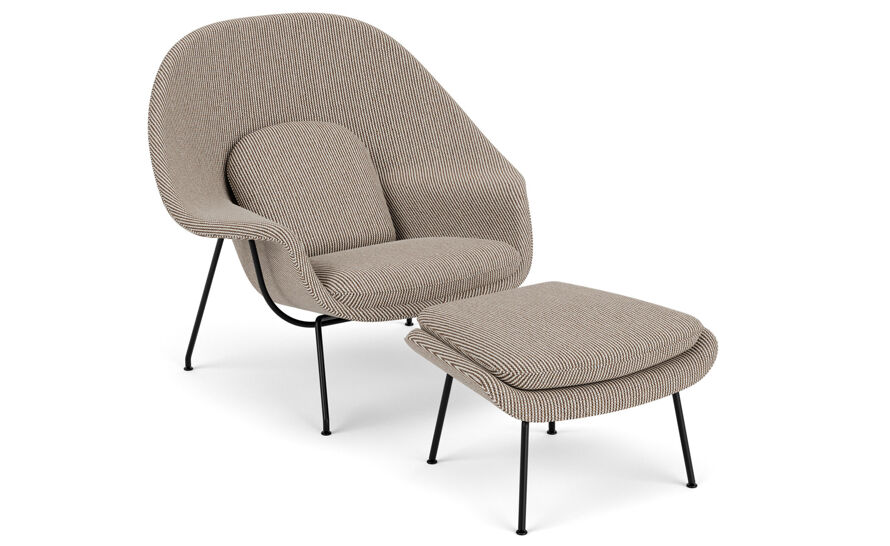
The Womb by Saarinen — literally “womb”, designed in 1948 to be curled up in — ticks every box: enveloping shell, continuous armrests, matching ottoman. The Egg by Jacobsen adds the “ears” that cradle the head. And the good contemporary enveloping chair, if its cover comes off, plays in the same league. The difference with the “special nursing” chair: in five years, this one will hold court in the sitting room instead of cluttering a second-hand listing.
The Beyit tip
Test it in real conditions: in the shop, with the nursing pillow under your arm — it is the pillow that sets the seat width you need, often more than the baby. And think about placement before buying: the chair lives beside the bed or the cot, with a small table within reach of your free hand — glass of water, phone, muslin. A perfect chair out of reach of a surface to set things down is no longer perfect on the first night.
The chair spotted in a photo?
If a chair stops you in a photo of a nursery, scan it: Beyit identifies the model and offers the original and its alternatives at every price.
One photo, every piece identified.
Your room, a shop window, an inspiration screenshot: send the photo, we find the pieces and their alternatives at every price.
On iPhone, the app does the same from your camera.
The pieces, at your budget.
Every piece mentioned, with its alternatives — from vintage to dupe.