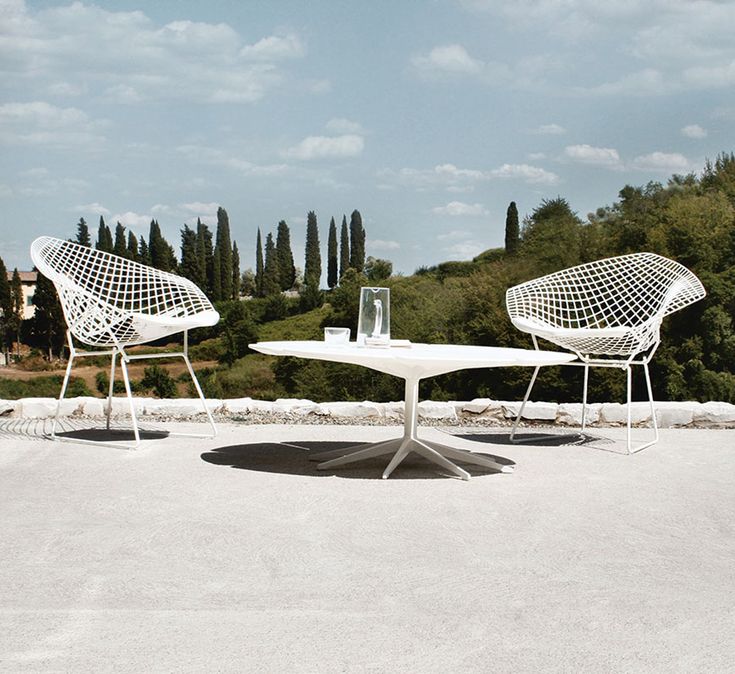

Bertoia's Diamond Chair: Knoll's steel wire and its imitations
In 1952 Harry Bertoia welds an armchair made mostly of air. Wire, welds, finish, label: how to tell the Knoll edition from the copies.
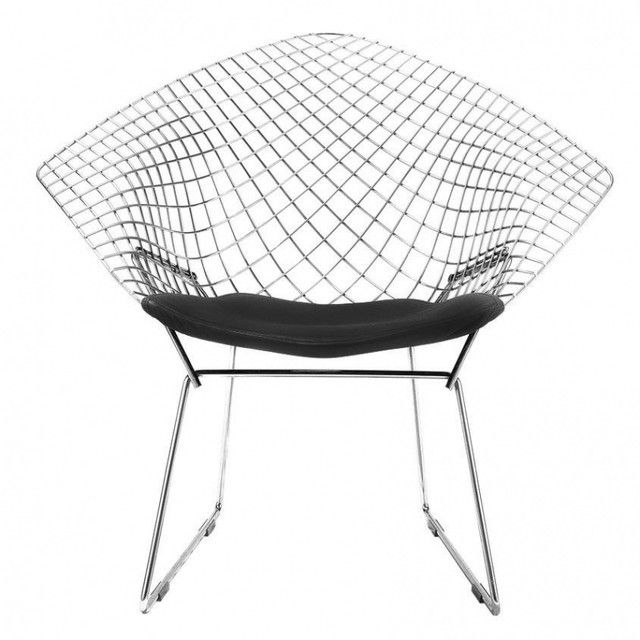
1 MIN · 1 OBJECT IDENTIFIEDHarry Bertoia said of his seats that they were made mostly of air, like sculptures. The Diamond Chair, designed in 1952 for Knoll, is a lattice of hand-welded steel wire, bent into a lozenge. Copied for seventy years, it can be recognised by touch.
Knoll, its maker since 1952
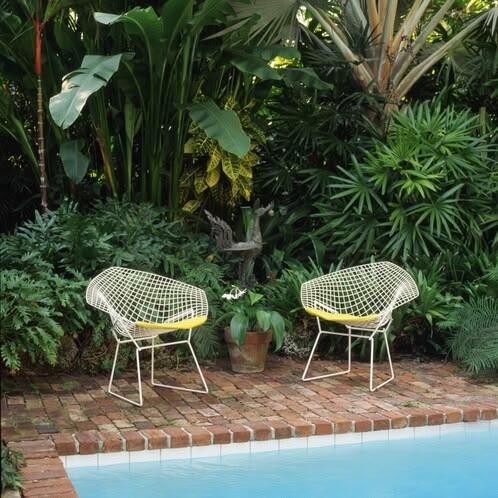
Knoll has produced the Diamond Chair without interruption since 1952. The wire is steel, welded and then chromed, or covered with a coloured polymer coating, usually white or black. The cushion, optional, attaches with small hooks. A Knoll label signs the edition under the seat or on the cushion.
What gives the copy away
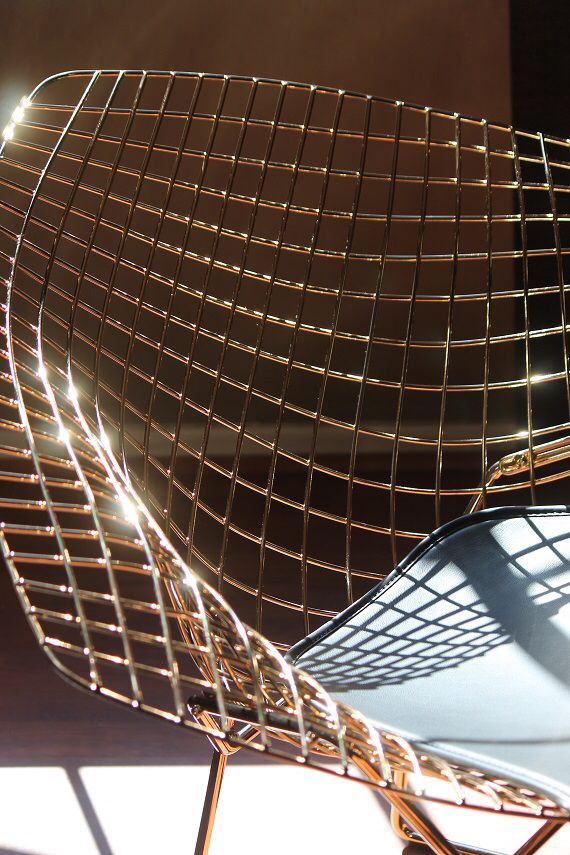
The wire: thinner on the copy, it vibrates under the hand and the seat sags. The welds: coarse, blistered, where those of the original are barely perceptible. The finish: the chrome on copies pits and rusts at the weld points, the coating flakes. The proportions, finally: the copy squashes the corolla and shortens the legs.
Price and verdict
New, a chromed Diamond Chair sits between €1,000 and €1,800 depending on finish and cushion. Vintage, a Knoll from the 1960s to 1990s starts between €400 and €900, and that is the good deal: the steel ages well, only the cushion needs replacing. Copies, between €150 and €300, do not last ten years. Verdict: vintage, without hesitation, once you have inspected the welds.
Spotted a steel wire armchair in a sitting room? Scan it on Beyit: Bertoia or imitation, edition, value and original cushion.
One photo, every piece identified.
Your room, a shop window, an inspiration screenshot: send the photo, we find the pieces and their alternatives at every price.
On iPhone, the app does the same from your camera.
The pieces, at your budget.
Every piece mentioned, with its alternatives — from vintage to dupe.

Gallery
4 images