

The Set Is a Character: Design in Four Films
Four interiors that share nothing in common, and the same lesson about what a room reveals.
2 MIN · 1 OBJECT IDENTIFIEDA director doesn't furnish a room to make it beautiful. He furnishes it to make it say something — who lives here, what they hide, what they inherited. Before it is a moodboard, cinema is a treatise on character through furniture. Four films, four interiors, one and the same lesson.
Call Me By Your Name — the inherited interior
A seventeenth-century villa in Lombardy, its frescoes faded, where nothing matches because nothing was chosen at the same moment: family furniture, old radios, weathered shutters. The opposite of the decorated interior — the accumulated one. The lesson: mismatch becomes style under a single condition, one shared temperature. Here, apricot and shade.
The Ghost Writer — minimalism as menace
A modernist beach house, concrete and glass, facing a grey sea. Polanski uses it as a bunker: everything inside is empty, smooth, glacial. The minimalism here does not soothe, it signals power and isolation. The counter-intuitive lesson: a room too tightly controlled always speaks of someone with something to hide.
The Grand Budapest Hotel — colour, owned
Mendl's pink, obsessive symmetry, the crimson lobby of a postcard Mitteleuropa (sets by Adam Stockhausen, an Oscar to show for it). Wes Anderson does the exact opposite of quiet luxury: saturation, pattern, confectionery. The lesson the market is rediscovering in 2026: frank colour is not a risk, it is a signature.
The Dreamers — bourgeois-bohemian disorder
A grand Parisian apartment of 1968, buckling under books and antiques. The direct cousin of the "collected" interior making its return among decorators: no overall plan, a hidden coherence, ten years of accumulation that ends up making sense. The lesson: a cultivated interior is built slowly, and never explains itself.
Four rooms, four characters
The heir, the man in hiding, the confectioner, the bohemian. None of these rooms is decorated. All of them are inhabited. The next time a shot stops you — the chair in the corner, the lamp on the desk — don't let it slip away.
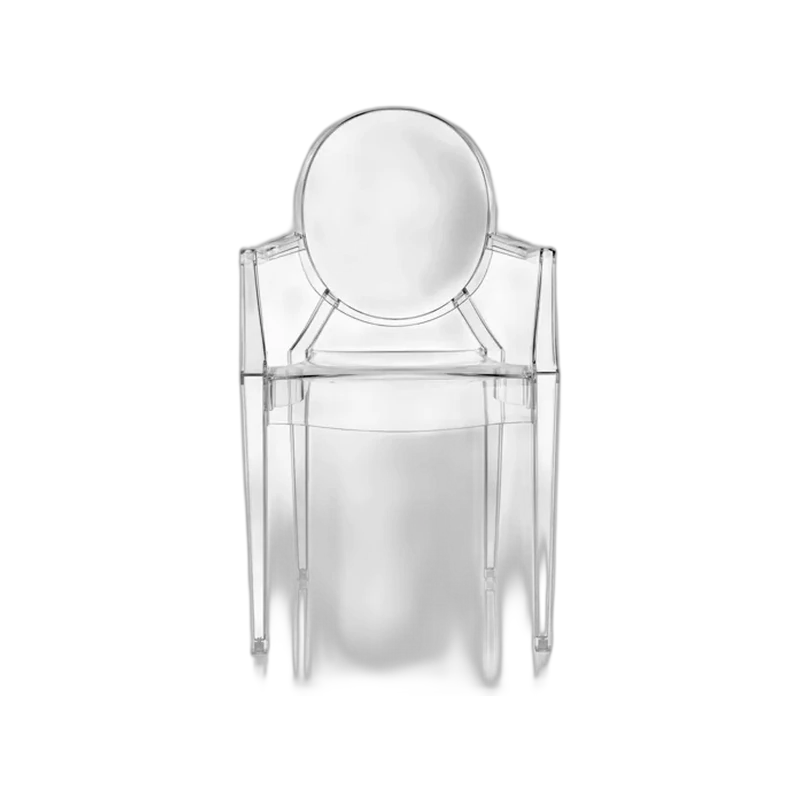
That chair in the film, which one is it? Take a screenshot, run it through Beyit: we'll find you the original and three budgets.
One photo, every piece identified.
Your room, a shop window, an inspiration screenshot: send the photo, we find the pieces and their alternatives at every price.
On iPhone, the app does the same from your camera.
The pieces, at your budget.
Every piece mentioned, with its alternatives — from vintage to dupe.
Gallery
4 images


