
The OFF, on pause: what you can buy, what gets reissued, what exists only once
Thirty-eight addresses, ten days. As the Paris Design Week closes, one useful question: what has a price, what has an editor, and what has neither?
2 MIN · 1 OBJECT IDENTIFIEDThe Paris Design Week closed on Saturday. We published thirty-eight articles in ten days, one address each morning. Reading them back in a single block, one thing leaps out: the objects we saw are not of the same species. Some have a price. Others have an editor. Others will never have either — and that is the first thing to know before you go looking.
What exists only once
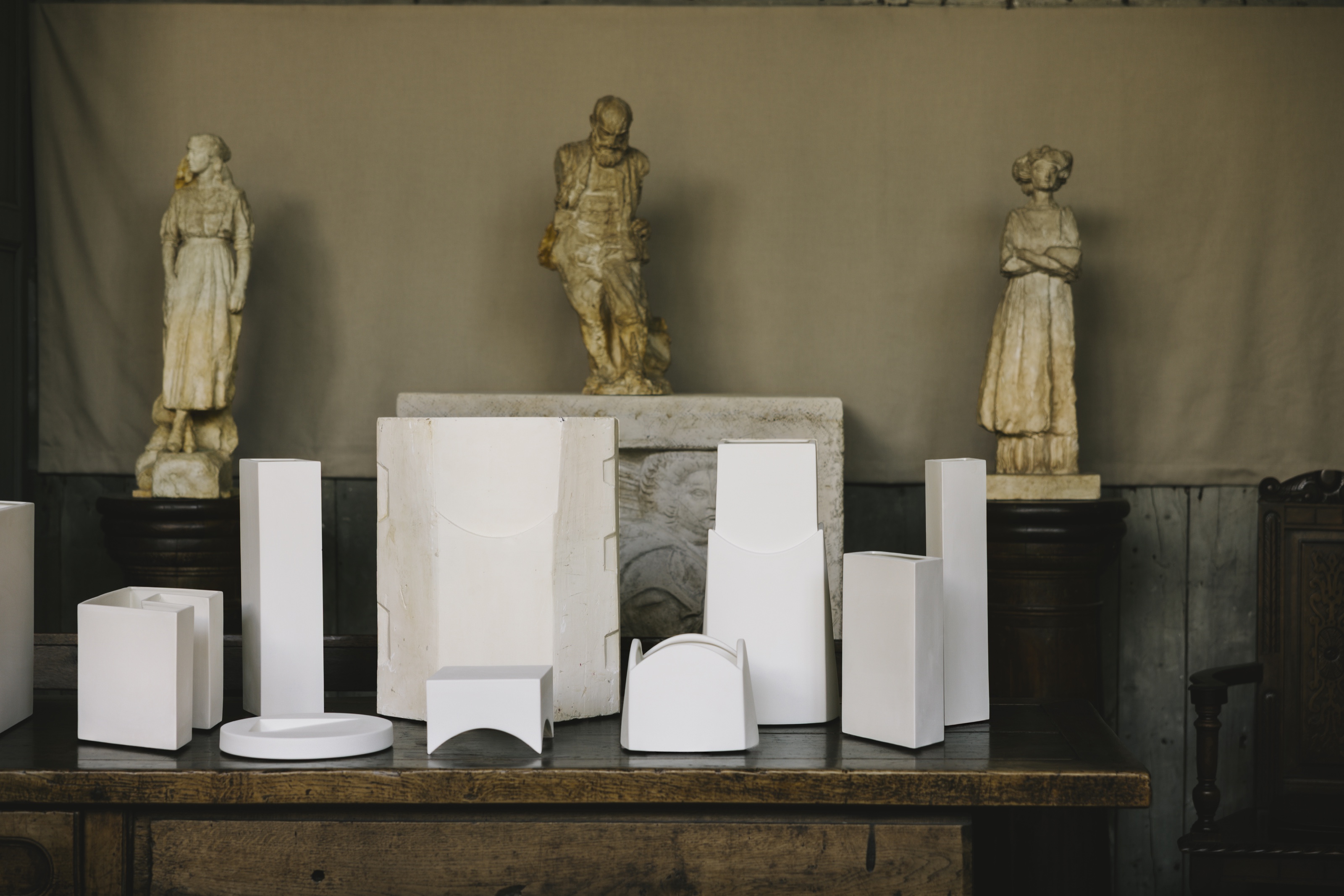
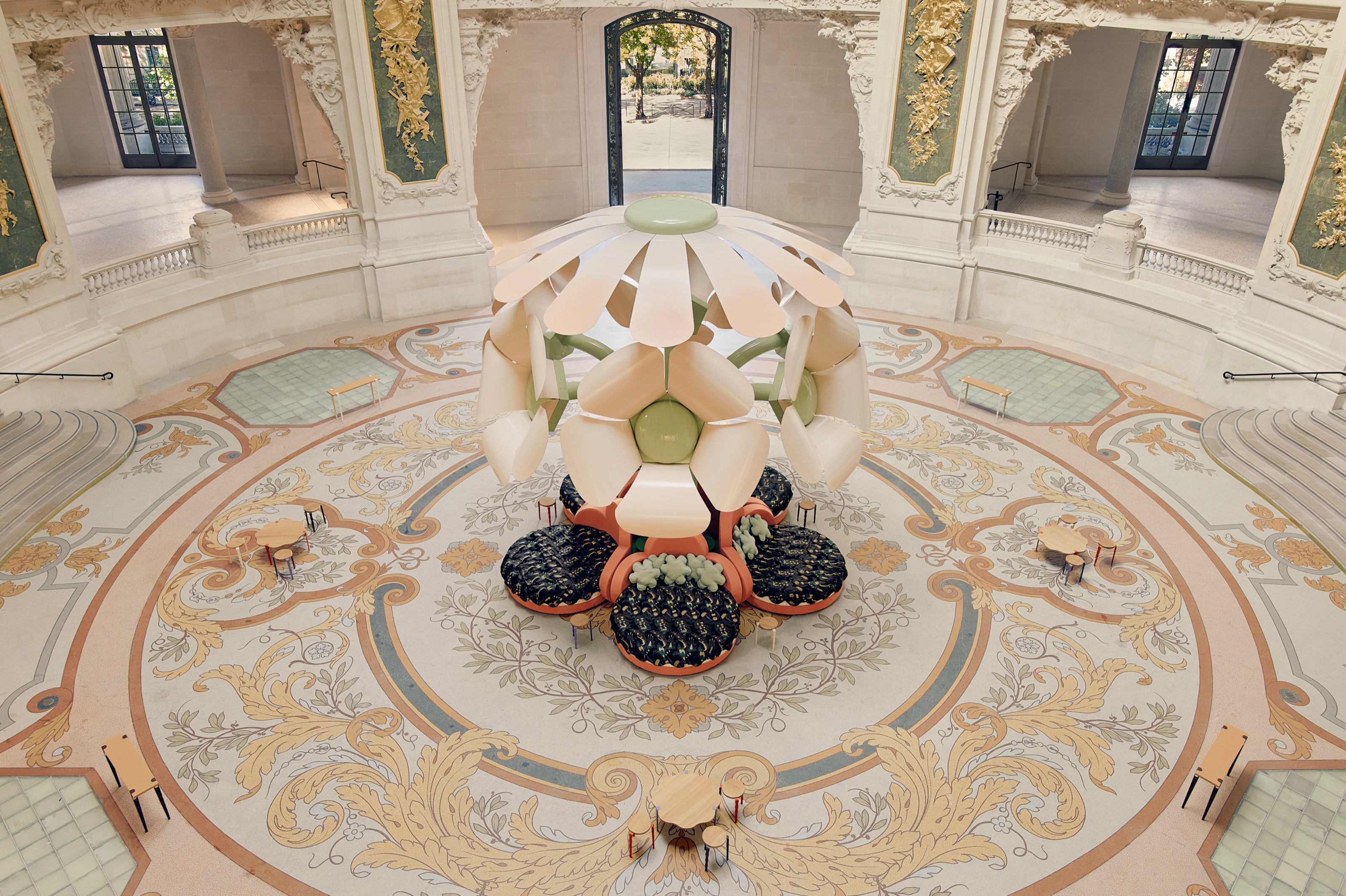
Uchronia's Grand Bouquet in the rotunda of the Palais d'Antin, Anthony Guerrée's stained-glass screens among Bourdelle's plasters, Patrick Jouin's Petals in Sèvres biscuit, ECAL's Polaris prototypes for Helinox: none of it can be ordered. An installation comes down, a collectible piece leaves with a single buyer, a biscuit from the Manufacture is made by hand in tiny runs, a school prototype stays a prototype. Faced with these objects, the right answer is not “here is the alternative at €200” — it is “this has no equivalent.” That is information, and it is worth as much as the other.
What gets reissued
The week talked a great deal about reissues, and for once with precision. Disderot recalled what separates a reissue (the original drawings, the rights, the agreement of the rights holders) from a reproduction that pays no one. The Studio Andrée Putman showed where the whole market comes from: Écart International, 1978, Eileen Gray and Mallet-Stevens put back into production — and, by extension, exposed to industrial copying. On the Rue Jacob, House of Finn Juhl relaunched three pieces from Hanne Wilhelm Hansen's 1961 bedroom, available since 10 September. These objects have an editor, a retail price, and a measurable difference from what you find at €90 under the same name.
What you buy at the workshop
Between the two lies the liveliest category of the OFF: production pieces made by those who designed them. Colomban de Mascarel's DePliable, whose single leg makes a stool or a side table depending on the angle. The steel tube of Ateliers J&J, bent in front of the pipe bender. The weavings of Les Moires, drawn from the archives of the Galeries Lafayette. Neither icon nor copy: a workshop price, full traceability, and no one else to sell them. This is exactly what we want to make visible.
What the scan does with it
Beyit answers three questions in front of an image: what it is, who edits it, how much. The OFF reminded us that the answer changes in nature depending on the box. On a reissue, you compare. On a workshop piece, you point back to the workshop. On a unique piece, you say it is unique. All three answers are right; the only wrong one would be to serve an “alternative” to an object that has none.
Did a piece seen during the Design Week stay in your mind? Scan the photo on Beyit: the object, the author, the editor when there is one — and the price when there is one.
One photo, every piece identified.
Your room, a shop window, an inspiration screenshot: send the photo, we find the pieces and their alternatives at every price.
On iPhone, the app does the same from your camera.
The pieces, at your budget.
Every piece mentioned, with its alternatives — from vintage to dupe.

Gallery
1 image