Interior scents, the social marker of 2026 décor
Why the same living room no longer smells the same at the neighbour's. And who decides what is still acceptable.
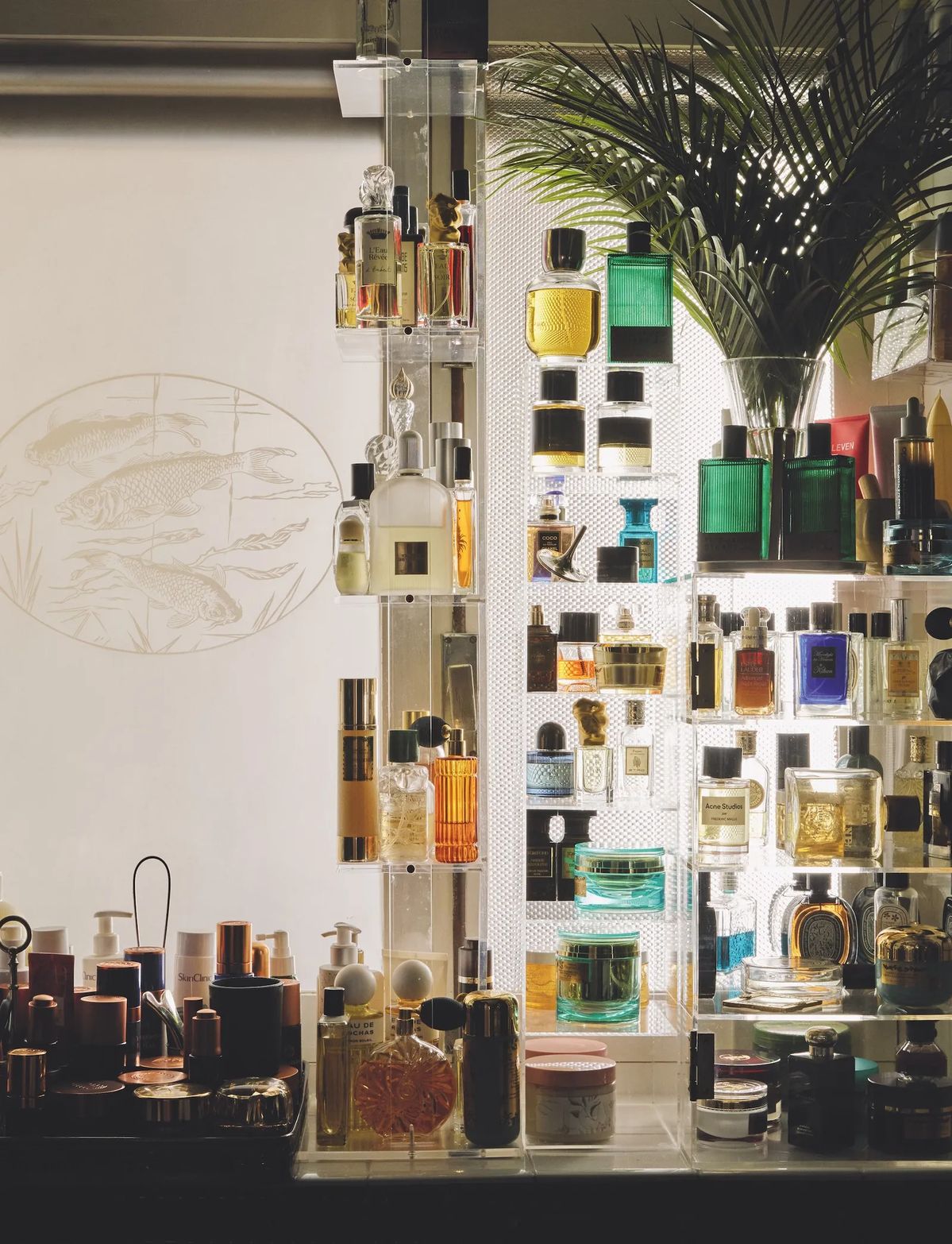
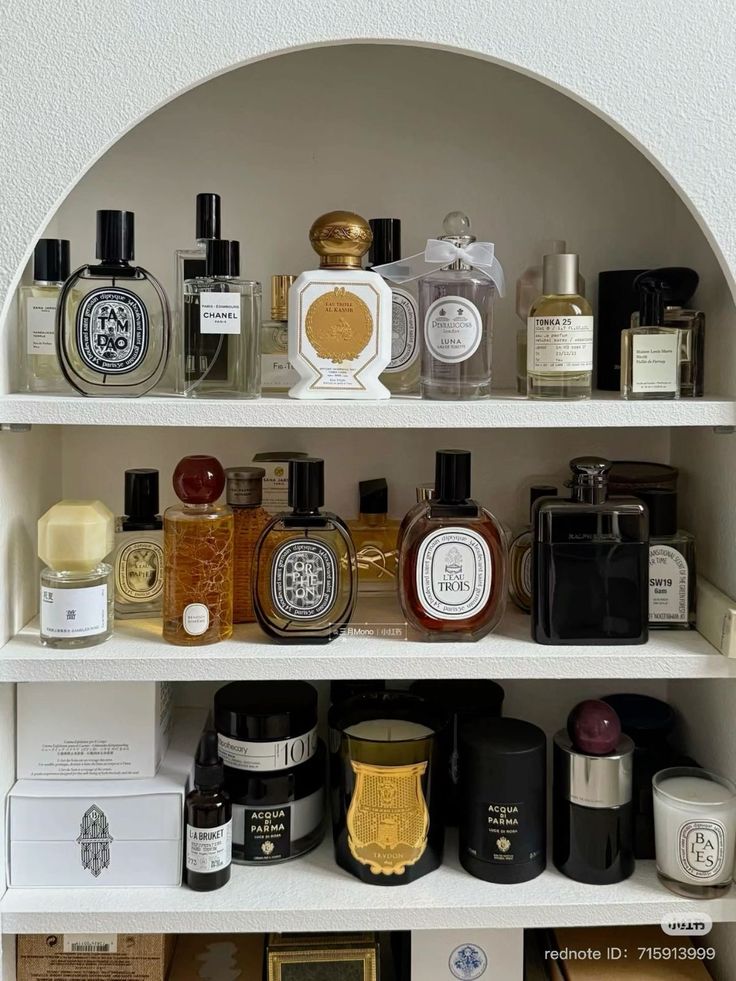
5 MIN · 5 OBJECTS IDENTIFIEDFor a long time, scenting one's home meant a Yankee Candle picked up absent-mindedly at Monoprix on a Saturday shop, or a burst of Febreze sprayed in panic before the in-laws arrived. In 2026, it has become a social marker as precise as a brand of shoes or a choice of mineral water. A Cire Trudon candle in the kitchen — no, wait, precisely not in the kitchen — an Astier de Villatte perfume burner in the bedroom, an Aera diffuser running low in the entrance hall: this is what the knowing visitor registers before even glancing at your sofa. The olfactory sense, long relegated to the rank of accessory, has in five years become the most discreet and most quickly decoded signature of any Parisian interior.
The shift of the olfactory sense
Three factors tipped the market in five years, and they must be named in order to understand how we got here. First, the democratisation of the quality candle: Diptyque, once exclusively Parisian, sold in three boutiques and a few hand-picked concept stores, is today distributed in eighteen countries and three thousand points of sale, without losing its aura — a rare feat in accessible luxury. Then, the arrival of electronic diffusers (Aera, Pura, Sensa, Vitruvi) which carried a technology first deployed in five-star hotel lobbies (Park Hyatt, Aman, Bulgari) into private flats — the promise being a coherent scent throughout the house, managed by app, the way one manages a thermostat. Finally, the TikTok effect: ten million views on the hashtag #interiorscenting in 2024, thirty-two in 2025, and a new generation that considers the choice of an interior scent a decision as important as the choice of a lamp or a sofa.
The three tacit rules
1. A signature, not a collection
Owning twenty different candles scattered around the house has become the mark of an amateur, even of the nouveau riche bourgeois trying to prove a point. Interiors with taste are recognised by a single olfactory signature — the same candle in several sizes throughout the house (pocket candle in the bathroom, large format in the living room, diffuser refill in the entrance), everything within the same olfactory profile. Diptyque Baies remains the absolute reference (fig, blackcurrant, rose — a 1968 classic), but Cire Trudon Ottoman (tobacco, rose, oud) doubled in recognition in 2025 and has imposed itself among thirty-somethings who want a more carnal signature.
2. No scent in the kitchen
This is the strictest rule, and the one most quickly broken by beginners. Mixing an amber candle with a truffle risotto has become, in certain Parisian circles, a social offence as visible as a poor food-wine pairing at a restaurant. The perfumers themselves now advise it explicitly: the kitchen must smell of the kitchen. One tolerated exception: a sliver of pure beeswax (unscented) in a burner, which purifies the air without competing with food smells. Everything else — vanilla candle, eucalyptus burner, citrus diffuser — qualifies as a social misstep as much as a sensory error.
3. Light it ten minutes before guests arrive, not during
A candle blazing as the first guest rings the bell is a faux pas. The ideal: light it ten minutes ahead, long enough for the wax to melt evenly and the top notes to diffuse, then put it out on arrival, and let the scented silence take over. A candle burning through dinner has become the sign that one is unused to entertaining, or confuses atmosphere with demonstration. A further subtlety among true connoisseurs: relighting it for fifteen minutes mid-evening if the conversation has stretched out and the guests are clearly staying another hour — a discreet relay that signals attention.
Who is benefiting
Astier de Villatte. Their John Galliano 2025 vintage candle (special mention to the scent "Bibliothèque", black fig and old paper) sold out in six weeks and was never reissued. Four-month waiting list for the 2026, due in October. The price of a second-hand Astier on Vestiaire Collective regularly exceeds one hundred and fifty euros for sold-out editions.
Cire Trudon. The Méditerranée range, launched in 2024 under the artistic direction of Lyn Harris, pushed the brand into upmarket mainstream. Eighteen per cent growth in 2025, four international flagships opening in 2026 (Tokyo, Seoul, Milan, Beverly Hills). The signature Ernesto (leather, tobacco, vanilla) has remained their global best-seller since 2018.
Aera. The 200-euro Californian diffuser has become the year's invisible décor object. Sold at Liberty London, Le Bon Marché (since March 2026), and Selfridges. The refills (60 euros each, lasting 80 days) make up a subscription model that earns more than the device itself — the Hewlett-Packard printer model applied to scent. A serious rival: Pura, more accessible at 130 euros, but with diffusion quality still inferior according to perfumers' blind tests.
The olfactory profiles rising and falling in 2026
On the rise: mineral notes (flint, wet stone, slate — popularised by the "Frédéric Malle Pierre" collection), sharp green notes (fig leaf, tomato, geranium), unexpected edible notes (toasted bread, raw honey, brown butter but never vanilla). On the decline: anything that smells of saturated oud (the 2018-2023 overdose), sweetened woods (honeyed sandalwood, vanilla cedar), heavy florals (tuberose, solar jasmine). Perfumers call this shift the "de-sugaring" of interior scent — an exact parallel to what happened in pastry during the 2010s.
And now?
The interior scent market will double between 2025 and 2028 according to Euromonitor International — moving from four billion euros to eight billion worldwide. The brands on the rise in 2026 are those playing the opposite of Yankee: mineral notes, almost imperceptible, to be worn like a personal perfume rather than a hotel atmosphere. Worth watching: DS & Durga (New York), Sana Jardin (London), Maison Crivelli (Paris), which is investing heavily in the diffuser segment in 2026.
The great shift to watch: the candle will probably become obsolete as a permanent signature, and risks migrating towards occasional use (dinners, parties, quiet moments). Electronic diffusers (Aera, Pura, Sensa) are replacing it in the most closely watched interiors for everyday — zero flame, programming by room, adjustable intensity. The candle will remain, but as an object of ritual use, not as a permanent signature — much as vinyl survived streaming by redefining itself as a collector's and ritual object.
One photo, every piece identified.
Your room, a shop window, an inspiration screenshot: send the photo, we find the pieces and their alternatives at every price.
On iPhone, the app does the same from your camera.
The pieces, at your budget.
Every piece mentioned, with its alternatives — from vintage to dupe.


Gallery
6 images