The Free-Standing Coat Stand: Stability, Height, and the One That Truly Stands Up
Weighted base, standard height, wood or metal, hallway or bedroom: the guide to the coat stand that won't tip under the first winter coat.
3 MIN · 5 OBJECTS IDENTIFIEDThe free-standing coat stand is the most underrated piece in the hallway: bought last, chosen by eye, and replaced the first winter when it leans under a single coat. Yet it should be chosen like a floor lamp — from the base, never from the top.
Stability: it's all in the base
A coat stand carries its load high up and offset to one side — the worst mechanical configuration there is. What saves it: a heavy base (cast iron, marble, thick solid wood) and a wide one, or a well-splayed tripod. The in-store test is simple: hang a real winter coat on a single side peg. If it sways or lifts off the base, it will fall at home — taking the coat, the bag and the lamp beside it with it.
The right height
The standard for the type sits between 165 and 180 cm: the high pegs above shoulder level, so coats hang without trailing, yet reachable without stretching. Beyond 185 cm, the piece becomes a mast reserved for the tall. With children, look for models with two levels of pegs — or accept that theirs live on a low wall peg alongside.
Wood or metal
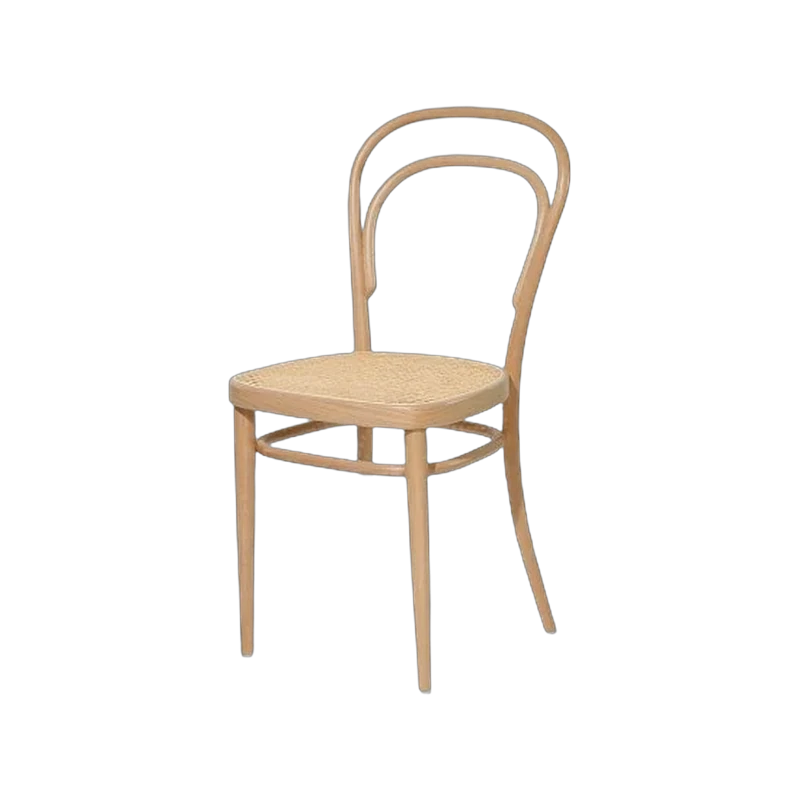
Bent wood has history on its side: it is the bistro coat stand of Thonet, a generous silhouette that softens a hallway and suits Scandinavian interiors as well as classic ones. Metal — black lacquered tube, slim steel — holds the graphic register and slips into narrow hallways. The rule of coherence: the coat stand is the first thing you see on entering; it sets the tone for the rest, so it had better own it.
Hallway, bedroom, study: three uses, three choices
In the hallway, it carries the everyday coats — priority to stability and to the number of pegs. In the bedroom, it becomes a valet stand: tomorrow's outfit, the jacket worn twice that is neither dirty nor storable — a lighter, more sculptural model is enough. In the study, a single peg does the job; it is the ideal pretext for the fine vintage piece.
The five-coat rule
An overloaded coat stand becomes a shapeless mound that swallows the hallway. Five or six pieces at most in real use: the coats of the current season, one for a guest, that's it. The rest lives in the wardrobe. It is a display piece as much as a storage one — what hangs on it is seen, so it is chosen.
And the wall-mounted version?
When floor space is lacking, the wall takes over: pegs set 160–170 cm from the floor, the shoulder height that lets coats hang straight. The type has its joyful icon — the Hang It All by Charles and Ray Eames, lacquered balls on steel wire, designed in 1953 for children and adopted ever since by every hallway that refuses gloom.
The Beyit tip
In vintage, two checks before buying: the plumb — set on a flat floor, it must stand straight when empty; a coat stand that leans empty will always lean — and the central tightening of column models that screw together, which is redone in ten minutes with a spanner. The patina, on the other hand, cannot be redone: it is precisely what you are buying.
Spotted a coat stand in a photo?
If a model stops you in a hallway photo, scan it: Beyit identifies the piece and offers the original and its alternatives at every price.
One photo, every piece identified.
Your room, a shop window, an inspiration screenshot: send the photo, we find the pieces and their alternatives at every price.
On iPhone, the app does the same from your camera.
The pieces, at your budget.
Every piece mentioned, with its alternatives — from vintage to dupe.