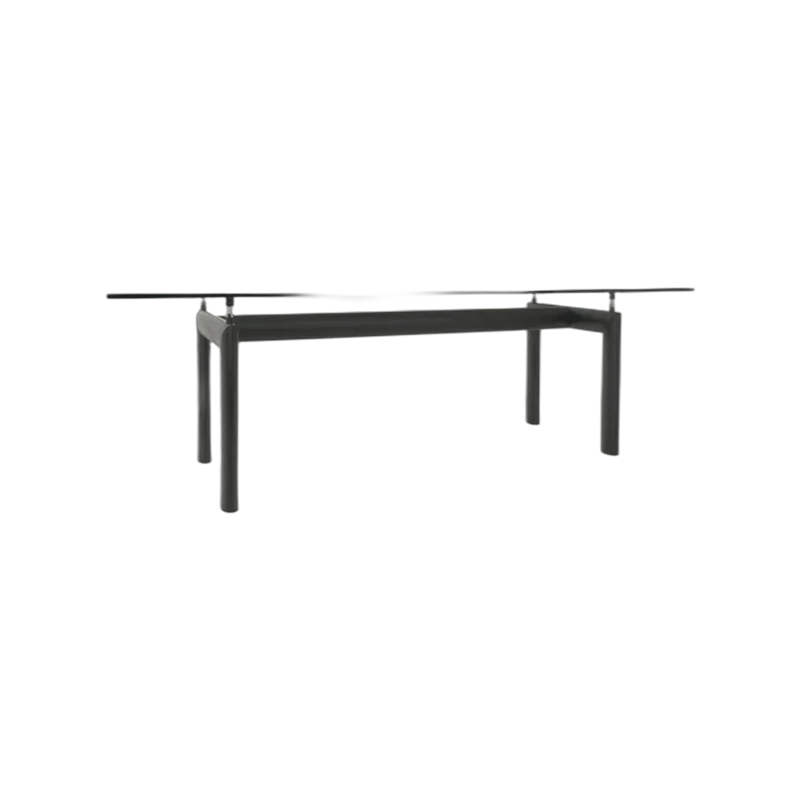
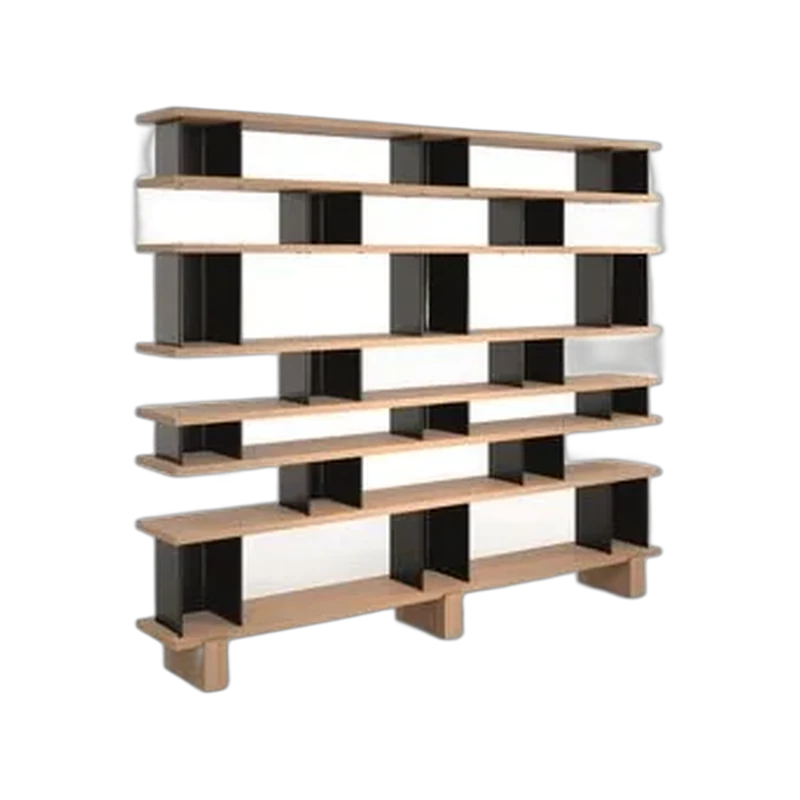
Alex de Rouvray: his furniture is named after his street
The Mayet range, drawn in 2018, takes its name from the street where the shop stands. Furniture steeped in Jean-Michel Frank, Le Corbusier and Perriand, by a Stanford-trained engineer.
2 MIN · 2 OBJECTS IDENTIFIEDTo name an armchair after a street is to give it an address before you give it a style. At Alex de Rouvray's, the address is his own: the Mayet range takes its name from the street where the shop stands.
An engineer who publishes furniture
Alexandre de Rouvray was born in Paris in 1978. He studied design at Stanford, in California, then joined the École nationale supérieure d'arts et métiers in Paris for a doctoral thesis in industrial engineering. He taught at NYU, worked in studios in New York and Paris, founded a product-design studio in 2009, then a furniture publishing house in 2012.
This path explains the work better than any manifesto: someone who has written a thesis in industrial engineering does not draw a chair the way someone fresh out of the Arts Déco does. The dialogue between the drawing and the production is not, for him, an intention; it is his training.
Families, not pieces
The furniture draws on the French and European modernist heritage — Jean-Michel Frank, Le Corbusier, Charlotte Perriand — and follows the Bauhaus motto, less is more, with an unapologetically functionalist approach. The pieces are not conceived in isolation: they are arranged into coherent families, each piece echoing the next.
The Séverin range received the Label de l'Observeur du design in 2014; the Mayet range was drawn in 2018. Pieces by the house are listed with the Mobilier national.
Why it interests us
Because it is the textbook case of what we set out to make legible. When a design descends explicitly from Perriand or Jean-Michel Frank, the question "is it a copy?" has no simple answer, and it deserves better than a reflex. A piece that claims a lineage, works it and signs it is not a reproduction: it is a bloodline, and that is how furniture has always moved forward. A reproduction, by contrast, copies a form without citing it, without altering it and without paying anyone.
Knowing how to tell the two apart is very nearly the whole of our trade.
Go there
Alex de Rouvray Design — 23 rue Mayet, 75007 Paris. Exhibition Empreintes during Paris Design Week.
The Beyit gesture: photograph a piece and scan it — the tool tells you who publishes it, at what price, and what else exists around it.
One photo, every piece identified.
Your room, a shop window, an inspiration screenshot: send the photo, we find the pieces and their alternatives at every price.
The pieces, at your budget.
Every piece mentioned, with its alternatives — from vintage to dupe.