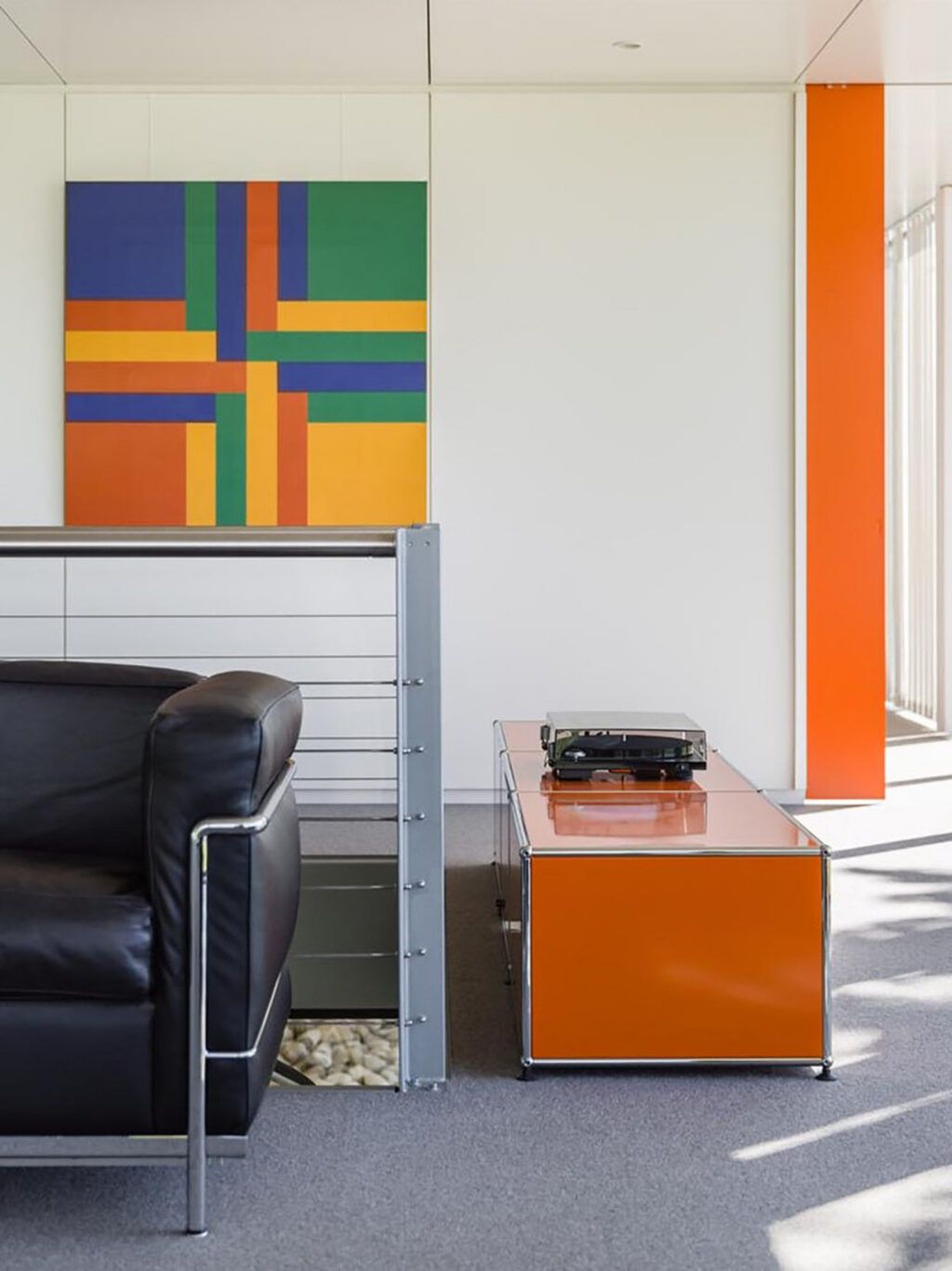

Second-hand USM Haller: values, prices, pitfalls
The Swiss modular system loses almost nothing on resale. What a used configuration is really worth, and what to check before buying.
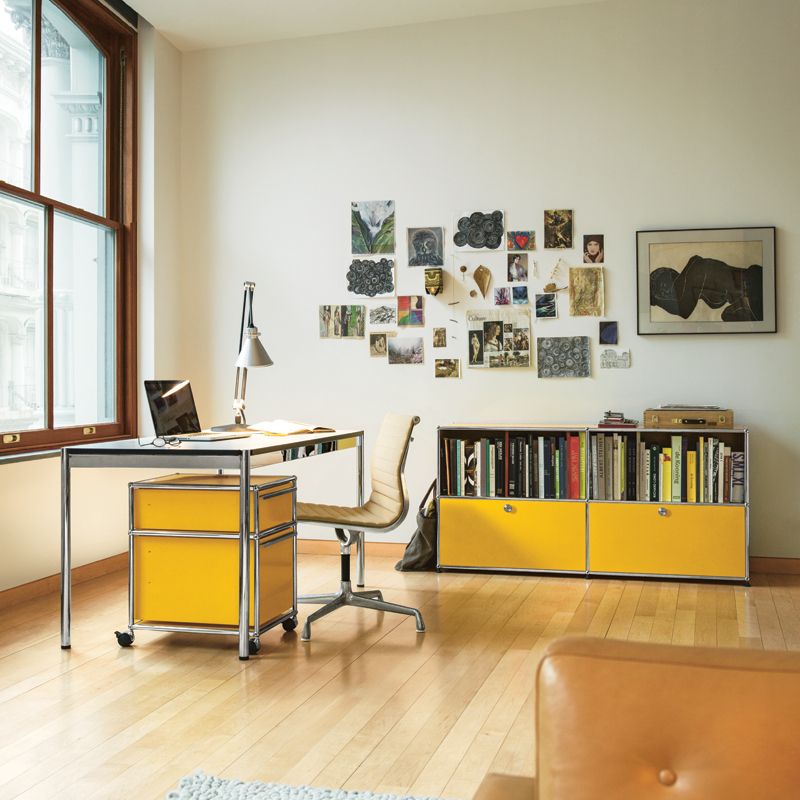
1 MIN · 1 OBJECT IDENTIFIEDFew pieces of furniture survive resale like the USM Haller. Designed in 1963 by Fritz Haller and Paul Schärer, the Swiss modular system changes hands second-hand at prices that sometimes brush against the cost of new. Here is how to read its value.
Why the value holds
Production unchanged for sixty years, chromed balls and tubes compatible across every generation, total repairability: a module from 1985 can be extended with parts from 2026. That continuity makes the USM a liquid object, almost a currency.
The prices observed
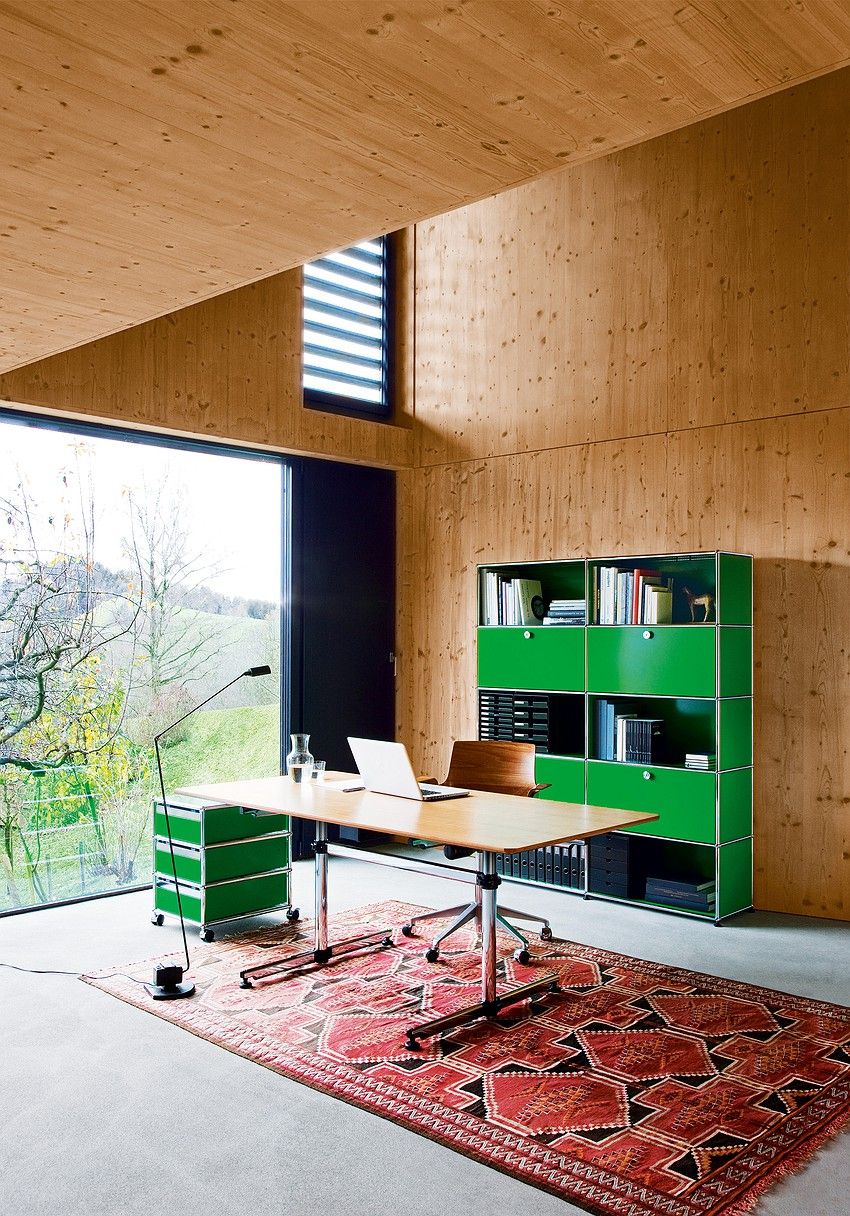
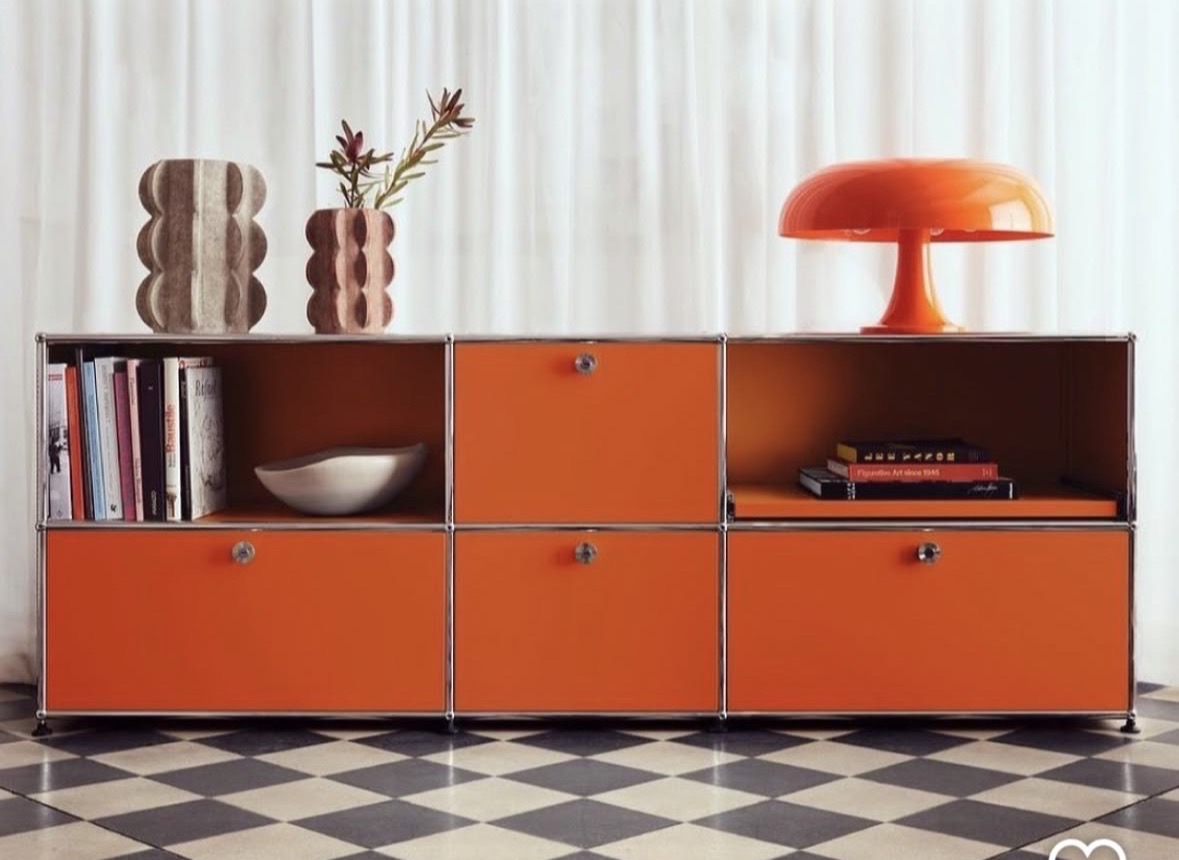
A low two-door cabinet trades second-hand between €800 and €1,500 depending on condition and colour; a large office shelving unit climbs to €2,500-4,000. The equivalent new piece often costs 20 to 40 per cent more. Rare colours — green, orange, gentian blue — command a premium over beige and white.
What to check
Rust at the foot of the tubes, warped panels, balls forced during repeated disassembly. The shelves are easy to replace, the chromed structure far less so. A module repainted outside the USM palette loses its resale value.
Where to look
Dealers specialising in reconditioned office furniture, corporate clearances, and general vintage platforms where configurations sell fast when the price is right.
Spotted a USM configuration? Scan it on Beyit to place its price.
One photo, every piece identified.
Your room, a shop window, an inspiration screenshot: send the photo, we find the pieces and their alternatives at every price.
On iPhone, the app does the same from your camera.
The pieces, at your budget.
Every piece mentioned, with its alternatives — from vintage to dupe.

Where to find USM Haller
At the house itself, or at the retailer that stocks it.
Gallery
4 images