Smoked glass is dead. Clear glass is back.
What happened between the two. And who's benefiting.
5 MIN · 5 OBJECTS IDENTIFIEDFor five years, smoked glass was everywhere. Coffee tables, display cabinets, lamp bases, sideboard tops, bathroom partitions, shower doors. It was the favourite material of interiors that wanted to look serious without spending much, the aesthetic shortcut of an era still searching for its frame. In 2026, it's over. Clear glass is back, and it has even returned a name to the spotlight that had been left on standby: Pierre Chareau. The shift happened in eighteen months, without a manifesto, without an announcement, by capillarity — like nearly every aesthetic shift.
The age of smoke (2019–2024)
Grey or bronze tinted glass exploded between 2019 and 2024 for three main reasons. First, it forgave everything — scratches, dust, reflections, fingerprints. A smoked glass coffee table could stay sticky for three weeks without anyone noticing, which made it a hygienic nightmare but a photographic dream. Second, it photographed well on Instagram, where interiors content lives: smoke absorbs flash, never throws back parasitic reflections, and makes a room look more "studio mood". Third, it could be produced very cheaply in Asia (vacuum deposition tinting became trivial in Shenzhen around 2018) and let mid-market brands — H&M Home, La Redoute Intérieurs, Westwing, Made.com before its collapse, Bonami — offer "design" pieces under three hundred euros.
Over those five years, millions of homes were furnished with smoke-grey coffee table tops, chromed-leg consoles, translucent bronze bar carts, blackish glass wall shelves. The material had become a shortcut — to the point that a clear glass coffee table looked almost old school, like a faintly embarrassing inheritance from one's grandparents.
The turn (2024–2025)
The shift happened without an official announcement, without a designer's manifesto, without a Wallpaper feature. Three indicators changed in twelve months, and side by side they make the movement obvious.
First sign. The Italian editors (Glas Italia, Fiam, Cassina, Knoll Italia) renamed all their lines "transparent" rather than "smoked" in their 2025 catalogues. A marketing decision that preceded, and triggered, the movement. Glas Italia's sales team confirmed off the record: showroom buyers had been asking for "the clear version" since autumn 2024, with no one quite knowing why.
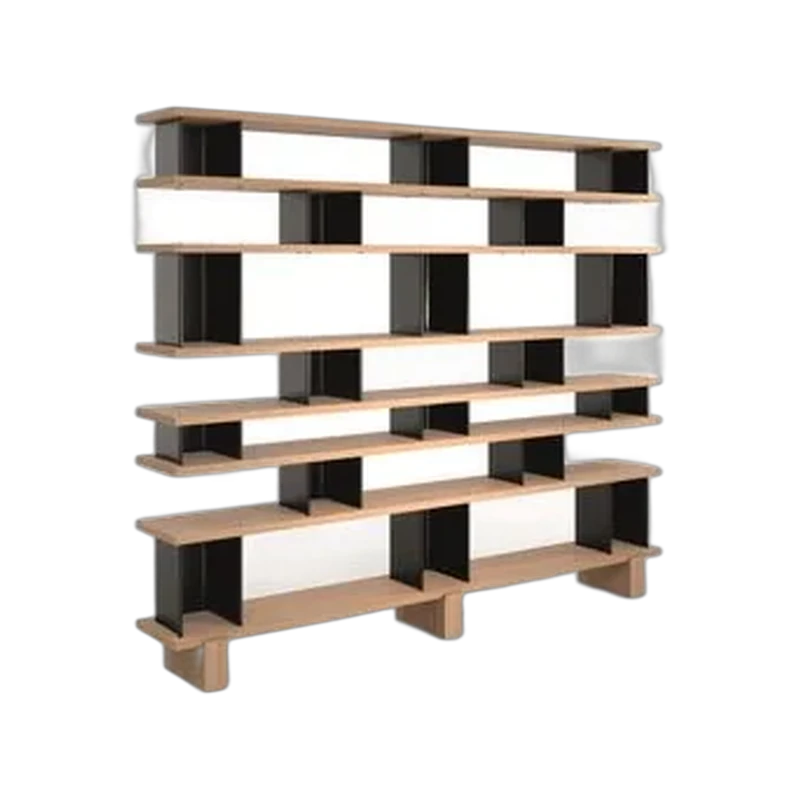
Second sign. Drouot and Christie's sales of Pierre Chareau furniture tripled in 2024. The Maison de Verre, built in Paris in 1932 at 31 rue Saint-Guillaume, has become once again the absolute reference for interior architects — Chareau invented the Nevada glass block there, the transparent partition, the glass-brick slab as a structural element. Its rediscovery coincides with the opening, in 2024, of more regular guided tours of the house, long closed to the public.
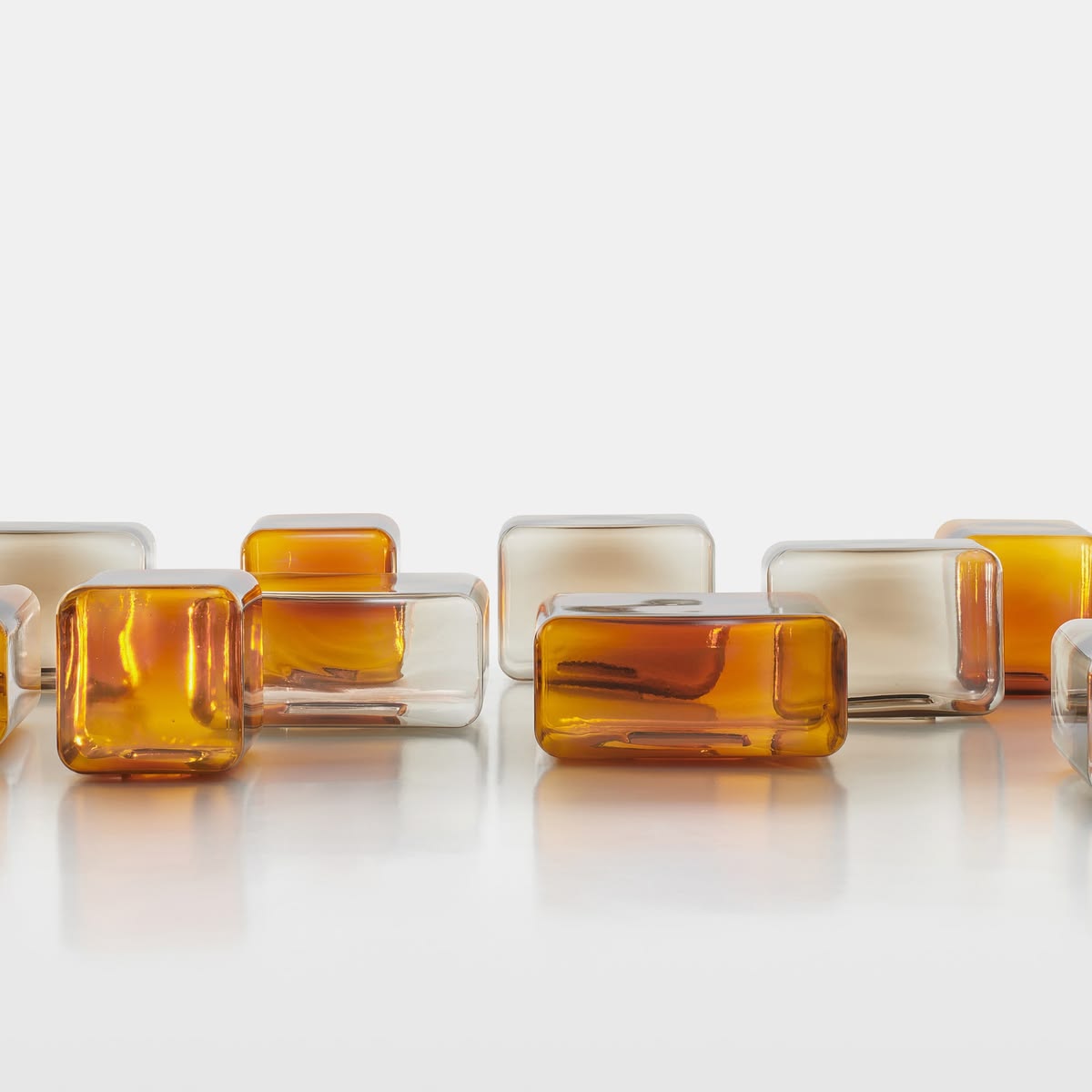
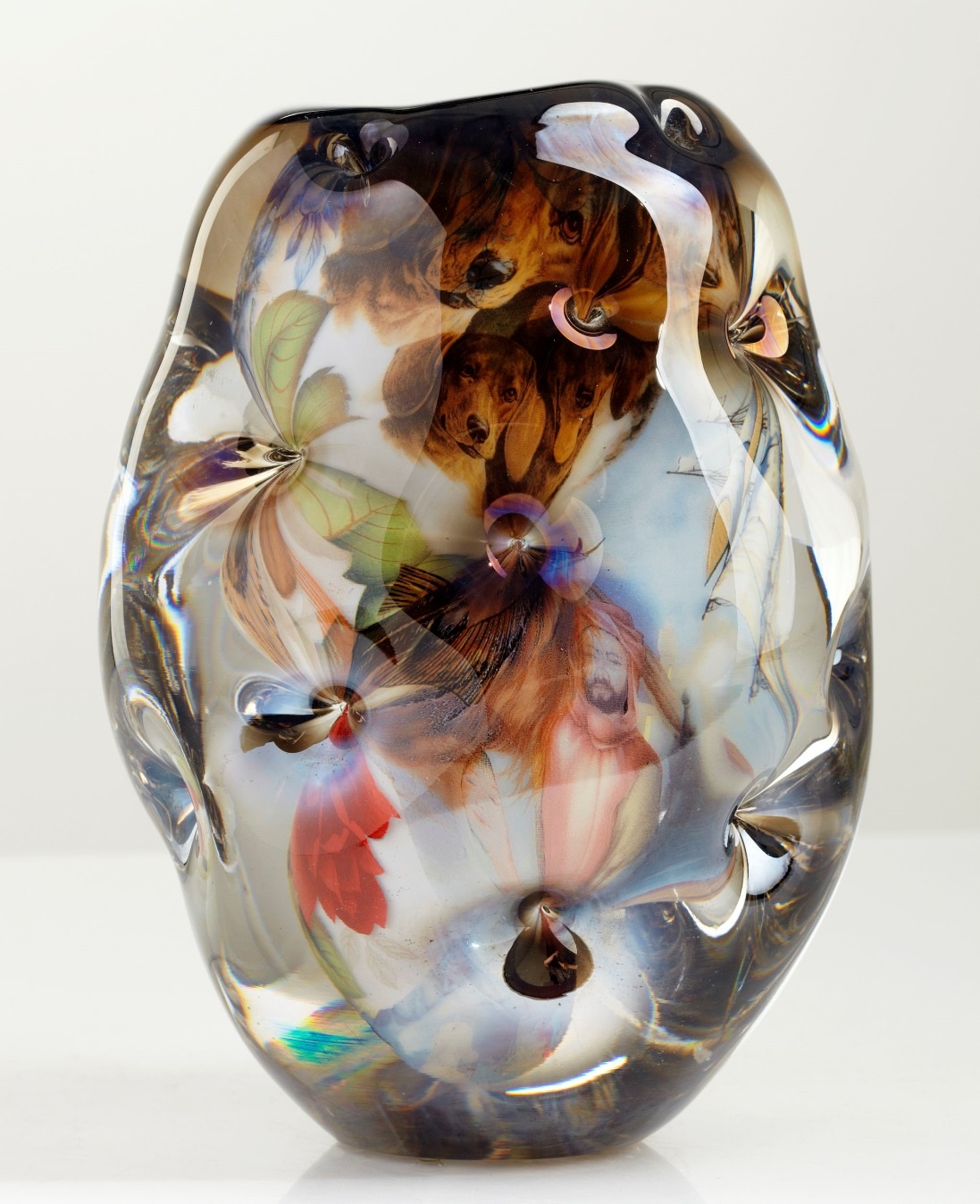
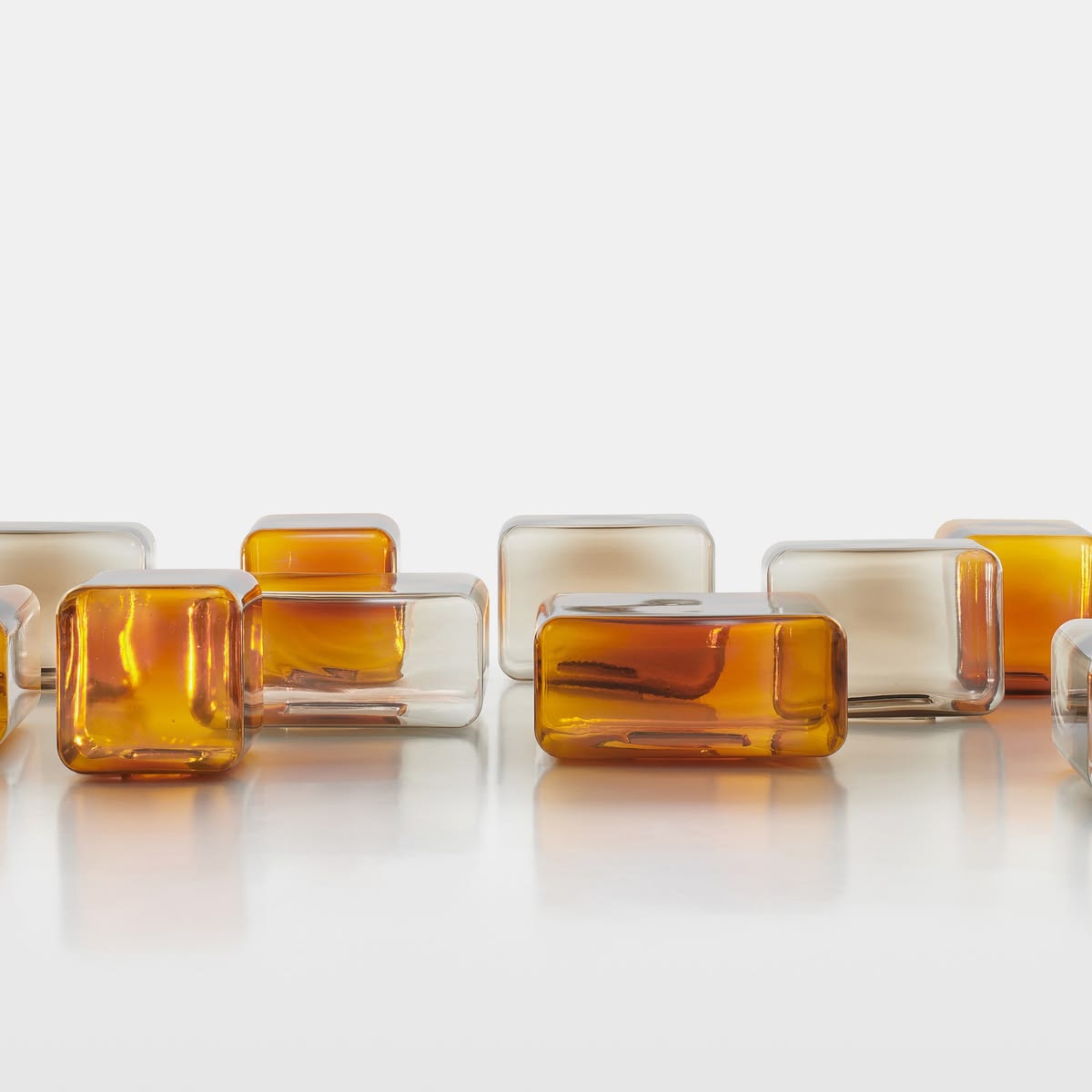
Third sign. Recent designers (Sabine Marcelis, Studio Ossidiana, Charlotte Kingsnorth, even Daniel Arsham in his furniture collaborations) have released pieces almost exclusively in clear or faintly tinted glass, sometimes with a pale amber wash that recalls French Art Deco. Smoked glass is now produced only by mid-market manufacturers, which has tipped it into the "cheap" category — exactly the move corduroy made in 2021, or veined Calacatta marble in 2017.
Why transparency wins
It talks to the other furniture
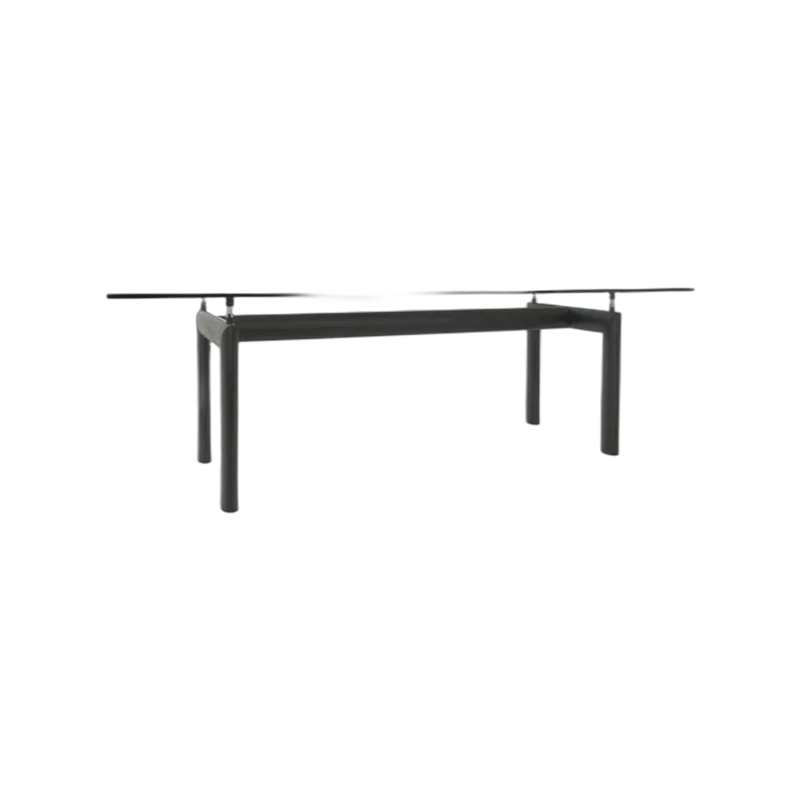
A clear glass coffee table set on a Berber rug lets the pattern show through. Placed near a washed linen sofa, it reveals the weave. On a Hungarian point parquet, it discloses the grain. Smoked glass, by contrast, created a shadow zone that ate the room like a black hole in the composition. The clear converses; the smoked imposes.
It forgives less, so it demands more
Clear glass shows everything: dust, the print of a tumbler, the forgotten drop, the ring left by a mug. It has become a social signal — the exact inverse of the smoked coffee table that could stay sticky for two months without anyone noticing. To have a spotless transparent coffee table is to tell your visitor: I live in a house that is kept. It's an investment in daily discipline, and the exact inverse of smoke, which was an investment in slackness.
It elevates what you put on it
A black ceramic on clear glass: strong. The same on smoked glass: invisible, swallowed by the top. An art book laid flat on a transparent surface reads like a displayed work. The editors understood this, and clear pieces have become exhibition trays for the objects that matter. Direct consequence: 2026 is seeing a parallel return of singular objects placed on the coffee table (signed ceramics, stacks of books, candleholders), which would have made no sense three years ago on a smoked top.
Who's benefiting
Four players bet right, and are fully reaping the movement.
Glas Italia. Reissue of Patricia Urquiola's Bird table in transparent only, selling for over four thousand euros. Four-month waiting list, delivery scheduled for September 2026.
Petite Friture. The Vertigo table with a clear top, black or patinated brass legs. The editor's bestselling piece of 2025 — figures kept confidential, but, according to our sources, above twelve thousand units.
Sabine Marcelis. The Dutch designer, who worked only in tinted resin until 2022, made clear glass (sometimes backed with a thin amber layer) her signature with the "Soft Geometry" collection shown at Salone 2024. Her "Disc" coffee table has gone from four thousand to nine thousand euros in eighteen months.
Selency, on the secondhand side. Pierre Chareau pieces, but also fifties Italian glass furniture (Fontana Arte, Max Ingrand, Pietro Chiesa above all), have seen their prices double. An "anonymous" transparent console from the sixties now sells for three times what it fetched two years ago. The "vintage glass" segment has become the platform's most profitable.
The particular case of the glass brick
Unexpected consequence of Pierre Chareau's return: the glass brick, a material long tied to the cheap nineties bathroom, is back as a noble architectural element. Parisian architects (Charlotte Perriand Studio, Atelier Senzu, Mathieu Lehanneur on his residential projects) are specifying it again, sometimes as a partition wall, sometimes as a simple corner panel. The Italian editors Seves and Vetroarredo, who had been producing only for public commissions for fifteen years, reopened a residential line in 2025.
And now?
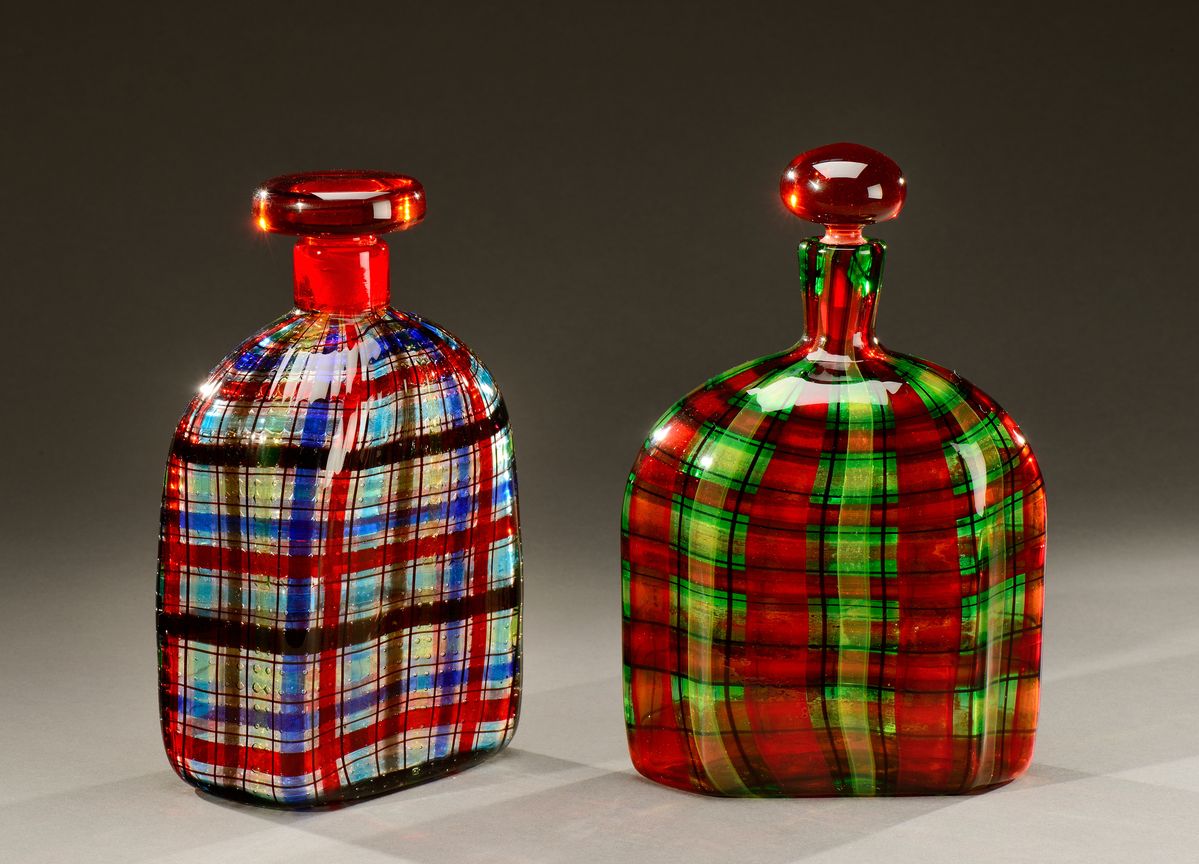
Smoked glass is not dead, strictly speaking — it survives in authentic vintage reissues (Carlo Scarpa for Venini, Franco Albini for Cassina, certain Joe Colombo pieces), where the smoke is part of the original drawing and is therefore no longer a fashion but a document. But as a contemporary material of choice, as a default option, it's out.
If you have a smoked glass coffee table at home, there are three options, depending on your patience. Keep it for ten years — it will come back, as all dead fashions do (smoked glass will return around 2034–2035, on the usual fifteen-year interiors cycle). Sell it now — its price will keep falling for three years before stabilising, and each month of waiting costs five to ten per cent. Own it as a counterpoint — set it against a strong transparent piece (Anna Karlin's Tubo Wide lamp, for instance), to make it function as a historical shade rather than a misstep.
One photo, every piece identified.
Your room, a shop window, an inspiration screenshot: send the photo, we find the pieces and their alternatives at every price.
On iPhone, the app does the same from your camera.
The pieces, at your budget.
Every piece mentioned, with its alternatives — from vintage to dupe.



Gallery
7 images