
Matisse arrived in Nice in 1917 and never really left. In 1938 he settled at the Régina, a former palace hotel in Cimiez divided into flats; he left it for Vence during the war and returned in 1949, staying until his death in 1954. His canvases are inventories of what he had at home.
The home
Two flats joined together, very tall windows, whitewashed walls, an aviary of dozens of birds, plants everywhere. Bedridden for much of his final years, he had his objects moved about, drew in charcoal fixed to a pole and pinned his cut-outs to the walls: the frieze of swimmers that would become La Piscine was born in his dining room, in 1952. Nearby, the Musée Matisse holds part of his collection of objects.
What you see there
The rocaille chair, a Venetian baroque seat in silvered wood that he bought in 1942 and painted from 1946, on its own, like a portrait. Kuba cloths from the Congo with geometric patterns, hung as the background of a painting. Moorish tables, a pewter jug, a Chinese vase, pottery: the same dozen objects returns from canvas to canvas, repainted, moved. And at Vence, the Chapelle du Rosaire, completed in 1951: white walls, tiles drawn in outline, yellow, green and blue windows — an entire interior conceived by him.
The palette
Limewash white, black laid flat, and three colours he does not mix: ultramarine blue, green, lemon yellow. Red in touches. The colours of the chapel are those of his rooms.
What to take home
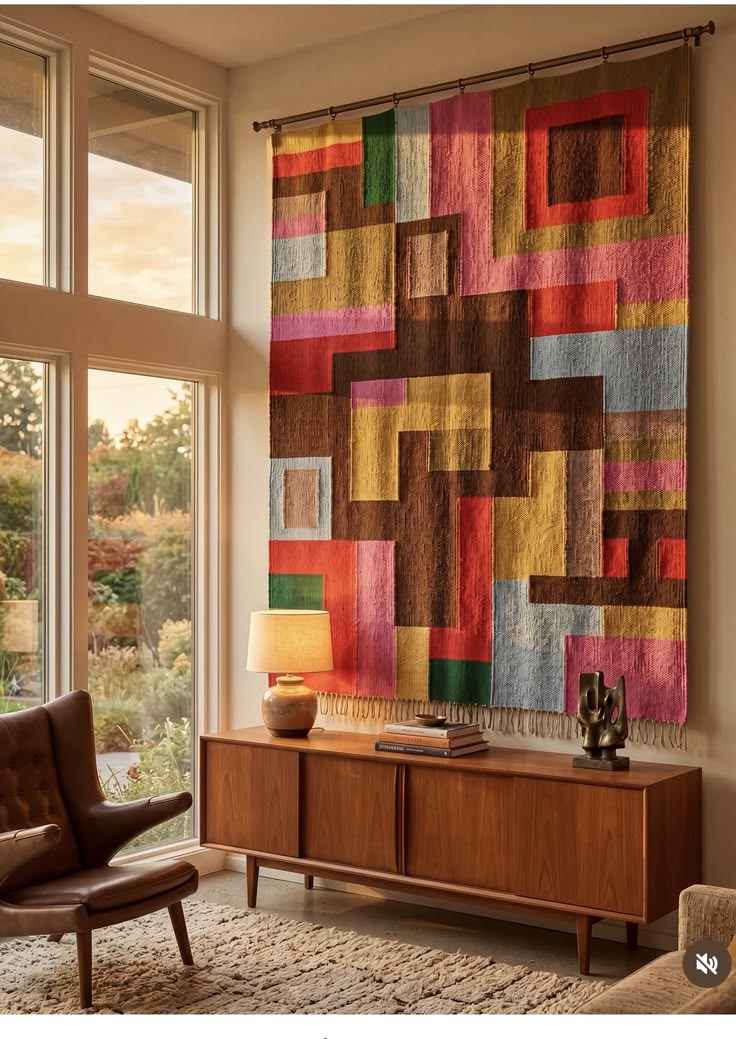
A room is composed like a still life: few objects, ones you look at and move about. A patterned textile on the wall rather than a painting. A single seat with character against a bare ground. And white, so the colours answer one another.
Spotted a room in this spirit? Scan it on Beyit: baroque chair, inlaid table or pewter jug, the app tells you the period, the vintage and a reasonable price.