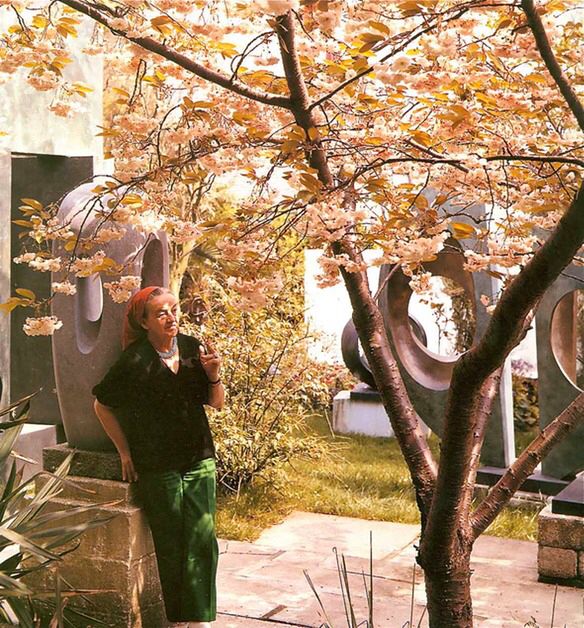

Constantin Brancusi settled at Impasse Ronsin, in the 15th arrondissement, in 1916, and stayed there until his death in 1957. He bequeathed the studio and everything in it to the State, on one condition: to reconstruct it exactly as it was. It has stood since 1997, rebuilt by Renzo Piano, on the piazza of the Centre Pompidou.
The studio
White walls, a glass roof, a concrete floor, works set on plinths that are themselves works. Brancusi tuned the distances between pieces the way one tunes a sentence; when a sculpture left, he replaced it with its plaster cast so as not to break the balance. The Centre Pompidou is closed for works until the end of the decade and the studio is to join the museum on reopening; check on access before making the trip.
What you see there
His furniture, carved by his own hand in oak and plaster: massive stools, benches, a round table on a single foot, a sculpted hearth, a low bed, shelves of raw wood. His tools, his gramophones, his kitchen — he had people to dinner. Nothing separates the useful object from the work: the same gesture of direct carving makes a plinth, a stool or an Endless Column. The Centre Pompidou retrospective, in 2024, set this furniture back among the sculptures.
The palette
White of plaster and walls, blond of oak, grey of limestone, gold of polished bronze — and the overhead light that makes it all. No added colour, no fabric.
What to take home
A stool of solid wood, hewn rather than assembled, is worth a designer chair. The plinth counts as much as what it carries: an object set on a block of oak changes its standing. And natural light, coming from above onto a bare floor, remains the finest lighting of all.
Spotted a piece in this spirit? Scan it on Beyit: single-block stool, hewn bench or oak plinth, the app tells you whether it is a studio piece, a vintage find or a production run.